Security | Threat Detection | Cyberattacks | DevSecOps | Compliance

Reflecting on the Q1 Threat Landscape: Attacks & Lessons Learned

As a human risk management platform, we keep a close eye on the evolving threat landscape to help organisations detect and mitigate human cyber risks. The first quarter of 2025 has already revealed critical vulnerabilities, data breaches, and novel attack vectors that highlight the importance of proactive security measures and automated interventions. Here’s a deep dive into the major cyber security events of Q1 and what forward-thinking organisations, like yours, can learn from them.

A Complete Guide to IT Risk Assessment

Most IT audit risk assessments fail because they treat risk as something to mitigate, not leverage. This leads to bloated reports, rigid frameworks, and security initiatives that slow innovation instead of driving it. Risk isn’t just a security concern—it’s a business decision. The best CTOs approach risk like an investment portfolio, with some risks to be minimized, but others that can be accepted or embraced for competitive advantage.

Examining the NIS2 Directive: The UK perspective

The EU’s NIS2 directive came into force on October 17, 2024. Notis Iliopoulos, VP MRC. Obrela explores the latest cyber resilience Directive’s pros and cons and suggests an alternative route the UK government might consider in developing its cybersecurity framework post-Brexit. The NIS2 Directive, which builds upon the original Network and Information Systems (NIS) Directive, aims to enhance the cybersecurity posture of critical sectors across the European Union.

Fixing AppSec's Data Problem: Context-Driven Security for Smarter Risk Management #short

Mend.io, formerly known as Whitesource, has over a decade of experience helping global organizations build world-class AppSec programs that reduce risk and accelerate development -– using tools built into the technologies that software and security teams already love. Our automated technology protects organizations from supply chain and malicious package attacks, vulnerabilities in open source and custom code, and open-source license risks.

Critical Middleware Vulnerability in Next.js (CVE-2025-29927)

Researchers have discovered a critical security vulnerability in Next.js that allows attackers to easily bypass middleware authorization measures. The vulnerability, designated CVE-2025-29927, was discovered by Rachid Allam and Yasser Allam and since assigned a base CVSS score of 9.1. By skipping checks for authorization cookies, attackers can potentially gain access to restricted areas of applications like admin tools and dashboards.

You're Not My Supervisor! Researching My Own New Starter Scam

Earlier this year I joined the team at CultureAI, and like many, I shared the news on LinkedIn. Within weeks, I found myself at the receiving end of multiple phishing emails impersonating our CEO designed to exploit new employees. But rather than ignoring them, I thought it could be fun to play along, see where the rabbit hole led, and deep dive into the world of BCE and Gift Card scams.

Remediation Made Easy: Reducing Risks and Driving Vendor Action

Managing the vendor remediation process is no small feat. While on the surface, it might seem like the bulk of the heavy lifting is done once you complete your initial assessment, you (and every other security team on the planet) know this couldn’t be further from the truth. After all, if your team doesn’t constantly track remediation efforts and validate corrective actions, how else are you supposed to ensure vendors effectively mitigate the risks you identified?

Corporate Security Trends: How S&P 500 Companies Stay Secure

Staying on top of corporate security trends may seem like a hassle, but it actually has great benefits for your organization. Understanding security trends helps businesses benchmark their performance—including within their specific industry—and strengthen their security posture to align with the best performers.

Bringing Data Privacy and Cyber Insurance Together with Bitsight

The cyber insurance industry continues to face challenges related to traditional cyber security risks, and more recently, data privacy risks. In many cases, traditional cyber insurance policies may cover legal fees or costs related to a data privacy infringement. Organizations not only get hit with class action lawsuits following incidents like breach of PII/PHI, but are seeing demand letters from law firms who are looking to protect their clients from any possible disclosure of their sensitive data.

UpGuard's Revamped Trust Page: Close Deals Faster

When it comes to closing a sales deal, trust and security are often just as important as the product or service you’re selling — sometimes even more important. The reason is simple. Before bringing you on as a new vendor, customers need to be confident that you’re a safe and secure partner. The challenge is proving your security posture quickly, without dramatically slowing the deal.

2025 Trustwave Risk Radar Report: Healthcare Sector: Key Risks and Defensive Measures

The healthcare industry, with its vast repository of electronic health records, a growing network of connected devices, reliance on legacy systems, and expanding telehealth solutions, continues to be a prime target for cyber threats. To provide deeper insights into these evolving risks, Trustwave SpiderLabs has expanded its healthcare cybersecurity research with the newly released 2025 Trustwave Risk Radar Report: Healthcare Sector - A New Era of Cybersecurity Challenges.

GPSec Boston 2025 - CTEM: How to Start When You Haven't Started

What does it really take to start a Continuous Threat Exposure Management (CTEM) program—especially if your organization hasn’t formally begun? In this GPSec Boston 2025 session, Scott Kuffer, COO and Co-founder of Nucleus Security, joins Chris Peltz, Director of Security Strategy at GuidePoint Security, to demystify CTEM by stripping away the buzzwords and breaking down the practical steps for getting started.

POAM Process Automation: Breaking the Manual Grind

Plans of Action and Milestones (POAM) play a critical role in public sector cybersecurity. In this webinar with government IT solutions provider Carahsoft, we break down the challenges security teams face when implementing POAMs, sharing real-life examples of where things go wrong and why. As part of the presentation, we also cover the intensive math of POAM programs: people, systems, and time.

Automated Risk Assessment Tools

As a CISO or security lead in a SaaS organization, the unthinkable could happen to you at any time. On a Friday evening, as you’re wrapping up work, you get a notification alerting you of a potential vulnerability in a customer-facing application. You have no idea what data has been leaked or how long this has been left exposed.

ISO 31000 vs. COSO ERM frameworks - Navigating the risk landscape

In an era where uncertainty is the norm, strong risk management isn’t just good practice – it’s a competitive advantage. For technology leaders steering organizations through complex challenges, two frameworks consistently rise to the top: ISO 31000 and the COSO Enterprise Risk Management (ERM) framework. Knowing how they differ – and where each shines – is key to building resilience and making smarter, strategy-aligned decisions.

Continuous Threat Exposure Management and the Role of Exposure Assessment Platforms

Traditional vulnerability management is broken. It is ineffective. The process of scanning for software vulnerabilities, prioritizing based on CVSS scores, and fixing what you can has become an endless patch cycle. The need for a better approach is clear. Different scanning tools are creating millions of alerts, obscuring critical risks within the noise. Organizations need to go beyond finding and patching vulnerabilities and opt in to a more effective approach to managing exposures.

How do EDR tools improve cyber security and threat response?

To keep pace with the scale and sophistication of cyber threats, organizations are re-evaluating how they secure the most common attack surface the endpoint. From laptops and servers to mobile devices, endpoints serve as entry points into business-critical systems. This is why Endpoint Detection and Response (EDR) tools are fast becoming a foundational layer in modern cyber defence strategies.

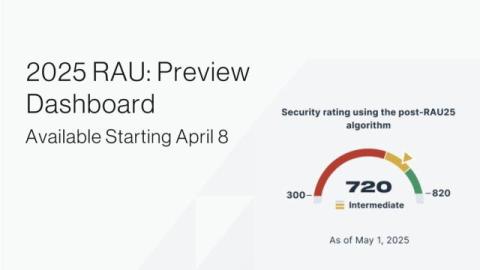
What to Expect from Bitsight's 2025 Ratings Algorithm Update

In anticipation of Bitsight’s upcoming 2025 Ratings Algorithm Update (RAU), many organizations are eager to learn more about what to expect from the changes. We are excited to share that the update will be ready for preview on April 8th in the Bitsight applications so that everyone can proactively prepare for the RAU.

Shadow IT: What Are the Risks and How Can You Mitigate Them?

Using unapproved tools, software, and devices poses a significant risk to your organization. You never know what vulnerabilities so-called “shadow IT” may introduce, leaving your sensitive data and systems exposed to potential threats. In this article, we define the term shadow IT and explore several reasons why employees use unapproved software.

The Cost of False Positives: Why Cybersecurity Accuracy Matters

Cybersecurity is a high-stakes landscape, with very real threats of data breaches, malware, and other cyberattacks lurking around the corner. But detecting cyber threats is only half the battle—what happens when the threats you detect aren’t real? Enter the deceiving world of false positives—security alerts that incorrectly identify legitimate activity as malicious. While most security tools are designed to maximize detection, they often sacrifice accuracy in the process. The result?

Understanding and Securing Exposed Ollama Instances

Ollama is an emerging open-source framework designed to run large language models (LLMs) locally. While it provides a flexible and efficient way to serve AI models, improper configurations can introduce serious security risks. Many organizations unknowingly expose Ollama instances to the internet, leaving them vulnerable to unauthorized access, data exfiltration, and adversarial manipulation.

Automating Vendor Risk Management and Assessments

Third and fourth-party vendors have become paramount to many businesses’ operations, as they can help improve efficiency and expand the availability of services. However, these vendors often come with increased cybersecurity risks for your organization. According to Ponemon, the average cost of a data breach increases by more than $370,000 for breaches caused by third-party vendors.

How UK businesses are managing risk and compliance with automation

Trust is critical to the success of every business. But building, scaling and demonstrating trust is getting harder for UK organisations. ‍ Vanta’s second annual UK State of Trust Report uncovers key trends across these areas of security, compliance and the future of trust. Surveying 1,000 business and IT leaders in the UK, our research found that more than half (54%) of UK organisations say that security risks for their business have never been higher. ‍

Uncovering Cyber Risks in the Global Supply Chain

No organization can achieve its goals on its own. To truly get ahead in the rapidly transitioning digital society, any organization will need a diverse group of partners who specialize in the products and services they do not. Commonly referred to as a “supply chain” this web of connections ensures the world operates smoothly, but navigating its many connections is challenging. Luckily, Bitsight TRACE doesn’t shy away from a challenge.

[Promo Video] Managed Cyber Risk Services

Protect Your Business with Managed Cyber Risk Services | SecurityScorecard Cyber threats are evolving, and your business needs proactive defense. SecurityScorecard's Managed Cyber Risk Services help organizations identify, monitor, and respond to cyber threats across their entire digital ecosystem.

What is risk & risk management in cyber security?

Cybersecurity risks are a constant and evolving threat. Organizations across industries face vulnerabilities from both internal and external sources, which, if not addressed, can disrupt operations, damage reputations and erode trust. And this is where a structured and comprehensive risk management strategy becomes critical. But what exactly is a risk in cyber security? And what is risk management? Keep reading and find out about essential best practices in cyber risk management.

Massive DDoS on X: Dark Storm or Cyber Fog?

Earlier this week, users of the X (formerly Twitter) social network were either unable to access the platform or experienced service degradation somehow. On March 10, 2025, reports emerged of users worldwide being unable to log in, post, or view content. This incident was later attributed to a large-scale distributed denial-of-service (DDoS) attack targeting X's infrastructure.

Evidence Analysis: Unlocking Insights for Stronger Security Posture

Navigating the maze that is vendor-supplied evidence is one of the most time-consuming and frustrating tasks security teams face during the risk assessment process. Imagine spending countless hours chasing down security information from a vendor only to receive a mountain of dense, unstructured (sometimes contradictory) documents. How can you possibly move forward? Security analysts have long dealt with this very problem.

Managing Cloud Exposures Just Got Easier: Introducing Nucleus Cloud-Native Vulnerability and Exposure Management

Every day, security teams are expected to manage risks in cloud environments that they don’t fully control, can’t always see, and that are constantly changing. Cloud-native assets—such as container workloads, autoscaling groups, and serverless functions—are highly dynamic, appearing, disappearing, and evolving in response to demand and functionality changes.

AI Risk Management: Benefits, Challenges, and Best Practices

Managing the risks of AI development tools is crucial for organizations looking to responsibly and effectively leverage this technology’s potential. AI offers transformative capabilities, particularly in coding assistance, where tools can speed up development and reduce manual workloads. However, these benefits can come with risks, such as security vulnerabilities and compliance challenges, that cannot be overlooked.

S&P 500: Which Industries Lead and Lag in Cybersecurity?

UpGuard recently published its State of Cybersecurity 2025 | S&P 500 Report, highlighting cybersecurity trends of the leading industries throughout the United States. Alongside reviewing the most impactful incidents of 2024, the report also details which industries are leading (and which are lagging) in their cybersecurity measures and risk management. With growing cyber threats from AI and software supply chain attacks on the rise, maintaining a strong cybersecurity posture is more crucial than ever.

What is cyber incident response and why is it critical for cyber security resilience?

When systems go down, data is leaked, or unusual activity spreads across a network, how organizations respond can mean the difference between disruption and disaster. This is the essence of cyber incident response. It is a critical capability that sits at the heart of operational resilience. It’s not just about reacting to threats but about managing them in a way that protects the organization’s assets, reputation and ability to function.

The Principles for Fair & Accurate Security Ratings: A Focus on Confidentiality

SecurityScorecard is actively engaged to ensure our Security ratings align with the Principles for Fair & Accurate Security Ratings, published by the US Chamber of Commerce. As part of this effort we strive to educate the cybersecurity community on how our products align with these important principles. This article is a continuation of a series of articles that describe how SecurityScorecard meets specific security rating principles as recommended by the US Chamber of Commerce.

ASPM Buyer's Guide: Find the Right Vendor for Your App Risk Management Needs

Security teams are overwhelmed. Whether it’s alert overload, a growing backlog of vulnerabilities, or fragmented security data, there’s no finish line in sight. The State of Software Security 2025 report reveals that security debt is rising and flaws times are increasing. Meanwhile, the traditional tools many teams leverage fail to provide the context needed to track risks across the application lifecycle and, importantly, to prioritize them.

Managed IT Services: Enhancing Business Efficiency and Security

Technology is integral to modern businesses, but managing IT infrastructure can be overwhelming. Many companies struggle with outdated systems, security risks, and the high cost of in-house IT management. Managed IT services support in Texas offers a strategic solution, allowing businesses to outsource IT management to specialized providers. These services ensure that companies can focus on their core operations while experts handle everything from system maintenance to cybersecurity. By leveraging managed IT services, businesses in Texas can achieve greater efficiency, reduce costs, and stay ahead in a competitive market.

AI-powered assessments: A new era in TPRM

UpGuard's Vendor Risk is a third-party risk management tool that delivers instant vendor insights, 360-degree assessments, and time-saving workflows—all in a centralized platform. Conduct vendor assessments at scale with an AI-powered security profile that scans vendor evidence to uncover control gaps and risks in minutes. Streamline risk management with actionable insights that help you prioritize, remediate, and track risks with precision. Generate AI-powered, point-in-time risk assessments in under 60 seconds to scale your program efficiently.

Why Organisations Still Fall Victim to Phishing and How to Avoid It

Phishing remains a significant threat to organisations, despite advancements in cybersecurity. The tactics used in phishing attacks have evolved significantly. Attackers now use advanced techniques like spear phishing, targeting specific individuals or roles within an organisation, and clone phishing, which duplicates legitimate messages but includes malicious links.

Lazarus Group Targets Developers Through NPM Packages and Supply Chain Attacks

North Korea’s Lazarus Group is evolving its tactics again. The latest campaign, dubbed Operation Marstech Mayhem, introduces an advanced implant named “Marstech1.” This malware is designed to compromise software developers and cryptocurrency wallets through manipulated open-source repositories. Unlike previous Lazarus operations, this campaign employs obfuscation techniques that make detection significantly harder. Read the full report here.
Vendor Responsiveness Solved: Soothing Your Third-Party Aches

Inefficiencies, like slow vendor responses, often plague security teams like a persistent headache. At first, it’s just a dull throb in the background. Yes, it’s annoying, but analysts often accept it as the way things are, pushing through the pain and getting the job done. However, over time, this headache intensifies.

What is a hash value and hash function in cyber security?

Strong cybersecurity relies on robust mechanisms to safeguard sensitive information. One of the foundational tools in this landscape is the hash function, a mathematical process that plays a crucial role in securing data, verifying integrity and preventing cyber threats. Understanding how hash values function within security protocols is essential for organizations striving to protect their systems against evolving cyber risks.

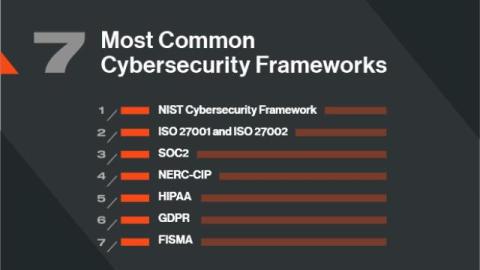
The Top 7 Cybersecurity Frameworks

In today’s ever evolving threat landscape, protecting an organization's digital assets is no longer optional—it's a critical business imperative. Security ratings can provide a snapshot of your organization's cyber health, but to demonstrate a robust, long-term commitment to cybersecurity, it’s essential to align with recognized industry and regulatory best practices. This is where cybersecurity frameworks come into play.

Detect cross-account access risks in AWS with Datadog

Managing access across multiple AWS accounts is a popular approach to isolating workloads and data. While it provides several benefits to organizing the various operational requirements for the environment, it introduces additional complexity for managing IAM policies and workload permissions. A primary concern is assigning too many permissions to any one source, which increases the risk of an attacker moving within the environment undetected.

Why Vendor Risk Management Can't Be a One-Time Task

Organizations across nearly every industry have become reliant on third-party relationships to accomplish their business operations. You’d be hard-pressed to find an organization that doesn’t partner with at least one third-party vendor. However, this growing reliance on vendors has also created an evolving threat landscape—vendors are now prime targets for cyberattacks.

From Reactive to Resilient: A New Mindset for Supply Chain Cybersecurity

Supply chain security is no longer just an IT issue, it’s a critical business concern. As recent high-profile breaches like the MOVEit vulnerability have shown, a single vulnerability in a vendor’s system can have a cascading effect, disrupting operations and damaging reputations across the entire supply chain. This shift in the threat landscape demands a new approach to cybersecurity that prioritizes collaboration, resilience, and a proactive defense strategy.

Trouble Brewing: Dissecting a fake homebrew update that stole user data

A few weeks ago, a malware campaign that leveraged Google Ads to promote a fake Homebrew website caught my attention. It tricked users into running an installer command that downloaded and executed a malicious binary resulting in an info stealer being introduced to the user’s machine.

Is Enterprise Risk Posture Better or Worse Today?

Measuring enterprise risk posture—its overall security readiness and resilience—is a complex challenge. Advanced security solutions, such as automated vulnerability management tools and unified risk dashboards, enable organizations to defend their networks with unprecedented efficiency. The rapid expansion of cloud environments and the intricacies of modern IT infrastructures, however, present an increasingly dynamic attack surface.

Prioritizing Critical Third-Party Assets to Protect Your Extended Attack Surface

The enterprise attack surface now extends well beyond the network firewall. As a result, Third Party Risk Management Teams are increasingly becoming an extension of Security Operations Centers, responding in times of crisis to questions of who, what, and more urgently, how and when. The line between ‘their exposure’ and ‘our risk’ is almost non-existent. But bridging the gap between data and platforms can be challenging.

Empowering organizations: Identifying and assigning effective risk owners

Effective risk management is crucial for organizational success in the business environment. Central to this process is the designation of risk owners—individuals accountable for identifying, assessing, and mitigating risks within their domains. Assigning the right risk owners not only enhances risk management but also fosters a culture of accountability and proactive problem-solving.

Cyber Risk Quantification Explained: Revolutionizing Security for Hospitals and Healthcare Providers

Cybersecurity is undeniably a critical concern for hospitals and healthcare organizations, as they handle sensitive patient data and are prime targets for cyber attacks. Traditionally, cybersecurity and HIPAA compliance are managed through biannual or yearly audits, which generate a list of items that need remediation to bring the organization into compliance.

Automation: Reducing Burnout, Improving Morale, and Mitigating Risk

Automation has the capacity to transform the way IT teams operate, from automated threat hunting to automated patching. However, not all organisations are making the most of its capabilities. In fact, many IT teams are suffering from ineffective automation strategies.

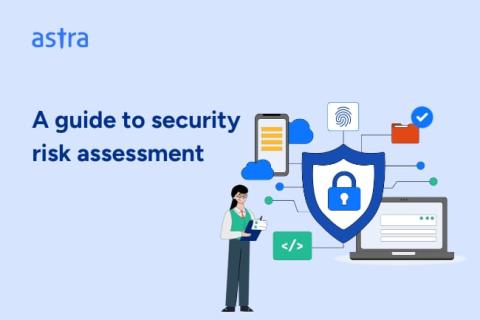
Security Risk Assessment: A Comprehensive Guide

Security isn’t a wall to fortify; it’s a living system that adapts, learns, and reacts. The weakest link isn’t just outdated software, misconfigured access, or even human behaviour and inefficient processes but the blind spots created at their convergence, driven by fragmented decision-making, unchecked complexity, and the illusion of control.

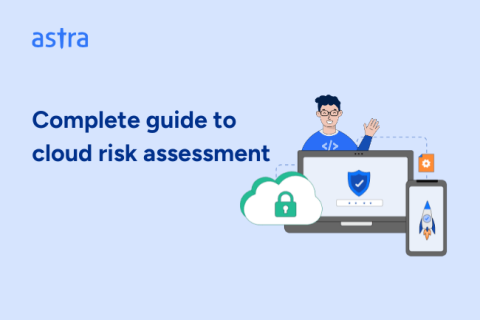
A Complete Guide to Cloud Risk Assessment

As organizations worldwide race to transform themselves digitally in a cloud-first world, many are doing so to the detriment of their businesses by failing to assess the security risks posed by their cloud applications and services. This oversight is not only a security issue but a core business risk that differentiates market leaders from those who are sure to face expensive setbacks and regulatory headaches.