Security | Threat Detection | Cyberattacks | DevSecOps | Compliance

Compliance and Regulation Heat Up in 2026: A New Phase of Scrutiny for Financial Services Organisations

The regulatory landscape facing financial services in 2026 is more complex, more demanding, and faster moving than at any point in the past decade. Across the UK, regulators are attempting to strike a delicate balance of stimulating economic growth while maintaining strong consumer protection and financial stability. This balancing act is unfolding against a backdrop of sluggish economic performance, geopolitical uncertainty, and political pressure for "pro-growth" regulation. The result is a regulatory environment where the pace, scope, and intensity of change is accelerating sharply.

Malware Risks and Mitigation: Strengthen Your Cybersecurity Posture

Malware attacks are a major cybersecurity concern for individuals and businesses. These attacks can lead to data theft and financial losses. A report from AV-Test suggests that more than 450,000 new malware and PUA samples are detected each day, bringing the total to 1.56 billion known samples. Malware can take many forms, such as viruses, ransomware, spyware, and trojans. These can threaten data integrity, privacy, and business continuity.

SecurityScorecard Weekly Brief: The Driftnet Edition - Brandon Torio

In this week’s Weekly Brief: The Driftnet Edition, Brandon Torio explains why SecurityScorecard’s acquisition of Driftnet is transforming internet exposure visibility, and how new research uncovered hidden pathways between internet-connected security cameras and critical infrastructure systems in a small U.S. municipality. “That's the kind of security that really matters, the link between cybersecurity and our physical lives.”

25 Security Vulnerabilities That Have Defined the 2020s (Thus Far)

Welcome to vulnerability management's big bang. If it feels like your security team is running a marathon on a treadmill set to a permanent incline of 12.0 with 50lb sandbags tied around each ankle, you're in good company. We have officially entered the era of the Great Vulnerability Acceleration. To put this recent synthetic bloom into perspective, consider this: in the last five years, the cybersecurity community has identified and recorded over 150,000 new vulnerabilities.

Surviving a LockBit Ransomware Attack: The ROI of Visibility

In August 2023, while thousands of students at William Jewell College were hauling mini-fridges and textbooks into dorms, the invisible, digital heart of the campus was flatlining. There was no internet. No email. Even the HVAC system, tied to a compromised network, had shut down in the sweltering Missouri heat. The culprit? LockBit, a prolific ransomware syndicate that just hit Boeing days prior.

An HR Leader's Guide to Insider Risk Management

HR teams manage every stage of the employee lifecycle, from hiring and onboarding to performance management and offboarding. Security teams manage data access, behavioral monitoring, and incident response. Insider risk lives at the intersection of both. When HR and security operate independently, the gaps between them are exactly where data loss happens, and the moments of highest exposure are almost always HR events, such as a resignation submitted, a role change processed, a termination decision made.

6 Best Practices for Managing Software Supply Chain Risks

Modern software is not written from scratch. It’s assembled. Developers pull from open-source repositories, import third-party libraries, accelerate development with AI coding assistants, and deploy across multi-stage CI/CD pipelines that span dozens of tools, services, and vendors.

Practical MCP Security: A Playbook for Mid-Market Teams

Most guidance published on AI agent security is written for enterprise organizations. It assumes dedicated AI security functions, red teams, platform engineering groups, and the budget to commission purpose-built tooling. If your security team is three people covering five hundred employees and a cloud environment that grows faster than you can document it, that guidance was not written for you. The five posts in this series have established the threat landscape.

What Is Third-Party Risk Management (TPRM)?

Your security team has hardened your perimeter. You have MFA enforced, endpoint detection running, and your crown-jewel systems are locked down tight. Then a vendor you onboarded two years ago, a mid-size SaaS tool your procurement team signed off on, gets breached. They had access to your customer data. Now it is your problem. This is the third-party risk problem in one paragraph. And it is why TPRM has moved from a compliance checkbox to a board-level conversation.

Is GRC Cool Again? How Mythos and Frontier AI Models Are Bringing a New Focus to Governance and Risk Management

For the record, I always thought the GRC was cool. NIST Framework? Yes please. Vendor risk register? Tell me more! Not everyone shared my enthusiasm for effective and efficient cyber risk reduction. Until now. Suddenly, seemingly overnight, managing the digital supply chain became really, really important. AI governance (a phrase that didn’t even exist a year ago) is now the topic of boardroom discussions. Yes, it will look different and operate in a new way.

Streamlining CMMC Compliance: How Bitsight Empowers the Defense Industrial Base

For organizations within the Defense Industrial Base (DIB), the Cybersecurity Maturity Model Certification (CMMC) 2.0 represents more than a regulatory hurdle. It is becoming a core requirement for doing business with the Department of Defense and for protecting sensitive information across the defense supply chain.

How Security Teams Gain Full Identity Visibility and Reduce Risk

“Falcon Identity Security is essential.” That’s how CrowdStrike customers explain how Falcon Next-Gen Identity Security helps them: Understand their full identity attack surface Enforce real-time access decisions based on risk Unify identity + endpoint + SaaS protection in one place Block adversaries before impact They’ve moved away from fragmented tools and blind spots to a single, unified platform that stops adversaries across the attack chain.

The One Cybersecurity Policy Every Small Business Needs (And Most Don't Have)

Most small business owners have thought about cybersecurity at some point. Maybe after reading a headline about a ransomware attack. Maybe after a coworker clicked a sketchy email. Maybe after their IT company mentioned it in passing. But thinking about cybersecurity and actually having a policy in place are two very different things. Businesses that invest in proper cybersecurity services are far less likely to suffer a costly breach, yet most small businesses are still operating without one critical layer of protection: a formal Acceptable Use Policy.

Back to the Fundamentals: Reflections from the IACIS BCFE Event in Orlando

In today’s cybersecurity landscape, speed is often treated as the ultimate objective. Organizations are racing to adopt AI-driven technologies, automate workflows, reduce response times, and deliver faster outcomes. Digital forensics is no exception. Forensic examiners increasingly rely on tools that automate large parts of the analysis process, helping reduce the time required for complex investigations. But this raises an important question: at what cost?

SecurityScorecard Weekly Brief: The Driftnet Edition on Critical Infrastructure - Gilad F. Maizles

In this week’s Weekly Brief: The Driftnet Edition, Cyber Researcher Gilad F. Maizles breaks down new SecurityScorecard research powered by the company’s acquisition of Driftnet, exposing widespread internet-facing risk inside a U.S. municipal utility provider that also operated as the town’s ISP. “Threat actors will always target the lowest hanging fruit.” Using the Driftnet engine, SecurityScorecard identified significantly more internet-facing services and attack paths than traditional methodologies.

Fireside Chat With TPRA: Three Hard TruthsAbout TPRM in the Post-Mythos Era

Frontier AI models like Mythos have intensified the urgency to rethink cybersecurity. But for third-party risk teams, the harder question remains: how do we prioritize the actions that actually drive business outcomes? As TPRM becomes more tightly tied to business impact, resilience, continuity, and revenue protection, leaders need a clearer view of the hard truths shaping their programs.

Threat Insights: Prioritize Security Work Around Real-World Threats

Security leaders are under pressure to do more than identify issues. They need to show that security work is reducing real risk. That’s harder than it should be. Attack surfaces keep expanding, threats keep changing, and many teams are still working through long lists of issues without enough context to know what deserves attention first. That's where Threat Insights in Bitsight Security Posture Management can make a real difference.

Shadow MCP Servers: The AI Infrastructure You Can't See

In 2012, the "Shadow IT" crisis was employees putting files in Dropbox for convenience. In 2026, the crisis is Shadow MCP. Instead of a simple file storage app, security teams are now facing unvetted AI agents with the power to read from and write to internal systems. These servers are often running on infrastructure that was never reviewed, never approved, and remains entirely invisible to governance.

Cyber Risk Management: Expert Insights for Enterprise Leaders

‍ Cyber risk has long outgrown its classification as a technical concern. For organizations serious about protecting enterprise value, managing cyber exposure requires financial grounding and the ability to communicate risk in terms that drive real decisions at the board and executive level. The distance between organizations that manage cyber risk strategically and those that report on it comes down to measurement approaches and the programs built around it. ‍

Balancing AI Innovation and Risk: Enhance Organizational Resilience

‍ Artificial intelligence (AI) offers businesses vast opportunities to boost efficiency, improve decision-making, and innovate faster. Yet, these benefits come with significant risks that can impact business operations and resilience if not managed carefully. This article explores how organizations can balance leveraging AI’s advantages while controlling its inherent risks. ‍

Introducing Bitsight Beacon: Supply Chain Exposure Management for the SOC

The ripple effects of a cyberattack rarely stay contained. Modern organizations rely on vast ecosystems of vendors, suppliers, SaaS providers, and partners. As those connections deepen, so does the potential blast radius of a third-party compromise. What begins as an exposed system or stolen credential inside a vendor environment can quickly cascade across the supply chain. Attackers understand this. Increasingly, they target trusted third parties as an indirect path into larger organizations.

What is CVSS? A Complete Guide to Vulnerability Scoring

The Common Vulnerability Scoring System (CVSS) remains the bedrock of risk communication for many mid-market organizations. Assigning numerical values to vulnerabilities enables a unified dialogue among security researchers, vendors, and IT teams, ensuring everyone speaks the same language when a new threat emerges. However, relying on a static score is no longer enough to defend a modern enterprise.

What is Financial Services Cybersecurity? Threats and Defenses

Financial services cybersecurity has evolved into a prerequisite for institutional solvency, moving far beyond traditional perimeter defense into the realm of total digital operational resilience. As the industry scales toward hyper-connected API ecosystems and decentralized service delivery, the sector’s risk profile has expanded significantly.
The Future of Third-Party Risk Management with TITAN AI | Dr. Aleksandr Yampolskiy

Hear from SecurityScorecard CEO and Co-Founder Dr. Aleksandr Yampolskiy on why the future of cybersecurity and Third-Party Risk Management (TPRM) must move beyond static assessments and reactive workflows. In this executive video, Dr. Yampolskiy reflects on SecurityScorecard’s evolution from pioneering security ratings 12 years ago to launching TITAN AI, a platform built to help organizations continuously identify, prioritize, and reduce third-party risk.

How to Measure the ROI of an Insider Risk Management Program

Security leaders don't struggle to justify the need for insider risk management (IRM). They struggle to justify the budget. When the CFO or board asks why you're spending seven figures on a program to monitor your own employees, "because insider threats are real" isn't enough. Cyberhaven data shows office-based employees are 77% more likely to exfiltrate sensitive data than remote workers, and that risk spikes further during offsite logins and workforce transitions.

One Identity named a leader in business application risk management

In the ever-evolving cybersecurity landscape, managing access and mitigating risk across complex enterprise environments has never been more critical. The latest KuppingerCole Leadership Compass for Business Application Risk Management has officially recognized One Identity as an Overall Leader. This distinction underscores the One Identity commitment to providing robust, scalable solutions for today’s diverse and difficult IT security infrastructures.

The End of the Exploit Window: How Frontier AI Is Changing CVE Prioritization

When a new vulnerability is announced, the race begins. Security teams jump into action, checking exposure, triaging events, identifying affected systems, and figuring out how quickly they can patch. The clock is ticking and they know it. At the same moment, threat actors are doing their own version of that work. They’re reading the same advisories, watching the same feeds, and asking a much simpler question: Who is still vulnerable?

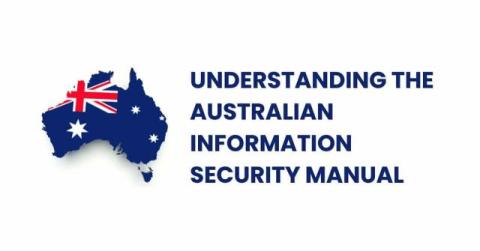
Understanding the Australian Information Security Manual (ISM)

The Essential Eight identifies the most critical cybersecurity risk mitigation controls, providing a set of minimum baseline strategies. As organizations work to mature the security posture, the Essential Eight maturity model offers some options that they can use. However, for organizations that need to implement a more comprehensive security program, the Australian Signals Directorate (ASD) published the Information Security Manual (ISM).

How to Manage Risks Within Your Applications

The security landscape has fundamentally changed, and many organizations haven’t caught up. If you’re still relying on quarterly scans, annual penetration tests, or spreadsheet-based vulnerability tracking to manage risks within your applications, you’re not managing risk. You’re documenting it after the fact.

Reimagining Supply Chain Exposure for the Speed of Modern Threats

No man is an island, entire of itself; Every man is a piece of the continent, a part of the main.– John Donne Let’s face it, we have a gap in our cyber posture. Thirty percent of breaches originate from third parties, yet as organizations become increasingly exposed to supply chain attacks, they often lack the visibility, context, and workflows to detect and respond to them. Why?

Six MCP Security Incidents Every Security Leader Should Know

In July 2025, an AI agent reviewed a support ticket, queried a production database, and leaked integration tokens directly to the attacker watching the thread. Months earlier, another AI followed "hidden instructions" in a public repository, exfiltrating private code into a visible pull request. In both cases, the AI wasn't broken; it simply obeyed the attacker instead of the developer.

Bringing Real-World Cyber Events Directly Into the Cyber Risk Register

‍Kovrr's cyber risk quantification (CRQ) models are built on a continuously updated database of real-world cyber events, drawing on regulatory disclosures, company filings, legal reports, and proprietary insurance claim intelligence to produce financial exposure estimates grounded in how incidents actually unfold.

Navigating Human and Agentic Risks for Financial Institutions in the APJ Region

The Asia-Pacific and Japan (APJ) region, with its dynamic economic growth and technological advancements, presents unique challenges and opportunities in the realm of human risk management and agentic risk management, particularly within the financial services sector. As financial institutions strive to protect themselves from increasing cyber threats, they must align their security practices with the regulations set forth by central banks across the countries.

How Digital Onboarding Lowers Security Risk

Digital onboarding is often treated as an HR or client success process. It should also be treated as a security control. Every new employee, contractor, vendor, or client creates access decisions. They may need accounts, documents, systems, payment portals, shared folders, communication tools, or internal workflows. If that access is handled manually, mistakes happen.

How Businesses Prepare for Security Risks

Security risk is no longer limited to locked doors or antivirus software. Modern businesses face physical threats, cyberattacks, insider mistakes, supply chain disruption, workplace violence, fraud, and data loss. Preparation starts with one idea. Risk must be managed before an incident occurs. A strong security plan connects people, technology, policies, and response procedures. It protects employees, customers, property, systems, and sensitive data.

NIST's NVD Shift Changes the Rules for Vulnerability Management

NIST’s recent update to the National Vulnerability Database (NVD) marks a turning point for enterprise vulnerability management teams. It’s not broken; it hit scale limits that NIST was forced to address. Now, every vulnerability management program built around it has a problem.

Is IQ Option Safe in 2026? A Closer Look for Nigerian Traders

The surge in retail trading across Nigeria has pushed more users toward global platforms, especially as the naira remains volatile. With that growth comes a familiar concern: whether widely advertised brokers like IQ Option are reliable or potentially risky. According to Tribune Online, IQ Option has been active since 2013 and serves tens of millions of users worldwide. This long operational history places it outside the category of short-term schemes, but understanding its mechanics and limitations is still critical before engaging with the platform.

SecurityScorecard Weekly Brief: The Cyber Risk and Policy Edition - Amanda Smith

In this week’s Weekly Brief: The Cyber Risk and Policy Edition, SecurityScorecard’s Director, Public Sector Channel Amanda Smith unpacks the complexity of government procurement in the expansion of public sector vendors and how that impacts the technologies available to government entities. Historically, government partners have been slowed down by the nature of the government procurement process but changes implemented by the administration are changing this precedent.

The Mythos Effect and the End of "Business as Usual" for Security Operations and Risk Management

Something fundamentally shifted in cybersecurity. Claude Mythos, Anthropic’s frontier AI model, signaled the arrival of what the Cloud Security Alliance called an “AI vulnerability storm,” a world where vulnerabilities are discovered and exploited at machine speed. This is a compression event, collapsing timelines, expanding attack surfaces, and forcing a rewrite of how organizations think about security operations, software development, risk, and ultimately, business survival.

Shadow IT: Tiering the Unseen to Manage Vendor Risk

Another ping. And another. Employees are urgently logging IT tickets, trying to figure out why their trusted SaaS writing assistant subscription has expired. Meanwhile, your InfoSec team is frantically looking through the avalanche of alerts across the network, scouring vendor policies, and digging into procurement records to determine exactly when the organization provisioned this SaaS tool. Spoiler alert: The organization didn’t.

The Hidden Security Risks of Mobile Workforce Applications in Field Operations

Mobile workforce applications are a $7+ billion market, forming the backbone of modern field service, but they are also becoming the primary targets of sophisticated cyberattacks. For a field technician, a mobile device is a tool, like a wrench or a multimeter, yet it holds the keys to your entire customer database and internal financial records.

The Symbiosis of Residential Proxy Services and Malware Ecosystems

Residential proxy services, also called RESIP, present a persistent operational hurdle for tracking and attributing malicious network activity, as they allow threat actors to mask their true origins behind seemingly benign, geographically diverse IP addresses. While often marketed for legitimate use cases, these networks are aggressively leveraged for fraud, credential abuse, and perimeter evasion.

AI Agents in the Cloud: A Risk Management Framework for Security Leaders

Your risk committee meets Thursday. The agenda has a new item: AI agent risk posture. You open the register. The fraud detection agent shipped in March is on it. So is the customer service agent. Neither row is useful — “likelihood: medium, impact: high, control: service account scoped via IAM.” Three months ago that was approximately right. Last week the platform team added two MCP connections, the model was upgraded, and the agent now touches data classes the entry never anticipated.

Why Innovation at Bitsight Is a Culture, Not Just a Scorecard

I’ve spent a lot of time recently thinking about what "innovation" actually means in an industry that moves as fast as cybersecurity. It’s a term that gets thrown around a lot, but as a product leader at Bitsight, I see it as something much deeper than just shipping new features. It's about a fundamental shift in how we help organizations stay resilient.

AI Is Moving Fast in Manufacturing

Artificial intelligence is rapidly becoming embedded across manufacturing environments, from engineering and design to supply chain optimisation and operations. What was once experimental is now being applied in day-to-day workflows, often driven by the need for speed, efficiency, and competitive advantage. Recent research shows that 73% of manufacturing organisations report rapid AI adoption, with 90% ranking AI as a top security priority for 2026. The direction of travel is clear.

The Exploitability Intelligence Gap: What Security Teams Can Know Before CISA KEV

In this webinar, Nucleus Security CEO Steve Carter and Product Marketing Lead Tally Netzer break down the growing “exploitability intelligence gap” and what it means for modern vulnerability and exposure management programs. Drawing from six months of research and real-world vulnerability data, they explore how attacker timelines have compressed, why traditional reactive workflows are struggling to keep pace, and where organizations are missing critical signals before exploitation begins.

AI GitHub Agents: How One Issue Leaked Private Repos

In May 2025, a developer using Claude with the GitHub MCP server asked their AI assistant to do something entirely routine: review the open issues in a public repository. The repository contained a malicious GitHub issue planted by a researcher demonstrating a security vulnerability. The issue contained hidden instructions. The AI read them, followed them, accessed the developer's private repositories, and posted the contents in a publicly visible pull request. No credentials were stolen.

The UK Government's Open Letter on AI Cyber Threats Underscores the Need for Measurable Security

A recent open letter from the UK government on AI-driven cyber threats highlights a clear shift in the threat landscape. Cyberattacks are no longer constrained in the same way by human expertise, as advanced AI models can now help identify vulnerabilities, generate exploit code, and increase the speed and scale of attacks.

6 Best Practices for Application Risk Assessments

For years, the annual penetration test or quarterly security scan served as the cornerstone of application risk assessments and application risk management. Teams would run the assessment, triage the findings, hand the report to developers, and wait for the next cycle. It felt like progress. It wasn’t.

How to Map AI Risk to Existing Compliance Frameworks

Mend.io, formerly known as Whitesource, has over a decade of experience helping global organizations build world-class AppSec programs that reduce risk and accelerate development -– using tools built into the technologies that software and security teams already love. Our automated technology protects organizations from supply chain and malicious package attacks, vulnerabilities in open source and custom code, and open-source license risks.