Security | Threat Detection | Cyberattacks | DevSecOps | Compliance

Build an Intelligence Advantage with Falcon Next-Gen SIEM

Every organization has a different threat profile. Industry, geography, infrastructure, business operations, and the broader technology ecosystem all influence which adversaries and threats matter most. The challenge is putting threat intelligence to work at scale to identify the greatest threats to each business. The intelligence that security teams rely on is as varied as the threats they face.

Elastic AlertZero: Who controls AI agents in the SOC?

With Elastic AlertZero, security teams can configure agent autonomy, audit agent activity, and choose the AI models that fit their environments without being locked into a single model provider. Mike Nichols, GM of Security at Elastic, explains how AlertZero addresses three priorities for bringing agentic AI into security operations: transparency, control, and model flexibility.

Every AI Agent Creates Security Debt. Most Organizations Aren't Tracking It.

Technical debt accumulates when organizations prioritize immediate speed and defer the architectural work that keeps systems dependable. Most engineering leaders know how that story ends. The shortcuts that made the first release possible eventually slow down every release after it. The agentic enterprise is creating a security equivalent.

Is "SIEM-less" really what it sounds like?

SIEM-less security may sound like an escape from traditional SIEM complexity and costs, but the underlying capabilities still have to exist somewhere. A SIEM is a multipurpose tool. It brings together cyber and physical security use cases; drives threat detection, investigation, and response (TDIR); serves as a system of record for governance, regulatory, and compliance needs; and supports observability use cases tied to resilience and service degradation. The list goes on.

How to investigate PHP2Shell-related activity with Sumo Logic

PHP2Shell is a pair of critical flaws in the PHP interpreter itself, each with a CVSS v4.0 score of 9.2. Both let an unauthenticated attacker run code on a web server with a single crafted web request, or a pair of them, before any application code runs. Because the bug lives in PHP, not in WordPress, Drupal or Magento, every reachable PHP endpoint on an affected server is exposed, including login pages, static forms, and health checks. Every PHP release from the last decade is affected (back to 5.4).

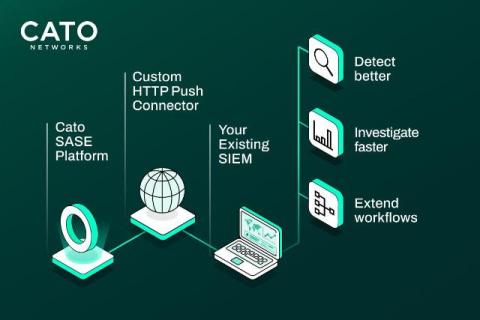
Make Your SIEM Smarter with Cato

Effective security operations require more than isolated alerts. Analysts need context from across the environment to understand what happened, assess its significance, and decide what to do next. That is why accessing insights and telemetry from across your networking and security stack is critical to teams using a SIEM tool.

Security Was Built for Humans. The Enterprise No Longer Runs on Humans Alone.

Cybersecurity has spent decades learning how to distinguish trusted users from attackers. The agentic enterprise complicates that model. An AI agent can be trusted, authenticated, authorized, and functioning as designed, yet still produce an unintended or risky outcome through a sequence of otherwise legitimate actions. That scenario does not require a malicious agent.

Access Isn't Trust: A Behavioral Risk Framework for People, Service Accounts, and AI Agents

Risk in the agentic enterprise spans people, service accounts, and AI agents. All three act with legitimate credentials, so access controls alone can’t show whether their activity is safe. A behavioral risk framework applies one model to every actor: Verify expected behavior before access goes live, observe activity once it does, analyze behavior for risk and drift, and improve detection coverage over time.
Sponsored Post

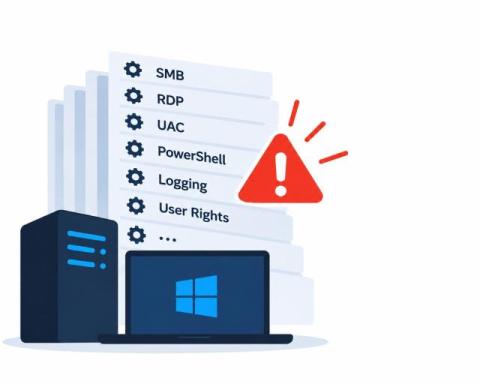
Windows Hardening & Continuous Compliance: Keeping 200+ Security Settings Secure 24/7

Every Operating System – not even counting the software installed on top of it – has a myriad of configuration settings that affect security. Windows Server alone has 4000+ configurable options, out of which 200+ are important for security & compliance efforts. They include: These settings are at the very core of all of your security & compliance efforts – and they are surprisingly often ignored.

Elastic Security integration with Google Distributed Cloud: Closing the velocity gap in air-gapped environments

The rules of cyber defense have shifted. Threat actors are increasingly using advanced automation to accelerate reconnaissance, evade static signatures, and orchestrate rapid intrusions across critical infrastructure, software supply chains, and insider pathways. This has created a critical velocity gap: when adversaries compress attack timelines from days to minutes and defenders rely on manual triage across fragmented legacy tools, the defense falls behind.

What are the 5 pillars of Zero Trust? [Quick Question Ep. 4]

What are the five pillars of Zero Trust? Across Zero Trust frameworks, five control points remain consistent: users, devices, networks, applications, and data. In this episode of Quick Question, we cover how each pillar generates critical security data, and why that data often lives in disconnected tools, leaving organizations with a fragmented view.

Why SOC Teams Need Runtime Visibility From Their CNAPP

Many companies run their software on cloud servers that come and go on their own. When traffic spikes, new ones switch on automatically. When it drops, they shut down, sometimes less than an hour after they started. That flexibility saves money, but it creates challenges for the people whose job is to investigate attacks.

Why CISOs Need an Agentic SOC Strategy

CISOs need an agentic SOC strategy because traditional staffing models can’t scale to match machine-speed threats, a global talent shortage, and rising alert volume. An agentic SOC pairs AI agents that collect evidence and investigate at machine speed with analysts who provide judgment, context, and accountability. Exabeam combines Agent Behavior Analytics (ABA), Exabeam Nova AI, and automated investigation to expand coverage and speed response without adding headcount.

Why Choose Exabeam Over QRadar and Cortex XSIAM for SIEM?

Exabeam delivers stronger detection, faster investigations, and more flexible deployment than IBM QRadar and Cortex XSIAM. It combines user and entity behavior analytics (UEBA), Agent Behavior Analytics (ABA), and agentic AI through Exabeam Nova AI to reduce alert noise and automate workflows. With cloud-native capabilities in New-Scale Fusion, Exabeam gives security teams a modern approach to SIEM and security operations.

Why Machine-Speed Risk Demands an AI-Assisted SOC

Security analysts traditionally move from an alert to a pivot, a search, a correlation, more pivots, and finally documentation before they can decide what to do. An AI-assisted workflow brings behavioral context, prioritized investigations, search timelines, and automation together, so analysts can review, validate, decide, and respond with far less manual friction. Exabeam Nova AI drives that shift, and the analyst stays responsible for validation and action.

Shadow IT Was Just the Beginning. Meet Shadow Automation.

Most security leaders remember the first time they discovered shadow IT inside their own organization. A business team had adopted a SaaS application, connected it to company data, and built a workflow around it before anyone in security knew it existed. The tool was useful, and the team was productive. The governance conversation simply started months late. The agentic enterprise is creating a more consequential version of that problem.

Connect and Validate Third-Party Data with Falcon Next-Gen SIEM

See how the Falcon Next-Gen SIEM Data Onboarding Agent simplifies the process of connecting and validating third-party security data. Using natural language, teams can identify the right connector, understand setup requirements, configure credentials, and create connections through a guided workflow.

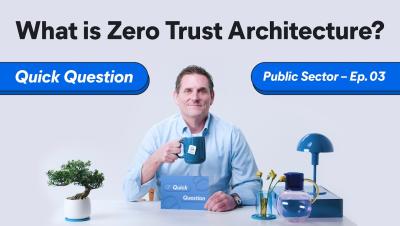
What is Zero Trust Architecture? Why is it important? [Quick Question Ep. 3]

What is Zero Trust Architecture, and why is it important? Zero Trust is a security framework built on one core principle: never trust, always verify. In this episode of Quick Question, we explain how Zero Trust shifts security from protecting the front door to locking everything inside by default, granting access room by room based on identity, context, and authorization.

What's New in LogRhythm SIEM for October 2026

The October 2026 LogRhythm SIEM release modernizes self-hosted security operations with an in-place migration from Elasticsearch to OpenSearch, a next-generation self-service reporting engine, generative AI collectors, and a community Model Context Protocol (MCP) server. The release also includes backend and API updates that improve event drilldown, rule administration, network routing, and telemetry quality while helping organizations maintain control of sensitive security data.

The Agentic SOC Isn't Coming for Analysts' Jobs. It's Coming for Their Tabs.

An agentic SOC uses AI-powered investigation, analysis, and automation to gather data, connect activity, and handle repetitive investigative work. Analysts remain in control and focus on judgment, prioritization, and response. This addresses the need for machine-speed security operations as AI agents gain autonomy and Tier 1 access to systems. Spend five minutes watching a security analyst at work and the “AI will replace analysts” headline starts to sound out of touch.