CTI Roundup: Russian threat actor APT28 exploits Outlook vulnerability
APT28 exploits a critical Outlook vulnerability, QR phishing campaigns grow more complex, and an SQL brute force attack results in BlueSky ransomware.


APT28 exploits a critical Outlook vulnerability, QR phishing campaigns grow more complex, and an SQL brute force attack results in BlueSky ransomware.
Even when looking at the various kinds of risks to business, cyber attacks still remain the biggest problem. But new data shows there may be a lesson to be learned to minimize losses. Aon’s Global Risk Management Survey, nearly 3,000 organizations across 61 countries were asked about sources of business risk. In the report, “Cyber Attack/Data Breach” was the #1 current risk and #1 future risk seen by organizations.
Cybersecurity breaches are at epidemic proportions; in the last two years, cybercriminals have stolen over 2.6 billion consumer records from thousands of organizations. The breaches target more than individuals—they target data from healthcare networks, academic institutions, small businesses, and governments. The attacks come at a destructive cost. Where criminals use personal information for extortion, and the trust of the public is ever-decreasing.
During a cyber attack, malicious actors often breach an organization’s perimeter security with tactics like vulnerability exploitation and phishing. Once inside, they attempt to navigate the organization’s network to escalate their privileges and steal or encrypt data—but here they often face sophisticated endpoint detection and response (EDR) systems designed to identify and prevent this type of activity.
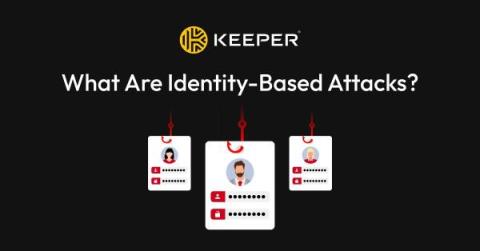
An identity-based attack is a type of cyber attack that targets and compromises the digital identity of individuals and organizations. In this type of attack, a cybercriminal tries to steal, alter and misuse an individual’s identity-related information such as their login credentials, domain names, personal data or digital certificates.
On November 25, the U.S. municipal water authority in Aliquippa, Pennsylvania confirmed that one of its booster stations had suffered an attack by a threat actor group that supports Iranian geopolitical interests. The attack by a cyber group known as CyberAv3ngers compromised a programmable logic controller (PLC) for a water pressure monitoring and regulation system. Officials, however, have made it clear that the incident did not threaten local drinking water or water supplies.
East River Medical Imaging (ERMI) has three locations in New York City and Westchester County. ERMI is a “multi-modality radiology center,” including patient-centered solutions like MRIs, CTs, ultrasounds, imaging, radiology, fluoroscopy, and x-rays. They have served New York since 1970 and have a long history of high-quality patient care. At the end of August, an unauthorized actor accessed their network—exposing sensitive information from employees and patients.
Over sixty credit unions across the United States have been taken offline following a ransomware attack at one of their technology providers - demonstrating once again the damage that can be caused by a supply-chain attack. There are a few moving parts here, so here’s a quick summary: Trellance - A provider of solutions and services used by credit unions, and the parent company of FedComp. FedComp - a provider of software and services that enable credit unions to operate around the world.