Security | Threat Detection | Cyberattacks | DevSecOps | Compliance

Attackers Using HTTP Response Headers to Redirect Victims to Phishing Pages

Researchers at Palo Alto Networks’ Unit 42 warn that attackers are using refresh entries in HTTP response headers to automatically redirect users to phishing pages without user interaction. “Unit 42 researchers observed many large-scale phishing campaigns in 2024 that used a refresh entry in the HTTP response header,” the researchers write. “From May-July we detected around 2,000 malicious URLs daily that were associated with campaigns of this type.


Fundamentals of GraphQL-specific attacks

Developers are constantly exploring new technologies that can improve the performance, flexibility, and usability of applications. GraphQL is one such technology that has gained significant attention for its ability to fetch data efficiently. Unlike the traditional REST API, which requires multiple round trips to the server to gather various pieces of data, GraphQL allows developers to retrieve all the needed data in a single request.

The Most Recent Credential Stuffing Attacks on Companies in 2024

So far in 2024, many major companies have fallen victim to credential stuffing attacks. Some of these notable credential stuffing victims include Roku, Okta, General Motors and Levi’s. Credential stuffing attacks occur when a cybercriminal uses stolen login credentials to attempt to log in to multiple accounts simultaneously. Since many people reuse their passwords, cybercriminals can use stolen credentials to sign in to many accounts, compromising employee, customer and organizational data.

Defending Against Attacks on Data with Rubrik and the CrowdStrike Falcon Platform

In today's digital landscape, cyber attacks are an ever-present threat, and they all ultimately target one thing: data. For most organizations, the challenge lies not only in protecting this data but also in understanding the full scope of what they have. Many organizations struggle to identify how much sensitive data they possess, where it resides, and who has access to it.

How Attackers Are Bypassing PowerShell Protections

PowerShell is one of the most popular platforms for malicious actors. To protect your critical data and systems, it’s vital to implement strategies for blocking and detecting attacks that exploit PowerShell. However, you should not assume those security measures are airtight — adversaries are constantly looking for ways to bypass your defenses. Let’s explore three of those techniques, so you can build an even more robust strategy for defending your data and your business.

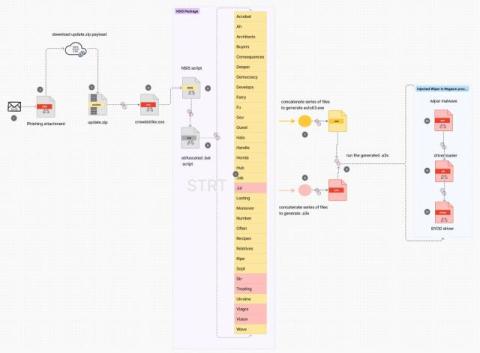
Handala's Wiper: Threat Analysis and Detections

On July 19, 2024, CrowdStrike released configuration updates for its Windows sensor, aiming to enhance security and performance. Unfortunately, this update inadvertently led to widespread downtime, manifesting as Blue Screen of Death (BSOD) on millions of machines worldwide. The BSOD, a critical system error screen, halts all operations, rendering affected systems inoperable until resolved.

Incident Response Services: Mitigate Damage and Recover from Cyber Attacks Quickly

In this digital era, businesses are more likely to be attacked online by scams like phishing and viruses like ransomware. When a breach happens, it's important to respond quickly and effectively to limit the damage, keep the business running, and protect private data. Specialized cybersecurity companies offer incident response services that give businesses the knowledge and tools they need to handle security incidents quickly and effectively.

Phishing Attack Takes a Two-Step Approach to Leverage Legitimate Sites and Evade Detection

Analysis of a new phishing attack demonstrates how attackers may take a longer path to reach their malicious goals while staying “under the radar” of security products. It would be pretty simple to create a phishing attack that sends its’ victims a brand-impersonated email with a link that takes you to an impersonated webpage that asks for credentials, personal details or credit card information. But many of today’s security products will detect the impersonation immediately.