Managing the Scramble for Meeting ITAR Compliance
Selling to the Department of Defence or dealing with Export Controlled material? Discover how to manage the information security and compliance of ITAR and other regulated data.


The latest News and Information on Data Security including privacy, protection, and encryption.
Selling to the Department of Defence or dealing with Export Controlled material? Discover how to manage the information security and compliance of ITAR and other regulated data.
Many businesses argue that they need to collect information about customers to verify who they are and secure their accounts. However, this is at odds with online privacy advocates, who say organizations are compromising our security by collecting far too much information about us.
In part 1 of this series, we discussed data privacy, the related laws, and the data collection practices that help comply with those laws. In this blog, we’ll take a look at the challenges in securing customer data and five effective steps to overcome them. Many countries deem data privacy a fundamental human right and have implemented data protection laws.
Speaking with clients, I find one of the biggest issues they struggle with how to properly secure Guest access in Microsoft 365 applications. While many organizations had already begun outsourcing their email to M365, most had really only begun looking at the rest of the M365 offering (Teams, SharePoint Online and OneDrive) when COVID hit. Most organizations wound up diving headfirst into this offering in an attempt to deal with the sudden need to work and collaborate with colleagues from home.
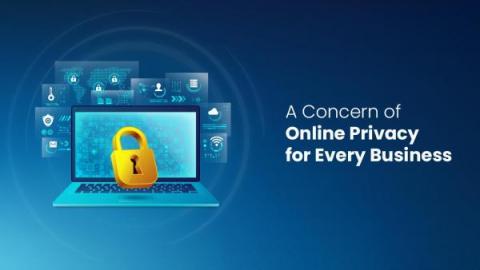
Online privacy is a state where one can keep their information and activities private from others. Due to the increase in internet usage for various purposes like social media, entertainment, education, and even business, the threat to data privacy has also increased. Above all the other online niches, businesses involve more critical data such as customer data, financial information, intellectual property, business agreements, and employee details.
Cybersecurity has become an important topic for the defense supply chain. The ever-increasing number of digital channels that data can be exchanged through, has exponentially increased the risk of data breaches and leaks. This puts a lot of pressure on these organizations to ensure that the risks associated with the handling of sensitive data are as low as possible.
Cyberthreats don't affect only large enterprises and governments – they can also affect small businesses. According to research, nearly half of small businesses have experienced a cyberattack, and 69% are concerned about future attacks. Small businesses should be aware of cyber security statistics and take tangible steps to protect their businesses against cyberattacks.
Data leak detection software identifies an organization's data leaks – the accidental public exposure of sensitive data due to software misconfigurations and poor network security. Data leaks quickly become data breaches when cybercriminals identify and exploit this exposed data. The following scenario demonstrates the progression of a cyberattack facilitated by a data leak attack vector.
We’re living in the era of “giga-breach,” where cloud data breaches can easily expose in excess of one billion records. As such, the stakes couldn’t be higher for cloud security teams seeking to secure cloud environments. That’s why it’s important to understand the key vectors driving data breaches today. Read on to learn more, or click the thumbnail below to join our upcoming webinar, where we’ll discuss these trends in detail.