Across the tech startup space, growth is on fire, and a key differentiator of success will be your ability to scale your talent at the pace needed. Based on having gone through this phase at various companies over the past decade, I’ve been pulled into helping advise founders and heads of people at several earlier-stage startups. So I made it simpler, and drafted a Hypergrowth Playbook , with my learnings. We are happy to share this openly, to help the community at large.
So you’re running microservices in containers? Congratulations! This is an important step towards meeting those business needs around delivering applications to the hands of your customers as soon as possible. But how can we mitigate any potential risks associated with faster software deployment? Simple, with Snyk.
The DevOps, IT security and IT governance communities will remember 2021 as the year when the Software Bill of Materials , or SBOM, graduated from a “nice to have” to a “must have.” Around for years, the SBOM has now become a critical DevSecOps piece, which everyone must thoroughly understand and incorporate into their SDLC (Software Development Lifecycle).
As developers, we spend a lot of time in our IDEs writing new code, refactoring code, adding tests, fixing bugs and more. And in recent years, IDEs have become powerful tools, helping us developers with anything from interacting with HTTP requests to generally boosting our productivity. So you have to ask — what if we could also prevent security issues in our code before we ship it?
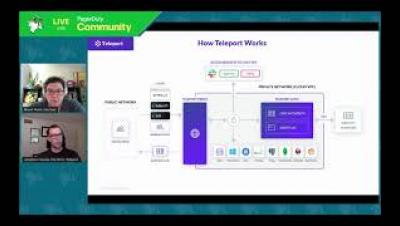
August has been a great month for Teleport. Our Series B round of funding , led by Kleiner Perkins, plus the arrival of secure MongoDB access with Teleport 7.0 is cause enough for celebration. In addition, Teleport has been officially Certified™ by Great Place to Work ®. This prestigious certification is based entirely on feedback from current employees; this year, an incredible 100% of our team members told us we are a great place to work.
One of the most worrisome trends in cybersecurity today is the skyrocketing incidence of supply chain attacks, such as the ones that hit SolarWinds last year and Kaseya more recently. Because they focus on compromising software development and delivery, supply chain attacks have forced developers and DevOps teams to scramble for solutions. Unfortunately, supply chain attacks are particularly challenging to prevent, detect and remediate, and, because of their stealthy nature, are often devastating.
The Forrester Wave™ Software Composition Analysis, Q3 2021 report states that open source components made up 75% of all code bases in 2020. This is more than double the 36% in 2015. As organizations increasingly rely on external components to quickly add functionality to their own proprietary solutions, they take on greater risk, especially considering these open source components may contain unmitigated vulnerabilities or violate organizations’ compliance policies.