Security | Threat Detection | Cyberattacks | DevSecOps | Compliance

MFA Best Practices 2026: From Basic to Phishing-Resistant Authentication

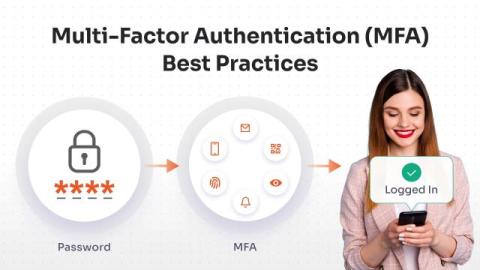
In 2022, Uber's systems were breached by an 18-year-old. Multi-Factor Authentication (MFA) was active, but the attackers flooded an employee's phone with push requests until they approved one, just to stop the annoyance. Authentication worked as designed, and the attacker got in. This is, in general terms, an MFA fatigue attack. Fast forward to Q1 2025. Rapid7 found that more than 56% of all compromises resulted from stolen credentials where no MFA was in place.

LLM Data Leakage Prevention: 10 Best Practices

Forget the breach notification email. Forget the security audit trail. A fintech user opened their chatbot last year, saw someone else’s account details staring back at them, and filed a support ticket. That’s how the team found out their LLM had been leaking customer PII for weeks. LLM data security isn’t a checkbox. It’s an architecture decision. Make it before the first model call, not after the first breach. Most teams get one expensive lesson before they understand that.

Meet HIPAA, GDPR, SOC 2, and NIS 2 requirements with Acronis Cyber Protect disaster recovery

You might feel sure that your organization can recover quickly from a cyberattack. But can you prove it? To remain compliant with major regulatory requirements, you have to be able to demonstrate recoverability. Compliance frameworks worldwide, including HIPAA, GDPR, SOC 2 and NIS 2, are increasingly requiring that organizations prove they can recover from system disruption, cyberattacks and data loss quickly and reliably. In other words, recovery time must be auditable.

What Data Is Required for EU AI Act Compliance

The EU AI Act places significant emphasis on documentation because regulatory oversight depends on an organization's ability to demonstrate how its AI systems operate and how associated risks are managed. Compliance is not determined solely by how an AI system performs, but by whether the organization can provide evidence that appropriate governance, risk controls, and oversight mechanisms are in place throughout the system lifecycle.

The Hidden Security Risks Living Inside Your APIs

Most organisations spend serious money on firewalls, endpoint protection, and threat monitoring. Yet one of the most commonly exploited attack surfaces gets far less attention: the APIs quietly running underneath almost every modern application. APIs are the connective tissue of today's digital infrastructure. They allow apps to talk to each other, enable third-party integrations, and power the real-time data exchanges that businesses depend on daily. They are also a favourite target for attackers who know that many organisations have not secured them properly.

How Scammers Use Travel SIM Sales to Steal Identity Documents

Most organisations spend serious money on firewalls, endpoint protection, and threat monitoring. Yet one of the most commonly exploited attack surfaces gets far less attention: the APIs quietly running underneath almost every modern application. APIs are the connective tissue of today's digital infrastructure. They allow apps to talk to each other, enable third-party integrations, and power the real-time data exchanges that businesses depend on daily. They are also a favourite target for attackers who know that many organisations have not secured them properly.

How to evaluate cybersecurity and fintech platforms before trusting them with your data

When we think about cyberattacks, we often imagine a scene from a movie where someone in a dark room is typing 300 words per minute to bypass a firewall. The reality of cybersecurity is a lot more boring, and in a way, more dangerous. Most major data breaches today start with very mundane access paths. We're talking about basic credential theft, simple phishing emails, or weak account recovery flows that a teenager could figure out. Misconfigurations in cloud storage-where someone simply forgets to lock the digital door-routinely cause more damage than exotic, high-tech exploits.

What is Smishing in Cybersecurity and How to Prevent it?

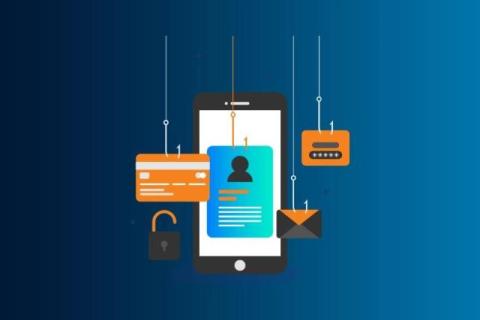
Cybercriminals are increasingly using sophisticated techniques such as smishing to exploit mobile users. Smishing is a type of scam conducted through SMS (Short Message Service). Attackers use this method to get people to give up private information or click on harmful links. This fraudulent method exploits the speed and trust people place in text messages by pretending to be a trusted organization, such as a bank or the government.

Best GRC software solutions for 2026

The right GRC platform does more than help you check boxes. As compliance requirements grow and security threats become more complex, Governance, Risk, and Compliance (GRC) software is essential for protecting your organization, enabling proactive risk management, and building stronger resilience. ‍ In this article, we review five of the best GRC solutions, highlighting their key features, strengths, limitations, and use cases, to help you pick the right tool for your organization. ‍ ‍