Security | Threat Detection | Cyberattacks | DevSecOps | Compliance

Preemptive Security, Governed Autonomy, and the Reality of Modern SOC Operations

Artificial intelligence is now central to every conversation about the future of security operations. Terms like autonomous, agentic, and preemptive are everywhere. Yet much of the discussion skips the harder question CISOs, SOC leaders, and boards actually care about: how AI can be applied responsibly, predictably, and at scale in real-world security operations. If we get this wrong, we do not just risk wasted investment. We risk eroding trust in the SOC itself.

How to Implement AI Code Generation Securely in Your SDLC

AI adoption is no longer a future state; it’s the current reality. According to the 2025 Stack Overflow Developer Survey, 84% of respondents are using or planning to use AI tools in their development process. But speed without guardrails creates debt, and in the case of AI, it creates security debt at an alarming rate. Recent data shows that nearly half of the time, AI assistants are likely introducing risky, known vulnerabilities directly into your codebase.

Reach Security Recognized as a Representative Provider of ASCA in the Gartner Innovation Insight: Automated Security Control Assessment

In its January 2026 research report, Innovation Insight: Automated Security Control Assessment, Gartner discusses why misconfigured security controls remain one of the most persistent drivers of breaches and why automation is now required to address the problem at scale.

Securing OT Access with Identity and Visibility: Kroll, Saviynt and Nozomi Networks

Industrial organizations face a new era of risk. As operational technology (OT) environments become more connected, the challenge of securing access and maintaining visibility continues to grow. In response, Kroll, Saviynt, Nozomi Networks and CrowdStrike have joined forces to deliver a unified solution that empowers organizations to protect their critical infrastructure without disrupting operations.

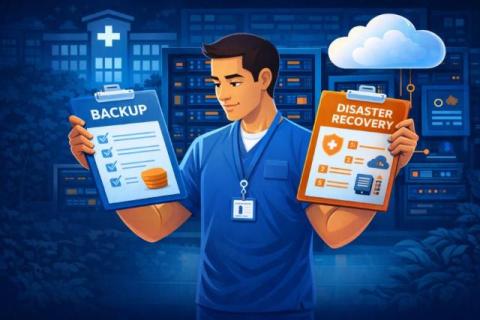
Backup vs Disaster Recovery for Medical Practices: What's the Difference?

Many medical practice administrators believe their organization is protected because “we have backups.” When asked about disaster recovery, they point to the same backup system. This confusion between backup and disaster recovery creates significant risk, because backup alone cannot restore operations quickly enough when systems fail. The distinction matters because patient care depends on system availability.

AWS KMS Vs Azure Key Vault Vs GCP KMS: Choose the Best Cloud Security Storage

Data breaches aren’t costing thousands anymore. They’re costing companies their reputation, their customers, and in many cases, their future. And here’s the part nobody tells you until it’s too late. It’s not always ransomware. It’s not always a missing patch. It’s not always some genius hacker breaking in through a zero-day exploit. It’s simply because someone gained access to the encryption keys.

Azure SQL Database Backup: A Complete Overview

Your Azure SQL database contains business-critical data that drives operations, analytics, and customer experiences. Losing this data, even temporarily, can impede revenue, damage customer relationships, and create compliance problems. Learning how to back up an Azure SQL database is essential for business continuity.

Practical Tips for Tracking Vulnerability Remediation Progress

When vulnerability remediation succeeds at enterprise scale, it’s very rarely because the vulnerability management team is finding more vulnerabilities. It’s because the program was built around the idea of turning messy findings into steady, measurable risk reduction. That’s not an easy task. It’s easier to make it a numbers game, pointing to vulnerability volumes and how many findings were addressed, rather than accurately depicting how much real risk was eliminated.

AI Infrastructure Needs an Agentic Identity Framework - We're Building It

AI agents are about to cross a threshold. For infrastructure and security leaders, agentic AI is no longer an innovation topic but a production readiness problem. What started as sandboxed applications and tech demos at trade shows (bet you’ve seen a few of those) has morphed into long-running autonomous actors operating directly in production cloud and on-prem infrastructure. They read data, write code, deploy services, access databases, and make decisions continuously across environments.