Yet Another Case for Using Exclude Patterns in Remote Repositories: Namespace Shadowing Attack
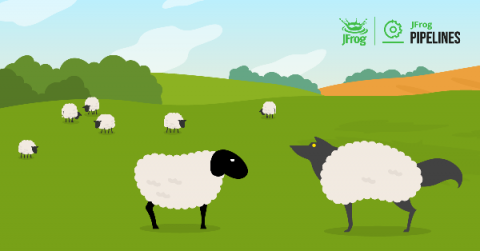
The npm Registry is vulnerable for supply chain impersonation attacks. Make sure you create npm scoped packages and force exclude patterns.
When it comes to securing your software development against open source vulnerabilities, the earlier action occurs — by the right person — the safer you and your enterprise will be. Many IT departments rely on the PagerDuty incident response platform to improve visibility and agility across the organization.
With so many esteemed adversaries competing in the same DevSecOps space, winning the “Best DevSecOps Solution” award feels even more special. We’re very grateful to the community and the DevOps Dozen2 judges who voted for JFrog Xray in this extremely tough category.
The SolarWinds hack, which has affected high-profile Fortune 500 companies and large U.S. federal government agencies, has put the spotlight on software development security — a critical issue for the DevOps community and for JFrog. At a fundamental level, if the code released via CI/CD pipelines is unsafe, all other DevOps benefits are for naught.
Earlier this year, we launched ChartCenter, our newest community platform to help Kubernetes developers find Helm charts. This new free Helm central repository was built with chart immutability in mind— meaning every version of a Helm chart and every version in ChartCenter will always be available even if the original source goes down.
In a prior blog post, we explained how to install or update Artifactory through the Azure Marketplace in the amount of time it takes for your coffee order to arrive on the counter. Now you can add to your self-managed (BYOL) Artifactory deployment Xray, the cream of software component analysis (SCA) tools, through the Azure Marketplace as well.
The best way to stay out of danger is to keep far away from where danger lurks. But in the internet age, the global network means risk to your systems is from everywhere, at all times. With estimates that worldwide damage from cybercrime will exceed 6 trillion dollars by 2021, many companies choose, or are required by regulations to isolate their most sensitive systems to avoid any type of security breach.
Adopting cloud native technologies like Kubernetes and Helm means your company’s operations can sail swiftly across the globe’s oceans to reach teams and customers. But there are dangers in the deep. With many components in Kubernetes, securing every dimension can be quite challenging and require a bit of learning curve. Let’s identify some important best practices that can help you to steer straight.
If your Helm charts could talk, what would they say to potential users? Would they boast of the power in the Kubernetes apps they deploy? Would they warn of their dangers? Would they offer advice? In JFrog’s new ChartCenter, a community repository of publicly available Helm charts, that’s exactly what they’ll do. ChartCenter reveals to users what known risks lie within the container images deployed by every Helm chart.
Most modern software today has moved aggressively into using third-party open source dependencies to reduce duplication and accelerate development by using pre-existing code.