Security | Threat Detection | Cyberattacks | DevSecOps | Compliance

EU AI Act Compliance Explained for CISOs and GRC Leaders

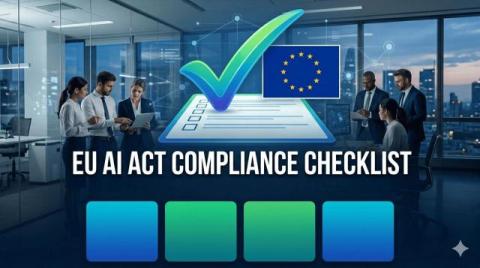
‍The European Union's Artificial Intelligence Act (EU AI Act) represents the first comprehensive attempt by a major regulator to establish legal oversight of artificial intelligence. Its objective is to ensure that AI systems deployed across the EU operate safely, transparently, and in a manner that protects fundamental rights.

CCPA Incident Response: Responding to Website Tracking Violations

Most websites host tracking systems that change continuously, tag by tag, pixel by pixel, version to version, often without anyone in privacy touching a line of code. Marketing adds a session replay script through the tag manager. Vendors quietly push updates to the tags. By the time it’s noticed in the next periodic review, the damage is done. Drift in tag behaviour leads to consent violations. And tracking scripts load and process data despite GCP signals.

GDPR Incident Response for Websites: What to Do When Tracking Violations Are Found

So your team just uncovered a GDPR tracking violation, a consent anomaly that, after a deeper look, turns out to be a pixel firing regardless of consent state.” From the looks of it, it’s definitely an ePrivacy violation. But the harder question, the one you now have to race against time to answer, is whether this is also a notifiable breach under GDPR. For that determination, you now have 72 hours. One gets fixed with a tag manager update and a stern email to marketing.

NIS2 vs DORA: Your Complete EU Cybersecurity Compliance Guide

By January 2025, over 160,000 EU organizations became subject to new cybersecurity regulations—NIS2, DORA, or both. If you operate in the EU or serve EU clients, you’re likely affected. This guide clarifies which regulations apply to you and what you must do to comply. Contents hide At-a-Glance Comparison Is Your Organization Affected? Question 1: Where Do You Operate? Question 2: What Sector Are You In? Question 3: What’s Your Company Size? What is NIS2?

When Do U.S. State Privacy Laws Apply? Scope and Thresholds Explained

While the objective of protecting personal data is to be lauded, the current setup in the US is one of the most complex in the world. Twenty states. Twenty different thresholds and definitions. ‘Sale’ means one thing in California, another in Virginia. Tracking 275 daily website visitors puts you in scope for CCPA/CPRA, but not Tennessee’s law. 274 keeps you out of both. Just determining if a law even applies has become a legitimate challenge for businesses.

The Monetary Authority of Singapore (MAS) on AI Risk Governance

‍ ‍The Monetary Authority of Singapore's (MAS) Consultation Paper on Guidelines on Artificial Intelligence Risk Management, released in November 2025, dramatically altered how AI is positioned within the country’s financial supervision. The document states that the proposed Guidelines "set out MAS' supervisory expectations relating to AI risk management in financial institutions (FIs)" (p.3).

The EU Cyber Resilience Act: What It Changes - and How Device Authority Helps Manufacturers Respond

The EU Cyber Resilience Act (CRA) establishes mandatory cybersecurity requirements for most products with digital elements placed on the EU market. It raises the baseline for secure-by-design/default engineering and, critically, makes post-market security support and evidence production a compliance obligation.

GDPR basics: Everything you need to know to keep your business compliant

The General Data Protection Regulation (GDPR) is a European Union (EU) regulation that governs the handling of personal data belonging to individuals in the European Economic Area (EEA). It is considered one of the strictest data privacy regulations globally. ‍ If your organization processes the personal data of EU/EEA residents, complying with the GDPR is mandatory.

GDPR and Data Retention

Rate this post Last Updated on January 16, 2026 by Narendra Sahoo GDPR and data retention — is an important aspect of organizations operating with large data processing requirements for their customers and third parties. One key area that organizations face challenges is how their data storage and handling should apply to customers: specifically, how long you’re allowed to store customer data, and why this is one of the areas where organizations get it wrong most often.

GDPR compliance for US companies: Step-by-step guide

Due to growing awareness of data privacy risks, organizations face mounting pressure from regulators to safeguard sensitive personal information. This can be particularly challenging for US companies, which must adhere to both domestic regulations, such as the CCPA and HIPAA, as well as international frameworks in their target global markets.