Security | Threat Detection | Cyberattacks | DevSecOps | Compliance

MyClaw Detailed Review: Is This OpenClaw Managed Hosting Worth It?

I've been working in the AI tools space for a while now, and one thing that comes up repeatedly is the gap between open-source AI frameworks and the actual effort required to run them. OpenClaw is a great example - powerful, flexible, and genuinely useful for building AI agents. But getting it deployed and keeping it running? That's a different story. That's what led me to try MyClaw AI. Here's an honest look at what the platform actually offers, who it's for, and whether it's worth the cost.
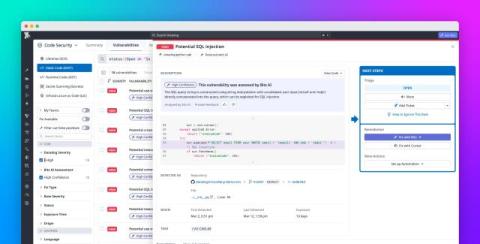

Introducing our open source AI-native SAST

Static application security testing (SAST) tools help developers quickly catch potential vulnerabilities as they code. However, these tools rely on inflexible rules that often generate a high number of false positives, reducing trust in their accuracy and slowing adoption. To help developers access context-aware vulnerability detection, we’ve released an open source AI-native SAST solution. This tool scans code changes incrementally and surfaces security issues in real time.

OpenClaw Needs Real Security Controls; We Built Them Open Source

AI agent adoption and development are evolving quickly. The tooling used to build agents is improving fast, but the security controls around those agents are often rigid, opaque, or difficult to adapt to real environments. As more teams experiment with OpenClaw, one challenge becomes clear: developers need ways to inspect what agents are doing, evaluate risky behavior, and intervene when necessary.

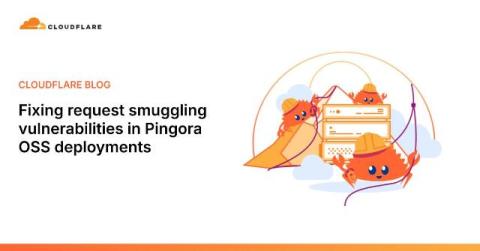
Fixing request smuggling vulnerabilities in Pingora OSS deployments

In December 2025, Cloudflare received reports of HTTP/1.x request smuggling vulnerabilities in the Pingora open source framework when Pingora is used to build an ingress proxy. Today we are discussing how these vulnerabilities work and how we patched them in Pingora 0.8.0. The vulnerabilities are CVE-2026-2833, CVE-2026-2835, and CVE-2026-2836. These issues were responsibly reported to us by Rajat Raghav (xclow3n) through our Bug Bounty Program.

What Is OSINT?

OSINT stands for open-source intelligence. It is the collection, analysis, and dissemination of information from publicly available sources, such as social media, government reports, newspapers, and other public documents. OSINT is commonly used by intelligence agencies, private investigators, and law enforcement to gather information about an individual or organization. The OSINT framework showcases the multiple ways in which organizations can gather intelligence.

The 89% Problem: How LLMs Are Resurrecting the "Dormant Majority" of Open Source

AI coding assistants are quietly resurrecting millions of abandoned open source packages. For the last decade, developers relied on a simple heuristic for open source security: Prevalence \= Trust. If a package was downloaded millions of times a week (lodash, react, requests), we assumed it was "safe enough" because thousands of eyes were on it. If it was obscure, we approached with caution.

Disclosure: XWiki CSS Injection (CVE-2026-26000)

During independent security research, a CSS injection vulnerability (CVE-2026-26000) was identified in the XWiki platform. XWiki is an open-source enterprise wiki and collaboration platform commonly used for internal documentation and knowledge management. According to XWiki, the platform has over 8,000 active installations and is used by organisations such as Lenovo and Amazon, meaning vulnerabilities can affect a large and diverse user base.

Open Source Supply Chain Security: Best Practices

Open-source components are the building blocks of modern software, enabling your team to innovate and deliver features faster. This reliance, however, introduces a significant challenge: your application’s security is now tied to a vast and complex supply chain of code you didn’t write. The risks are escalating, with attackers targeting open-source libraries to launch widespread breaches.

You can't rely on open source for security - not even when AI is involved

Open source libraries, packages, and models power nearly every product team today. They accelerate development, democratize innovation, and let teams stand on the shoulders of giants. But there’s a dangerous assumption creeping into engineering orgs: that open source — or AI trained on open source — will keep your software safe. That assumption is wrong. Open source gives you speed and community, not guaranteed security.

Introducing Aikido Package Health: a Better Way to Trust Your Dependencies

Aikido Package Health surfaces the true health of an open source package with a single score. It helps devs understand stability, maintenance quality, and supply-chain risk before installing a dependency. Aikido Package Health is a public service that assigns a clear Health Score to open source packages. It gives you an honest signal about which dependencies are well-maintained and safe to adopt, and which ones might need extra scrutiny before you pull them into your project. The goal is simple.