Security | Threat Detection | Cyberattacks | DevSecOps | Compliance

SEC Advances Crypto Asset Capital Formation Framework

On August 18, 2026, the SEC proposed Regulation Crypto Assets1, a new regulatory framework intended to create a tailored registration exemption regime for certain crypto asset offerings while maintaining core investor protection requirements. The proposal represents a significant evolution in the SEC's approach to digital assets and could provide the clearest pathway to date for crypto issuers seeking to raise capital in the United States.

Ship a Working Detection Pipeline in One Workshop: Headless SOC with Grid by LimaCharlie

By the end of this hands-on workshop, you will have deployed a working detection pipeline, ingested a cloud log source, and shipped a bespoke dashboard app, all using Claude Code integrated with Grid by LimaCharlie. Along the way, you will see how Grid compresses the traditional SIEM/EDR/SOAR stack into a single automated workspace. We go well beyond standard EDR and SIEM use cases. What to expect.

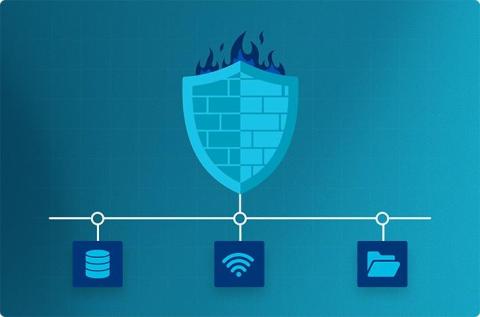
ESP32 Marauder tutorial for WPA2 deauthentication and handshake capture

Wireless networks are often assumed to be secure once WPA2 is enabled. In practice, that assumption is only partly true. While WPA2 remains widely used and is not inherently broken, the real security of a wireless network depends heavily on how it is configured, how client devices behave, and how strong the Pre-Shared Key (PSK) actually is. As a result, the protocol label alone can sometimes create a misleading sense of security.

The AI challenge most companies don't have

A few months ago, I attended a GC AI Summit hosted by Harvard Law School. As expected, there was plenty of discussion about AI tools, governance frameworks, emerging regulations, and the future of the legal profession. One topic of discussion stood out above the others: Most organizations only need to think about how they deploy AI, whereas we have to think about how we deploy AI and how we develop AI.

GPT-5.6 Sol Shows Why a Better Model Isn't a Uniformly Safer Model

Veracode Research’s latest secure-coding test finds GPT-5.6 Sol with a 15-point Python gain beneath modest aggregate movement, evidence that cyber capability and secure-code generation do not move in lockstep. OpenAI calls GPT-5.6 Sol its “strongest cybersecurity model yet.” Veracode’s extension test finds it scoring only two percentage points higher overall on secure-code generation than GPT-5.5, but it scores 15 points higher in Python.

The Vulnerability Tax: What CVE Response Costs at the Network Edge

Network edge vulnerabilities are accelerating. Cato’s cloud-native architecture reduces customers’ attack surface and shortens exposure to emerging vulnerabilities. The Cato CVE Exposure Calculator shows what that difference could mean for your organization. Another Known Exploited Vulnerability (KEV). Another emergency CAB. Another weekend spent upgrading firmware. You have to respond. The question is how much each response costs the business.

ServiceNow + UpGuard: Automating Risk Management Together

UpGuard connects to ServiceNow across the whole platform. Vendor risk findings, breach alerts, and user risk signals all land in the same ticket queue your team already works from, not a separate, siloed risk dashboard. With this integration, you can: Risk Automations makes this possible. You define the events that matter: a monitored vendor picks up a new risk, a risk score drops below a threshold you set, a credential breach turns up on a watched domain, or a questionnaire response comes in.