Security | Threat Detection | Cyberattacks | DevSecOps | Compliance

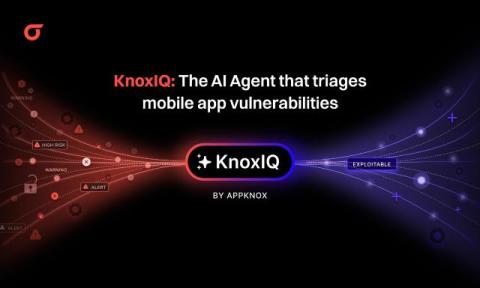
KnoxIQ: The AI Agent That Triages Mobile App Vulnerabilities

KnoxIQ is the agentic triage layer in Appknox. It takes the findings from your SAST and DAST scans, filters out the ones that aren't real and ranks the rest by how exploitable they are in your build. For each one, it shows you how to reproduce it and writes a fix for your app, including a prompt for Claude Code, Cursor, Github Copilot or any AI coding agent.

CrowdStrike 2026 Legal Threat Landscape Report: eCrime Leads Attacks, China Activity Intensifies

Cyber intrusions targeting the legal sector nearly doubled between 2023 and 2026, reflecting the value of legal entities to both eCrime and nation-state adversaries. Legal entities hold privileged communications, corporate transactions, intellectual property, government matters, and financial records that make them valuable targets for threat actors seeking financial gain or long-term strategic intelligence.

When AI Guardrails Expose Vulnerabilities

CrowdStrike researchers asked a frontier AI model to explain a function in a small C web server. While it had previously explained every other function in the codebase without hesitation, it refused to explain this one. The request was routine. We'd only asked what the code does; we hadn't asked about security, exploits, or vulnerabilities. But a single token in the code had changed: a max swapped for a min; a one-character logic inversion that creates an out-of-bounds write.

An Alert Doesn't Stop an Attack: Introducing Autonomous Defense

Security teams have never been better at finding problems. Discovery is broader, detection is sharper, and the volume of findings keeps climbing. But a finding is not a fix. When teams identify a risky AI agent, an exposed MCP server, or an active attack against an API, what happens next usually looks the same: someone triages it, someone opens a ticket, and someone on another team eventually makes the change. Until then, the risk stays exactly where it was.

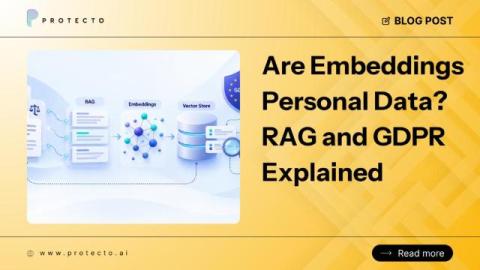
Are embeddings personal data? RAG and GDPR explained

Short answer: Do not assume an embedding is anonymous. An embedding can be matched back to the text it came from, and the text is usually stored right next to it. Treat each representation in a RAG pipeline as personal data when it can still be tied to a person, which is most of the time for chunk text. When the source record is deleted, every copy has to go. Your team builds a RAG assistant over HR policy and customer contracts. Documents go in, get chunked, get embedded, and land in a vector store.

PHP2Shell is in CISA KEV: why runtime visibility matters

Five days after PHP shipped the fix, CISA added both PHP2Shell flaws to its Known Exploited Vulnerabilities (KEV) catalog. Federal civilian agencies have until October 29 to remediate. Last week’s question was whether attackers could turn the flaws into working shells. This week’s question is which of your images and hosts still run an affected PHP build, and who can fix each one.

Social Engineering Attacks Against Businesses: Examples, Risks, and Prevention

Social engineering attacks differ from other cyberattacks most businesses face. In this type of attack, attackers exploit human trust rather than depending only on technical vulnerabilities. They impersonate employees or business partners to trick people into sharing sensitive information or transferring money. In some cases, they are also granted unauthorized access to company systems.

What Is Penetration Testing? Types, Stages and How Often to Test

Every business with a website or email accounts has weak spots, and penetration testing helps you find them before an attacker does. Security experts try to break in the way a real hacker would, so you can see whether your defences hold up. The test itself is only the start. How often you test and what happens with what the testers find, decides whether a report makes you any safer. Both are worth knowing before you compare penetration testing services.