Security | Threat Detection | Cyberattacks | DevSecOps | Compliance

Securing Agentic AI Workflows in n8n: From Leaked API Keys to Encryption Key Compromise

A leaked n8n API key is only the start. GitGuardian's research traces the full chain, from exposed tokens and weak keys to CVE-2026-25053 and the N8N_ENCRYPTION_KEY that protects every stored credential, then lays out a hardened configuration to break it.


How to Use Teleport and GitHub Actions to Deploy to Kubernetes Without Shared Secrets

We live in the era of Kubernetes. And if you are using Kubernetes, you are probably using CI/CD to deploy your applications into it. However, as CI/CD and Kubernetes have grown in popularity, the number of bad actors looking to exploit weaknesses in them has also grown. It is critical that modern security techniques keep your Kubernetes clusters, and the sensitive data and services within them, safe from attack.

Your Scanners See a Different Internet Than Your Users Do

A few years ago, cloaking was mostly a black hat SEO problem. Someone would serve one version of a page to Googlebot and another to human visitors, and the worst outcome was a spammy search result. It has since become one of the more effective evasion techniques in the phishing and malvertising toolkit, and most security teams are still measuring their external exposure from a vantage point that attackers stopped caring about some time ago.

6 Administrative Tasks Every Personal Injury Law Firm Can Automate With AI in 2026

Personal injury law firms spend a significant amount of time on administrative work that supports-but does not replace-legal expertise. Reviewing medical records, preparing demand letters, drafting litigation documents, organizing case files, summarizing evidence, and communicating with clients are all essential parts of managing a case, yet they can consume valuable hours every week.

Shadow AI Is the New Shadow IT: Getting Visibility Into the Models Your Teams Already Use

Security teams spent a decade wrestling shadow IT - the unsanctioned SaaS accounts, personal Dropboxes, and rogue cloud instances that employees adopted faster than governance could follow. That battle produced hard-won playbooks: discover, broker, monitor. Now the same movie is replaying with AI, at higher speed and with higher stakes. Developers embed model APIs into services over a lunch break, marketing teams paste customer data into chatbots, and product features quietly ship with third-party inference behind them. Most organizations today cannot answer a basic question.

Why Traditional Security Monitoring Is No Longer Enough in 2026

Cybersecurity has become significantly more complex over the past few years. Attackers no longer rely solely on mass phishing campaigns or simple malware. Modern threat actors use automation, artificial intelligence, credential theft, living-off-the-land techniques, and multi-stage attacks designed to evade traditional security controls. As a result, organizations that still depend on conventional monitoring tools often struggle to detect and contain threats before damage occurs.

From executive order to operational reality: a federal AI SOC blueprint

The June 2, 2026 White House Executive Order on Promoting Advanced Artificial Intelligence Innovation and Security has officially set the clock ticking. With mandates requiring CISA and federal agencies to deploy AI-enabled defensive tools on civilian systems, the directive for Federal CIOs, CISOs, and SOC Directors is clear: AI adoption is an operational requirement to effectively defend federal networks.

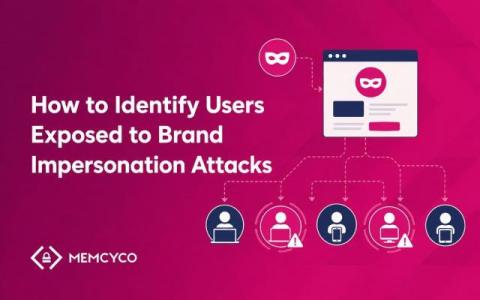
How to Identify Users Exposed to Brand Impersonation Attacks

Most organizations have become better at finding brand impersonation attacks. They can detect fake domains, identify cloned websites, report phishing pages, initiate takedowns, and warn customers when an impersonation campaign becomes visible. That work matters. But it does not answer the question that often matters most once the attack is live: Which users were exposed? Finding fake sites is only half the problem. Understanding who encountered them is where effective protection begins.

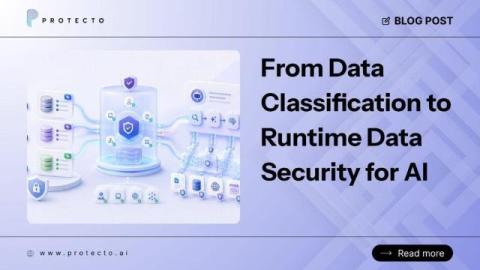
From Data Classification to Runtime Data Security for AI

Authentication used to be a login form. Then it became IAM: identity providers, roles, federation, lifecycle. Then it became Zero Trust: no built-in trust, every request checked in context. Each step did not replace the last so much as fold it into a bigger runtime decision. The login still happens, but it is now one input to a constant, context-based check.