Security | Threat Detection | Cyberattacks | DevSecOps | Compliance

5 Ways to Detect Malicious Activity & Protect Your Kubernetes Workloads

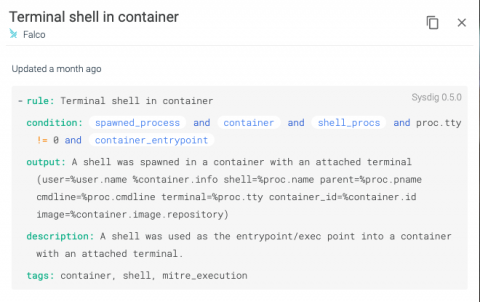
Organizations are rapidly moving more and more mission-critical applications to Kubernetes and the cloud to reduce costs, achieve faster deployment times, and improve operational efficiencies. But security teams struggle to achieve a strong security posture with Kubernetes and cloud-based resources because of the inability to apply conventional security practices in the cloud environment.
Protection from malicious Python libraries jeilyfish and python3-dateutil

Two malicious Python libraries, jeilyfish (with a capital i and a lowercase L in the original name) and python3-dateutil, were detected on PyPI (Python Package Index) on December 1st. They were typosquatting similar named legitimate libraries jellyfish (with a double lowercase L) and python-dateutil libraries, a malicious technique aiming to trick developers to use the similar named modified libraries.

Five Ways to Quickly Uncover Malicious Activity and Protect Your Kubernetes Workloads

Organizations are rapidly moving more and more mission-critical applications to Kubernetes (K8s) and the cloud to reduce costs, achieve faster deployment times, and improve operational efficiencies, but are struggling to achieve a strong security posture because of their inability to apply conventional security practices in the cloud environment. Commitment to cloud security grows, but security safeguards are not keeping up with the increased use of the various cloud platforms.
PSA: Beware of Exposing Ports in Docker

Docker is an awesome technology, and it’s prevalent in nearly every software developer’s workflow. It is useful for creating identical environments and sharing them between development, testing, production, and others. It’s a great way to ship a reliable software environment between systems or even to customers. However, like with any technology, one must know how to be secure when using it.

Modern compliance with Sysdig Secure DevOps Platform

Authorization to Operate (ATO) in a day and on-going authorization are compliance nirvana. The ATO is the authorizing official’s statement that they accept the risk associated with the system running in production environments using live business data. The idea that all of the information necessary to make a risk decision is at hand and can be consumed by decision makers is what every compliance program is trying to achieve.

Inline Image Scanning for AWS CodePipeline and AWS CodeBuild

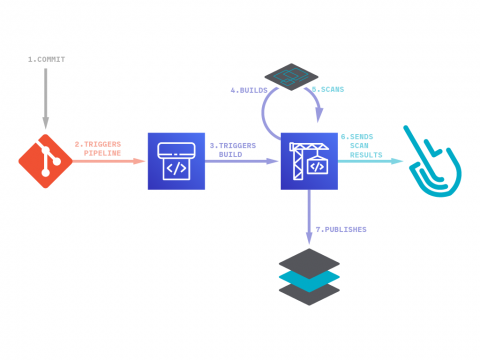
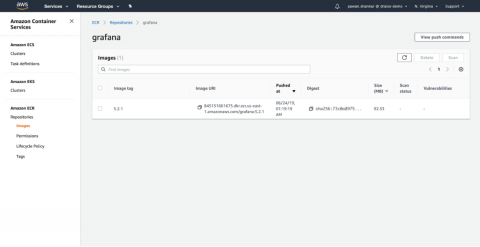
In this blog post you’ll learn how to set up image vulnerability scanning for AWS CodePipeline and AWS CodeBuild using Sysdig Secure DevOps Platform. AWS provides several tools for DevOps teams: CodeCommit for version control, CodeBuild for building and testing code, and CodeDeploy for automatic code deployment. The block on top of all these tools is CodePipeline that allows them to visualize and automate these different stages.

Sysdig extends security across all AWS container services

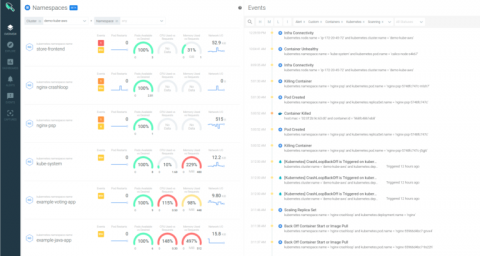
Cloud teams are increasingly adopting AWS container services to deliver applications faster at scale. Along with the roll out of cloud native architectures with containers and orchestration, what’s needed to stay on top of the security, performance and health of applications and infrastructure has shifted. At Sysdig, we’ve worked with Amazon to provide tools and integrations that help secure your Cloud Native workloads deployed across all AWS container services.