Security | Threat Detection | Cyberattacks | DevSecOps | Compliance

Best Open-Source Kubernetes Security Tools: From Alert Fatigue to Full Attack Stories

Your morning scan returns 3,000 CVEs. Maybe a dozen actually matter. But which dozen? You’re running Trivy for image scanning, Falco for runtime detection, kube-bench for compliance, and Calico for network policies. Each tool generates alerts in its own format, its own dashboard, with its own context. When an incident happens, connecting a vulnerable image to a misconfigured RBAC role to a suspicious process requires manual work that doesn’t scale past a handful of clusters.
Best Kubernetes & Container Security Dashboards: Top 8 Tools for 2026

What is a Kubernetes security dashboard? A visual interface showing your clusters’ security state—what’s vulnerable, what’s under attack, and what to fix first. Different from general dashboards like Lens or Rancher, which focus on cluster management rather than threat detection. Why do most security dashboards fail? They create more work. Alerts are siloed across tools, forcing hours of manual correlation.

Sidecarless mTLS in Kubernetes: How Istio Ambient Mesh and ztunnel Enable Zero Trust

Encrypting internal traffic and enforcing mutual (mTLS), a form of TLS in which both the client and server authenticate each other using X.509 certificates., has transitioned from a “nice-to-have” to a hard requirement, especially in Kubernetes environments where everything can talk to everything else by default.

Docker Hardened Images are Free: Scale Their Adoption with JFrog

Securing your Docker containers just got a lot easier. On December 17, Docker announced that their catalog of over 1,000 Docker Hardened Images (DHI)—previously a premium-only feature—is now free and open source. This big change means every developer can now start their Dockerfile with a minimalist, near-zero CVE, SLSA Level 3 compliant foundation.

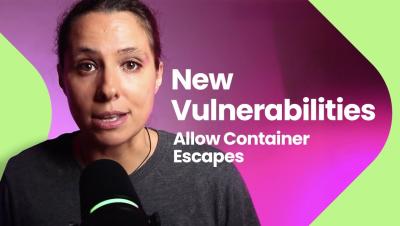
runc container escape explained: Critical container vulnerabilities & host takeover risk

Containers are supposed to be isolated — but what happens when that isolation breaks? In this video, we explain critical container escape vulnerabilities in runc, the default container runtime used by Docker and Kubernetes, and why they represent a serious container security risk. Recent disclosures known as the “Leaky Vessels” vulnerabilities show how a compromised container can escape its sandbox, access the host filesystem, and potentially take over the node.

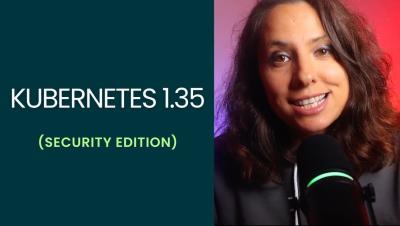
Kubernetes 1.35 Security Changes: cgroup, WebSockets, Image Pull Auth + More

It’s December, and Kubernetes 1.35 is almost here - with security changes that can break workloads or access paths if you upgrade unprepared. This video is a fast, practical security edition rundown for security and platform engineers: what changed, why it matters, and what to verify before you roll 1.35 into production. In this video (Kubernetes 1.35 security highlights): If you want a deeper dive, comment with what you’re running today (managed K8s vs self-managed, distro, container runtime, auth setup) and I’ll break down the safest upgrade path.

KubeVirt installation on public cloud/upstream clusters

The default node pool VMs (worker nodes) in Azure do not have Intel virtualization extensions (VT-x) enabled. When trying to create a guest VM, you will see that the kubevirt VM pod will be unschedulable with the following error message: To fix this, you need to create a new node pool using an Azure VM flavor that has VT-x extensions. (those from the Ds_v3 series all have them)

Falco for Kubernetes runtime security (eBPF, Rules, Tuning & Alerts)

Runtime attacks don’t wait for your next scan. Falco detects suspicious behavior in real time across Kubernetes, containers, and Linux hosts—using syscall signals (eBPF/kernel module) plus a rule engine and plugins. In ~10 minutes, you’ll learn how Falco works end-to-end, where it fits in a modern cloud-native security stack, and how to operationalize it without drowning in noise. In this video: Getting started checklist (practical).