Security | Threat Detection | Cyberattacks | DevSecOps | Compliance

AI Meets Kubernetes Security: Tigera CEO Reveals What Comes Next for Platform Teams

Platform teams are tasked with keeping clusters secure and observable while navigating a skills gap. At KubeCon + CloudNativeCon North America, The New Stack spoke with Ratan Tipirneni, President and CEO of Tigera, about the future of Kubernetes security, AI-driven operations, and emerging trends in enterprise networking. The highlights from that discussion are summarized below.

Best 5 Platforms to Help Eliminate CVEs from Container Images

The rapid adoption of containerized applications has reshaped software development and deployment across industries. Containers allow teams to deliver updates faster, scale efficiently, and manage dependencies with precision. However, this flexibility comes with a critical challenge: vulnerabilities hidden inside container images.

The Rise of the Kubernetes based OpenStack Control Plane

OpenStack has long been the go-to platform for building private clouds, but its architecture, particularly the control plane, has undergone a significant transformation in the 15 years since its inception. The original design, a tightly coupled 3-node control plane, provided a stable foundation but presented challenges in scalability, resilience, and operational complexity.

Understanding the Fundamentals

Docker and OpenShift solve different problems in containerization. Docker creates and runs containers, while OpenShift manages container deployments at enterprise scale using Kubernetes underneath it. Docker vs. Openshift isn’t about choosing one over the other but rather understanding which tool fits your specific use case. Docker excels at application packaging and local development. OpenShift handles production orchestration, security policies, and multi-team environments.

A Detailed Look at the Calico Ingress Gateway

The Kubernetes community recently announced that Ingress NGINX, one of the most widely used Ingress controllers, will be retired. This change means teams need to plan for a secure, modern, and future-proof alternative for managing Kubernetes traffic. The Kubernetes SIG Network and the Security Response Committee confirmed that the project will only receive basic maintenance until March 2026. After that, there will be no new releases, bug fixes, or security updates.

Securing Kubernetes Traffic with Calico Ingress Gateway

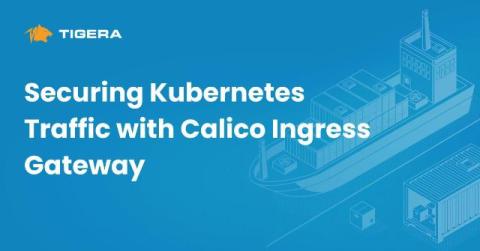
If you’ve managed traffic in Kubernetes, you’ve likely navigated the world of Ingress controllers. For years, Ingress has been the standard way of getting our HTTP/S services exposed. But let’s be honest, it often felt like a compromise. We wrestled with controller-specific annotations to unlock critical features, blurred the lines between infrastructure and application concerns, and sometimes wished for richer protocol support or a more standardized approach.

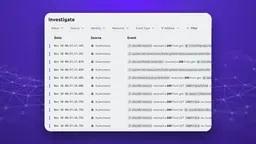
Investigate Amazon EKS Audit Logs with Teleport Identity Security

In Teleport 18, we’ve added official support to import Amazon EKS Audit Logs into Teleport Identity Security. This capability allows teams to have visibility into actions performed on Amazon EKS clusters when those actions were not executed via Teleport. Amazon EKS Audit Logs in Teleport Identity Security will be generally available in Teleport 18.3, coming November 2025. Your browser does not support the video tag.

Zero-Trust with Zero-Friction eBPF in Calico v3.31

Calico has used eBPF as one of its dataplanes since version 3.13, released more than five years ago. At the time, this was an exciting step forward, introducing a new, innovative data plane that quickly gained traction within the Calico community. Since then, there have been many changes and continued evolution, all thanks to the many adopters of the then-new data plane.

Beyond the Scan: The Future of Snyk Container

At Snyk, our mission has always been to empower developers to build secure applications without slowing down. The importance of a developer-first approach is even more critical with the proliferation of AI use and in the world of cloud-native development. This means rethinking container security. It’s no longer enough to just scan a Dockerfile or a finished image at a single point in time.