Security | Threat Detection | Cyberattacks | DevSecOps | Compliance

5 Top Container Image Security Platforms for 2026

Technology changes every year, and one of the biggest shifts over the last decade has been a deep investment into the use of containers. Containers offer a lot of potential benefits, particularly for information security, but they also present serious risks of their own. Those risks can be mitigated, but you need to understand that the problem exists before you can address it.

Secure What Matters: Scaling Effortless Container Security for the AI Era

In November, we shared our vision for the Future of Snyk Container, outlining a fundamental shift in how teams secure the modern container lifecycle. We promised a future where security doesn’t just “scan” but scales effortlessly with the speed of the AI-driven, agentic world. Today, we are thrilled to announce that we are moving from vision to reality.

Container Security Without Context Is Just More Noise

Mend.io’s new Docker Hardened Images integration brings DHI intelligence directly into the AppSec workflow, giving a smarter, faster path to container security. Container scanning has a noise problem. Run a standard scan against any production image, and you’ll surface thousands of CVEs.

How Minimal Container Images Are Reshaping the Fight Against CVE Exposure in Modern Cloud Environments

As the adoption of containers grows across Cloud infrastructure, Cybersecurity experts and DevSecOps leaders continue to deal with the persistent surge of publicly available software vulnerabilities. The National Vulnerability Database documented an alarming figure of 29,000 CVEs for 2023, and the numbers since then show no signs of slowing down. Research shows that the majority of production container images have known vulnerabilities. This article explores the relationship between container images and CVE vulnerabilities (exposure), the growing burden of compliance, and the target risk reduction of minimal-image strategies.

How to Stub LLMs for AI Agent Security Testing and Governance

Note: The core architecture for this pattern was introduced by Isaac Hawley from Tigera. If you are building an AI agent that relies on tool calling, complex routing, or the Model Context Protocol (MCP), you’re not just building a chatbot anymore. You are building an autonomous system with access to your internal APIs. With that power comes a massive security and governance headache, and AI agent security testing is where most teams hit a wall.

Kubernetes for Agentic AI: Best Practices for Security and Observability

Agentic AI workloads are shipping to production on Kubernetes faster than the standards to secure them. Many teams deploying autonomous, tool-calling agents as containerized microservices do so without a shared baseline for securing or monitoring those containers. The CNCF AI Technical Community Group recently published a comprehensive article on cloud-native agentic standards, marking the first attempt to define best practices for such deployments.

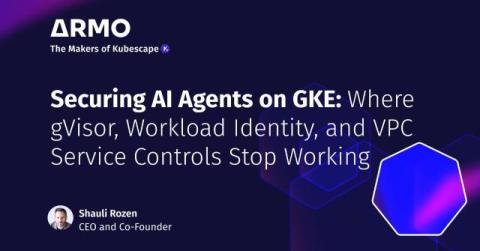
Securing AI Agents on GKE: Where gVisor, Workload Identity, and VPC Service Controls Stop Working

You enable GKE Sandbox on a dedicated node pool, bind Workload Identity Federation to your AI agent pods, wrap your data services in a VPC Service Controls perimeter, and deploy your agents with the Agent Sandbox CRD using warm pools for sub-second startup. Your security posture dashboard shows every control configured and active. And then an attacker uses prompt injection to trick an agent into exfiltrating sensitive data through API calls that every single one of those layers explicitly allows.

Unify Kubernetes, VMs, and AI with VCF 9

Managing modern IT infrastructure often feels like balancing completely different ecosystems. For years, organizations have run separate, hand-built, Kubernetes stacks on top of legacy virtualization platforms. Due to security concerns, it just made sense to build a separate, tailored container environment that they could automate and schedule their exact needs. This fragmented approach leads to inconsistent security policies, fragile integrations between clusters, and operational silos.