Security | Threat Detection | Cyberattacks | DevSecOps | Compliance

Asset Visibility and Behavior: The Keys to Segmentation Success

Recently, Gartner® refreshed one of its foundational cybersecurity research, “The 6 Principles of Successful Network Segmentation Strategies.”1 The principles covered in the research are tried and true. Segmenting networks to improve security and performance is nothing new to security teams, yet the same challenges persist year after year.

Need to Improve Efficiency? Access the Data in Your Network for Better Performance, Security, and Reliability

TLDR – watch our presentation on the Tech Field Day YouTube Channel. How many times have you been asked to improve efficiency, do more with less, or work with fewer staff than needed due to talent shortages or resource constraints? Throughout my decades-long IT career, the network has been the backbone of the business – yet our teams are always expected to do more with less and to be bulletproof while we’re doing it. And somehow, we always rise to the challenge.

Detect the Most Common Ransomware TTPs to Prevent Attacks

In our new threat briefing, Forescout’s Vedere Labs details tactics, techniques and procedures (TTPs) commonly adopted by ransomware groups and provides specific mitigation recommendations. In addition to basic cyber hygiene practices, we recommend using Forescout XDR for extended detection and response. Its 1,500+ detection rules cover hundreds of the TTPs most commonly used by ransomware.

Merging WAF and IAM Capabilities for Next-gen Security | Scott Tomilson (Sr.Director, Ping Identity)

In this podcast, Scott Tomilson (Sr.Director, Ping Identity) talks with Venky about best practices for implementing Single Sign-On (SSO) in SaaS apps. He also discusses how applications are at risk due to humans, devices, and apps. And having behavioral-based anomaly scoring and security is the need of the hour.

Are You Trapped in the Upside-Down World of Networking and Security?

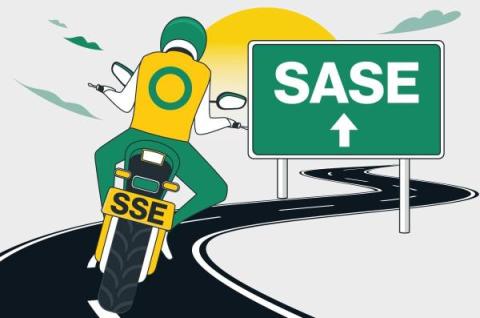
Many enterprises today are exploring the benefits of Secure Access Service Edge (SASE). SASE is a modern networking and security solution for enterprises that converges SD-WAN and network security solutions like NGFW, IPS, and NGAM. SASE provides a single, unified and cloud-native network and security service that is adapted to current and future technology and business needs.

How to Safely Stream Movies on Your TV: Tips for Protecting Your Privacy and Security

The perks of streaming movies on your TV are numerous compared to its cons. Some of these perks include; delivering music and shows faster, regulating what you watch, and conserving storage space since you don't download content. You can always rewatch old choice shows on your time. You can also explore new shows and stream live events like college basketball, NFL games, and other sports at a lesser cost.

Leverage IP and CIDR IOBs with SecLytics Cloud Threat Exchange Plugin

The Netskope Security team is happy to announce the official release of our newest Cloud Threat Exchange plugin built in-house, which now allows users to pull threat data discovered by SecLytics. This integration leverages the SecLytics Bulk API to allow users to pull identified URL, IP, and CIDR block indicators of behavior (IoBs) into Cloud Exchange.

How Corelight Transforms Data Security with Normalyze

When organizations need to know not only what type of malicious activity potentially occurred within their networks and clouds but also gather the remnants of that activity as evidence — they turn to Corelight. Corelight's customers include Fortune 500 companies, major government agencies, and large research universities. Based in San Francisco, this open-core security company was founded by the creators of the widely-used network security technology, Zeek.

Expand visibility around authentication and application anomalies with Corelight's new LDAP analyzer

Comprehensive visibility into network protocols is a hallmark of Zeek (and therefore Corelight) data. That's why we are very happy to announce that with our v27.2 release we are supporting a new analyzer for the LDAP protocol. You likely know LDAP as a workhorse for carrying directory information across the network. While it's an open standard, it's most often seen as part of several server implementations, especially Microsoft's Active Directory, OpenLDAP, and others.