

Security | Threat Detection | Cyberattacks | DevSecOps | Compliance

How incident.io and Apono Enable Just-in-Time Access for Incident Response

Picture this: it’s 2am, your pager goes off, and you’re staring at a production database that’s on fire. You know exactly what’s wrong. You know exactly how to fix it. But you can’t touch anything because you’re waiting on someone to approve your access request. Meanwhile, your customers are down, your SLAs are bleeding out, and you’re refreshing Slack, and every minute you spend waiting is another minute of damage you could’ve prevented.


Are there any real alternatives to Akeyless in 2026?

Akeyless has earned its place as one of the strongest cloud-native secrets management platforms available. Their Distributed Fragments Cryptography technology, FIPS 140-2 Level 3 certification, and native DevOps integrations make them a popular choice for teams migrating away from self-hosted HashiCorp Vault. But Akeyless is not the right fit for every use case. Akeyless alternatives like SplitSecure split secrets across devices instead of cloud servers which reduces vendor dependency, third party risk and custody concerns.

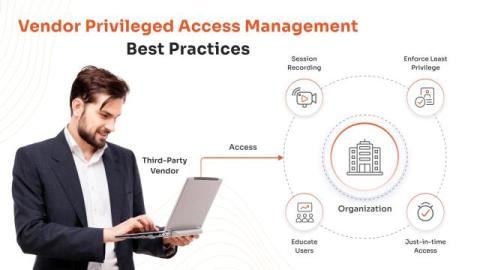
11 Third-Party Vendor Privileged Access Best Practices

Third-party vendors are an essential part of modern enterprise operations, providing critical services such as infrastructure maintenance, application support, system integrations, and managed IT services. To perform these tasks, vendors often require remote access to internal systems, frequently with elevated privileges. While this access enables operational efficiency, it also introduces significant security risks if not managed properly.

6 Data Governance Principles You Need to Know

At some point, something bad always happens. Incidents like NHI sprawl and data ownership are always preventable. A supply chain attack finds its way either through upstream infiltration or downstream delivery. However, despite being aware of this, the problem persists. 54% of large organizations see supply chain challenges as a barrier to cyber resilience. There is complexity and interdependency among different systems, software, and teams that require access to one another.

Selling to Regulated Customers: 5 Requirements You Need to Know and Prove

So you’ve got a groundbreaking product that has outstanding market fit. Your prospects love it and are raring to buy. Amazing. But before they can hit approve on the order, they need to make sure you’re SOC 2 or ISO 27001 compliant because their compliance officer won’t let them work with any vendor that hasn’t passed their audit. This is the joy of selling to regulated customers — which today, let’s be honest, is almost everyone.

Common Security Gaps Solved by Managed IT Services

In today's digital world, security threats can affect every part of your business. Many companies install cybersecurity tools but still leave openings hackers can exploit. Even with strong software, human mistakes, outdated systems, and overlooked processes create vulnerabilities. Recognizing these common security gaps and understanding how managed services can address them is essential for keeping data safe, clients confident, and daily operations running without interruptions.

Privileged Access as a Growth Strategy in a Perimeterless World

Cybersecurity is no longer just an IT concern; it is now a strategic priority in the boardroom. As enterprises operate without a fixed perimeter, depend on cloud providers for infrastructure and build partnerships across digital ecosystems, controlling access to critical systems and data has become essential to doing business. Privileged Access Management (PAM) plays a key role in securing this new environment.

Delegation in Active Roles

In just three minutes, explore the fine-grained delegation capabilities in Active Roles that can keep your privileges and permissions under control for maximum AD security. Examine Active Roles features with Ian Stimpson, One Identity Solutions Architect, to see the centralized, policy-driven permissions delegation that can drastically reduce your AD attack surface.

Data Governance Policy: 9 Fundamental Components

In 2026, you’re not just managing clusters and pipelines; you are managing the risk associated with the data flowing through them. As environments become decentralized and agentic, traditional, static data governance policies have morphed from inefficient to a security liability. The financial stakes of data governance failures have reached an all-time high. The average cost of a data breach in the United States has reached $10.22 million.