Security | Threat Detection | Cyberattacks | DevSecOps | Compliance

Why 2026 is the Year of Proactive Cyber Threat Intelligence

In the early days of IT, cybersecurity was like a digital burglar alarm—it chirped after someone already broke a window. But as we move through 2026, the game has fundamentally changed. We are no longer just fighting “hackers”; we are navigating a global landscape where cyberspace is the invisible frontline of international conflict. With war tensions escalating across the globe, the digital world has become a primary theater for state-sponsored attacks.

Proactive Threat Management Strategies for Modern Cybersecurity

Businesses are under increasing pressure to protect their digital assets as cyber threats continually evolve. Threat management is now an important part of modern cybersecurity because it enables companies to detect, mitigate, and respond to threats in real time. Effective advanced threat protection not only reduces risk but also makes businesses more resilient, ensuring operations remain secure and uninterrupted.

What Is OSINT?

OSINT stands for open-source intelligence. It is the collection, analysis, and dissemination of information from publicly available sources, such as social media, government reports, newspapers, and other public documents. OSINT is commonly used by intelligence agencies, private investigators, and law enforcement to gather information about an individual or organization. The OSINT framework showcases the multiple ways in which organizations can gather intelligence.

Evolving Cloudflare's Threat Intelligence Platform: actionable, scalable, and ETL-less

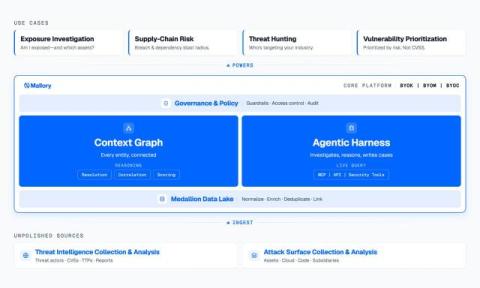
For years, the cybersecurity industry has suffered from a "data gravity" problem. Security teams are buried under billions of rows of telemetry, yet they remain starved for actionable insights. A Threat Intelligence Platform (TIP) is a centralized security system that collects, aggregates, and organizes data about known and emerging cyber threats. It serves as the vital connective tissue between raw telemetry and active defense.

Scaling Threat Intelligence: Building Threat Intelligence Capabilities Without Expanding Headcount

As cyber threats grow and hiring slows, security leaders must scale smarter. This blog explores how to strengthen threat intelligence capabilities through automation, integration, and risk-led prioritisation, without expanding headcount.

What Happens When You Start Shrinking the Attack Surface

In April 2025, a logistics firm suffered a breach that followed a pattern security teams are seeing with increasing frequency—one that began with a single forgotten API. It wasn’t a zero-day exploit, or a sophisticated nation-state intrusion. It was an exposed development endpoint—one that had quietly been left online long after its purpose was served.

Top 10 Threat Intelligence Tools for 2026

In 2026, threat intelligence isn’t just about tracking malware families or IP reputation. It’s about catching the earliest signals of identity abuse: stolen credentials, suspicious logins, token misuse, and privilege escalation attempts that move fast through cloud and SaaS environments. Credential abuse remains a key initial access vector, accounting for 70% of breaches. In response, modern threat intelligence tools are prioritizing identity signals.