Security | Threat Detection | Cyberattacks | DevSecOps | Compliance

RaccoonLine Technical Report Details the Efficacy of Residential P2P Nodes in Overcoming Range-Based IP Blocking

RaccoonLine, a decentralized networking provider, has released a technical report addressing the limitations of protocol obfuscation in the face of modern "range-based" IP blocking. The findings detail how national censorship systems now identify and blacklist data center IP ranges within hours of deployment, and how RaccoonLine's P2P residential node architecture provides a structural solution to this enforcement trend.

MSPs, Cyber Resilience, and the Human Side of Security with James McMillan

In this episode of The 443, Marc Laliberte and Corey Nachreiner speak with James McMillan, CTO of Redinet Limited, about what it really takes for MSPs to help customers stay ready, responsive, and secure. From AI’s role in security operations to the human trust behind every strong customer relationship, this conversation goes beyond tools and into what resilience actually looks like in practice.

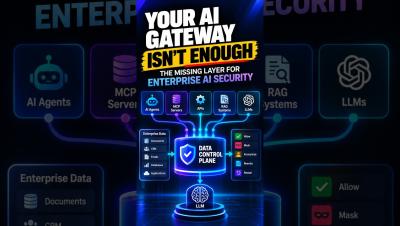
Salt Agentic Security Platform

Most enterprise AI security investment is focused on the model layer—guardrails, output filtering, LLM governance. That's necessary. It's not sufficient. AI agents take actions: they call APIs, invoke MCP servers, access databases, and trigger downstream workflows. The Salt Security Agentic Security Platform was built to secure that action layer (the infrastructure your agents actually operate across).

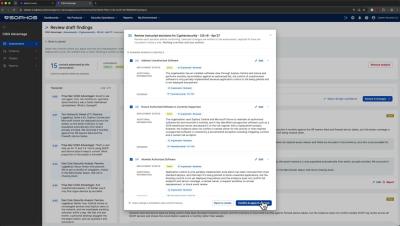
Sophos Email: Configure Self Service Portal for end-users

A step-by-step tutorial showing you how to grant access to and configure the Sophos Central Self Service Portal (SSP) for end-users. This web interface allows end-users to perform daily tasks related to email management and more (depending on the configuration) without the need of an administrator. Ask questions and get expert answers in the Sophos Community.

OpenAI Daybreak and the Future of Secure Software Development

OpenAI recently introduced Daybreak, a cybersecurity initiative designed to apply frontier AI models to vulnerability discovery, secure code analysis, and earlier remediation across the software lifecycle. By combining advanced reasoning and planning capabilities, Daybreak aims to help organizations identify and address weaknesses before they reach production. This is a meaningful step forward, but it is also a continuation of a long-standing approach.

Turning Security Telemetry Into Actionable Insights

Modern security environments generate enormous volumes of telemetry. Authentication events from identity platforms, API activity from cloud services, endpoint security logs, email interactions, and network traffic can all flow into centralized systems. For most organizations, the challenge is no longer data collection. The real problem is extracting meaningful insight from that data without overwhelming analysts or introducing operational friction.

AI Agent Attack Detection: The Complete Framework for Security Teams

It usually starts the same way. The CISO comes back from a board meeting having signed off on agentic AI for production. The SOC lead is told, in roughly that many words, to build detection for the agents. And the security stack she has — CNAPP for posture, EDR on the nodes, container runtime sensors, a SIEM ingesting everything — was architected before AI agents existed as a workload class.