In this Session at GISEC Global 2026, Dubai Exhibition Centre (DEC), Expo City, our Founder & CEO, Mr. Anirban Mukherji, discussed the importance of balancing AI innovation, data sovereignty, privacy, and national security in the era of frontier Large Language Models.
In 2020, the SolarWinds attack exposed the vulnerability of supply chains worldwide, a problem this episode’s guest, Matt Moore, had already been working to solve for years. In 2021, he co-founded Chainguard to protect supply chains from future breaches. His conversation with 1Password CTO Nancy Wang and Google Gemini’s Dev Tagare covers why the open source trust model is structurally broken and how AI agents have complicated supply chain security, with a live demo demonstrating how standard tools overlook many vulnerabilities.
AI governance in healthcare has become a question boards and auditors ask directly. They want to know which AI tools reach protected health information, who's accountable for each one, and what evidence shows the controls are holding. Most health systems have a written policy and no way to produce those three answers on request, which is precisely what an auditor tests. Healthcare organizations adopted AI faster than they built the governance to account for it.
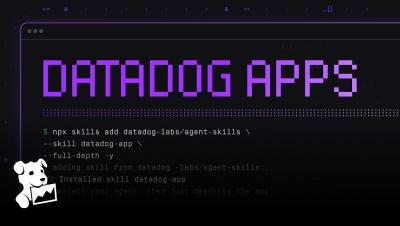
In today’s AI-first world, anyone can build an app. The hard part is shipping it securely where your teams already work. Datadog Apps lets you build and deploy apps natively in Datadog, with your existing data, integrations, permissions, governance, and observability built in. The next chapter of app development starts now.
AppSec teams know application risk is growing, but budget conversations are often won and lost outside the security team, in rooms full of executives who speak the language of revenue and delivery velocity, not CVSS scores. The core argument: application security software is easier to fund when it is tied to growth, resilience, compliance, and delivery outcomes… not just technical findings.
AI is changing the speed and scale of cyber risk, but the fundamentals of security remain the same. Elisa Costante, VP of Software Engineering at Forescout, discusses why visibility, risk assessment, and adaptive controls are essential for protecting organizations against rapidly evolving threats. Learn more.
Available as a fully integrated add-on for Sophos MDR and Sophos XDR, Sophos ITDR provides a comprehensive security solution that addresses the growing and complex challenges of identity threats and is delivered through the Sophos Fusion platform.
You guide the strategy. You recommend the controls. You field the call when something goes wrong. You were always their CISO - now deliver it at scale with Sophos CISO Advantage.