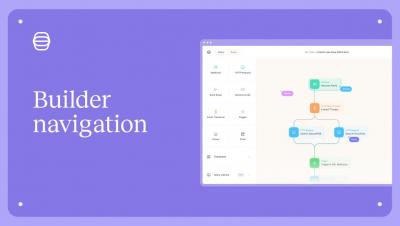
Builder navigation
In this video, we'll take a look at some basic navigation around being a builder within Tines.


According to Pew Research, 41% of Americans have experienced some form of online harassment – and the severity of incidents has been getting worse over time. Understanding what different types of online harassment look like, and what behaviors harassers engage in, can help you recognize and address it. Keep reading to learn about the different types of online harassment, consequences of online harassment and how to avoid becoming a target.
The Iranian threat actor Charming Kitten is launching sophisticated spear phishing attacks to distribute a new version of its POWERSTAR malware, according to researchers at Volexity. “In the last few years, Volexity has observed threat actors dramatically increase the level of effort they put into compromising credentials or systems of individual targets,” Volexity says.
As executables and scripts are unable to bypass security solutions as attachments, cybercriminals turn to HTML as a means of obfuscation and malicious execution. According to analysis from security vendor Avanan, executables and Office documents as malicious attachments are almost non-existent – thanks to the solid efforts on the part of security companies and Microsoft.
American Airlines and Southwest Airlines are both known for offering a long list of destinations throughout the United States and some other parts of the world. Two of America's largest airlines just suffered from a data breach that threatens to expose new pilots and cadets joining and hoping to join the airlines.
Coming soon TrustCloud’s New Platform Experience Get ready for a new and improved homepage that gives you a high-level snapshot of your compliance program, risks, employee compliance, automation status, and audit preparedness—all without toggling between apps. See a sneak peek. Coming soon Ask questions, get answers in TrustCloud Forums We created FlightSchool to help you learn about our products, GRC, and trust. Now, you can join the conversation with FlightSchool Forums!
With the worldwide popularity of Android and its open-source software, hackers have an increased incentive and opportunity to orchestrate attacks. A Google search for “Android malware” brings up headlines like these, all from the past few days or weeks: SecurityScorecard recently analyzed a specific threat known as the AhMyth RAT (remote access trojan), which made headlines for infiltrating a popular screen recording app on the Google Play Store.
In today's disconnected world, the task of managing privileged access has become increasingly challenging. The surge in remote work has exposed employees to new vulnerabilities as they access sensitive systems and data from unsecured networks and personal devices, making them attractive targets for cyberattacks. To combat these risks, organizations must adopt Privileged Access Management (PAM) solutions.
Continuous integration (CI) and continuous delivery (CD) has become a ubiquitous practice for DevOps teams. The CI/CD process focuses on building and deploying new applications or releasing updates to already-deployed workloads. As a result, most CI/CD efforts focus on enhancing development speeds. However, CI/CD practices can accomplish much more than enabling workload deployments.