How Ransomware Negotiations Work
What are ransomware negotiations? How do they work? That's what we're going to uncover today!


In the world of digital transactions, businesses handling payment cards must demonstrate their data security measures through the Payment Card Industry Self-Assessment Questionnaire (PCI SAQ). Completing the SAQ is a key step in the PCI DSS assessment process, followed by an Attestation of Compliance (AoC) to confirm accuracy. Level 1 merchants and service providers, mandated by PCI SSC or customers, must complete a Report on Compliance (RoC), while others use an SAQ.
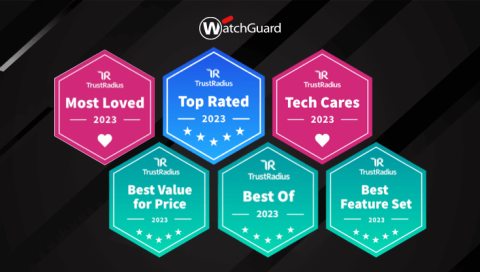
We’re thrilled to share that WatchGuard has been recognized in the 2023 TrustRadius Best Of Awards! With the “Best Of Awards,” TrustRadius recognizes products that have the highest percentage of positive reviews and ratings. This recognition certifies that WatchGuard products meet all these criteria with the highest quality standards. Three WatchGuard products were recognized, each earning all award badges – Best Feature Set, Best Value, and Best Relationships.
Read also: US citizen goes to prison for purchasing stolen credentials, US imposed sanctions for money laundering for Ryuk ransomware group, and more.
It’s been a long journey toward securing and optimizing the enterprise branch, from the days of rigid MPLS networks to the agile era of SD-WAN. Now comes the next stage of that journey: Secure access service edge (SASE), which, when architected correctly, converges the most important network and security capabilities into a single cloud-delivered service. Before we talk about how, though, let’s examine why SASE’s moment is now.
CrowdStrike Counter Adversary Operations has been investigating a series of cyberattacks and strategic web compromise (SWC) operations targeting organizations in the transportation, logistics and technology sectors that occurred in October 2023. Based on a detailed examination of the malicious tooling used in these attacks, along with additional reporting and industry reports, CrowdStrike Intelligence attributes this activity to the IMPERIAL KITTEN adversary.
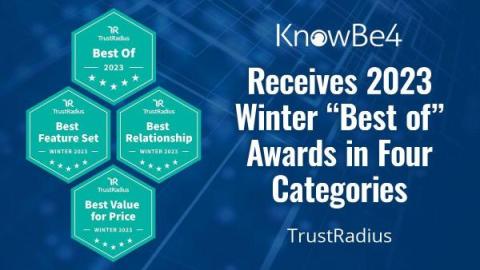
KnowBe4 is proud to be recognized by TrustRadius for our Security Awareness Training and PhishER platforms in three categories for Best Value for Price, Best Relationship and Best Feature Set. The Best of Awards highlight products providing customers with outstanding ROI, customer satisfaction, performance, reviews, and more. To win a Best of Award, each organization had to receive 10 TrustRadius reviews between January 1 and September 30, 2023.