Security | Threat Detection | Cyberattacks | DevSecOps | Compliance

The State of IoT Identity Security in 2026: Why Machine Identity Is the New Perimeter

By 2026, the idea of a fixed security perimeter is no longer realistic. Organisations now operate across cloud platforms, industrial environments, remote sites, and edge locations, often supported by tens or hundreds of thousands of connected devices. These devices are not users in the traditional sense, yet they authenticate, communicate, update, and make decisions autonomously.

Protecting the Language of AI: Why API Security is No Longer Optional

Protecting the Language of AI: Why API Security is No Longer Optional As AI continues to reshape the digital landscape, APIs have become the "language" of innovation—but they've also become a massive target for attackers. In this clip from the A10 Networks webinar, "APIs are the Language of AI: Protecting Them is Critical," security experts Jamison Utter and Carlo Alpuerto discuss the complexities of modern API security.

AI and Data Security: Why Your Data Security Model Is Hurting Innovation

Why Your Data Security Model Is Outdated For over 20 years, we’ve focused on the Data Envelope—securing the perimeter, the cloud, and the network. But in a world of AI and rapid data sharing, protecting the envelope is not enough. In this video, James Rice (VP of Product Marketing at Protegrity) explains why traditional security has become the biggest bottleneck for modern innovation. Whether you are a security leader, a data architect, or a business innovator, understanding this paradigm shift is essential for the next decade of growth.

When Agentic AI Becomes an Attack Surface: What the Ask Gordon Incident Reveals

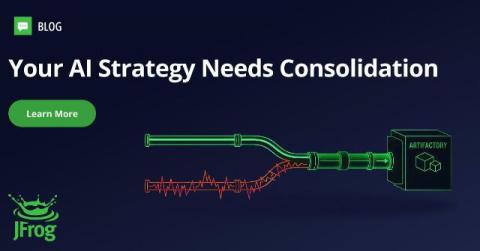
Pillar Security’s recent analysis of Docker’s Agentic AI assistant, Ask Gordon, offers an early glimpse into the security challenges organizations will face as AI systems begin operating inside the development stack. Their researchers discovered that a single poisoned line of Docker Hub metadata caused the agent to run privileged tool calls and quietly exfiltrate internal data.

Bots vs. Barcodes: The Resource Quota Failure. #ticketmaster #bla #ratelimiting #businesslogic

The infamous Ticketmaster case highlights BLA 1: Resource Quota Violation. Attackers used bots for mass purchasing and employed ingenious evasion: they reverse-engineered the barcoding logic to rotate and authenticate tokens, bypassing security controls. The core failure? Flawed rate limiting and business logic expiration. You must protect your inventory and your purchasing flows as if they were financial assets.

Unlocking AI's Potential: Network Trends and Challenges

Artificial intelligence is no longer just an overused buzzword; it’s a fundamental shift in how businesses operate. The Architects of AI were just named as Time’s person of the year for 2025. From generative AI creating code to machine learning algorithms optimizing supply chains, the demand for AI is reshaping the technology landscape. But here’s the thing: all that computational power is useless if your data can’t move fast enough.

A CISO's Honest Take on Regulation

Cybercriminals don't care about borders. So why do we have 12 different regulatory frameworks for the same threat? Olivier Busolini, Group Head of Information Security at Mashreq Bank, voiced the frustration every global CISO feels: "In every country, I have 12 countries at Mashreq. In every country, there is a slightly different or sometimes vastly different requirement that I have to abide to.".

Vibe check your vibe code: Adding human judgment to AI-driven development

Remember when open meant visible? When a bug in open-source code left breadcrumbs you could audit? When you could trace commits, contributors, timestamps, even heated 2:13 a.m. debates on tabs versus spaces? That kind of openness created confidence in the code and made it possible to hold contributors accountable when issues arose. Today, as AI changes how code is created and shared, those familiar markers of trust and transparency are becoming harder to find.