Nearly all CISOs report they are now responsible for AI governance and risk management, cite the growing sophistication of threat actor capabilities as their greatest risk. Vast majority say AI enables more security events to be reviewed.
93% of organisations in the UK and Ireland are increasing cybersecurity budgets in 2026 with AI as the top spending driver despite being the hardest investment to justify.
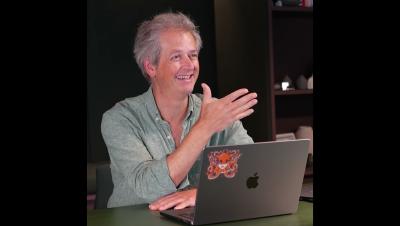
An AI agent that browses docs, makes a video, and posts it to Slack — in under a minute. Clip from with VP of Engineering Celso Martinho on Moltworker (for OpenClaw).
We are witnessing the birth of a new profession in the blend of security engineering and security operations, a discipline that didn't exist five years ago because the systems it protects didn't exist five years ago. As artificial intelligence moves from experimental to essential and agentic systems begin to perceive, reason, act, and learn autonomously, we need defenders who can operate at the same velocity. I'm talking about the AI Security Engineer.
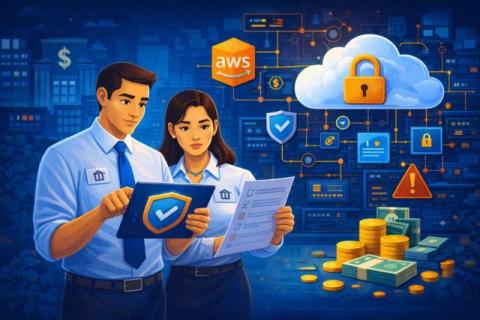
Financial services organizations moving to AWS often discover that retrofitting security and compliance controls costs three to five times more than building them in from the start. Compliance gaps discovered during audits can delay critical initiatives, trigger regulatory scrutiny, and expose organizations to unnecessary risk.
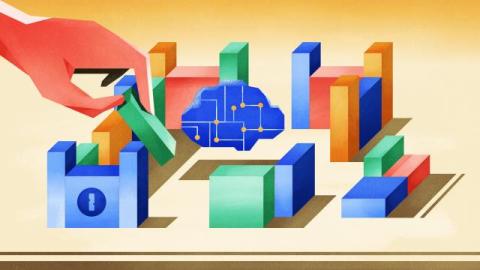
Sr. Technical Content Strategist Hockey has a saying that describes the problem security organizations face when trying to integrate AI:"You have to skate to where the puck is going, not where it has been". Think of the modern security stack. It's a fragmented architecture built layer by layer over decades. Tools are siloed, some overlapping, some operating in black boxes, and others that no one remembers installing.
Since 1Password began, we have built security into the places where work actually happens. Security is not treated as an overlay or a separate workflow, we build directly into the browser, command lines, developer tools, and IDEs, where decisions are made and actions take place. We believe that if you want to improve security outcomes, you build where the work happens, making the secure path the simplest one.
Getting clear answers about your security risk shouldn’t require hours of manual work or deep platform expertise. Meet Seema – Seemplicity’s new AI assistant designed to translate complex remediation data into plain-spoken, actionable insights. Whether you’re a practitioner investigating a specific vulnerability, an engineer needing context on a finding, or a leader briefing on overall risk, Seema provides the clarity you need to move from data to action.
For the past two years, the adoption of Generative AI has felt like a gold rush. Organizations raced to integrate Large Language Models and build autonomous agents to assist employees. They often bypassed standard governance processes in the name of speed and innovation. That era of unrestricted experimentation is rapidly drawing to a close. A massive regulatory wave is forming worldwide. Frameworks like the EU AI Act and the new ISO/IEC 42001 standard are forcing a corporate reckoning.