Security | Threat Detection | Cyberattacks | DevSecOps | Compliance

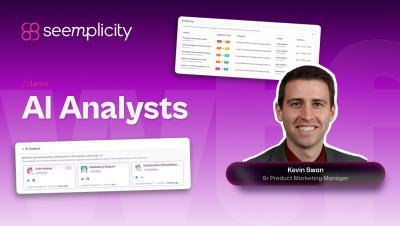
Automate Vulnerability Triage with Seemplicity AI Analysts | Demo Video

Stop manual investigation and scale your security operations. In this demo video, discover how Seemplicity’s AI Analysts automate vulnerability triage by investigating exploitability directly within your remediation workflow. Manual triage doesn't scale for large organizations. Seemplicity delivers dedicated AI experts for code, dependency, and infrastructure/host vulnerabilities to move the needle for security professionals.

Your AI Agent Needs to Know Who You Are

When your AI agent calls an MCP tool, that tool has no idea who actually triggered the request. It sees the agent, not you. This post explains why that matters and how to fix it with Teleport JWTs. In part two of this post, we will explain how to extend this to AWS to carry your identity through Amazon Bedrock AgentCore all the way into CloudTrail.

We just crossed the point of no return with AI #aisingularity #cybersecurity

AI is moving so fast that even security professionals feel they are staring over an event horizon without knowing what comes next. Public information alone is already unsettling, and the fear grows when you consider what is happening beyond open sources, from hidden capabilities to post quantum risk no one has fully mapped yet.

What Is AI Asset Discovery (And Why It Matters for AI Governance)

Enterprise artificial intelligence adoption is scaling at a pace that manual inventory methods simply cannot match. This rapid proliferation has created a severe visibility chasm for security and risk teams: it is fundamentally impossible to govern, secure, or quantify what you do not know exists. ‍ To bridge this gap, organizations are shifting away from point-in-time compliance audits and adopting continuous discovery.

Secure AI for the real world

AI makes building look easy. That’s the trap. Without a secure, well-designed foundation, workflows break, costs spike, and systems grow fragile. CTOs and CISOs from leading organizations discuss what breaks without a secure foundation, and how to build AI systems that hold up at scale. This session goes deep on the real-world tradeoffs between speed, risk, and trust.

Ep. 64 - The Mythos Hype Index: What AI Really Did to the Zero-Day Curve

Every CISO is asking it: now that frontier models like Claude Mythos and ChatGPT 5.5 have real offensive cyber capability, are zero days surging? Host Tova Dvorin and SafeBreach offensive engineer Adrian Culley dig into the mid-2026 data—GTIG, Mandiant M-Trends, Rapid7, AISI—and find the curve moved in shape, not volume. Inside: the two AI "firsts" (Big Sleep and a 2FA-bypass exploit), why commercial spyware explains the rebound, the negative-seven-day time-to-exploit, and why defender deployment is the real bottleneck.

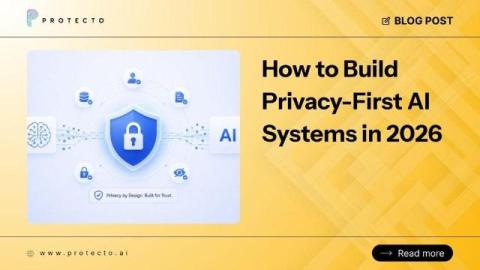
How to Build Privacy-First AI Systems in 2026

Your RAG pipeline goes live on a Monday. By Friday, a customer query is surfacing another user’s account number in a response. Privacy-first AI stops that before the data reaches any model. More than half of organizations have already experienced an AI-related security incident, according to Check Point’s 2026 Cloud Security Report, and most don’t catch it until an audit forces the issue. Start with AI data privacy concepts and best practices.

Least Privilege Access for AI Agents: How to Secure Autonomous Systems in 2026

AI agents are no longer just answering queries or summarizing documents. They are booking meetings, pulling customer data, triggering workflows, and even making decisions across systems. And they don’t ask for permission every time. That’s where the real problem starts. Because once an AI agent is connected to your tools, APIs, and internal systems, the question isn’t what it can do, it’s what it should be allowed to do.