

Security | Threat Detection | Cyberattacks | DevSecOps | Compliance

The Key To Detecting AI Threats - CTRLtheThreat Cybersecurity Tips From Cato CTRL

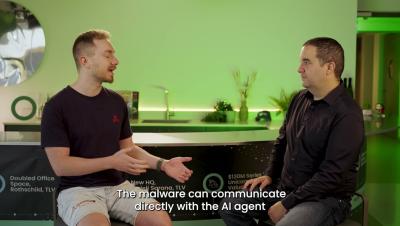
The key to detecting AI threats? Detecting them before they detect you. Tune in to this week's series in which Dolev Attiya, threat researcher and member of Cato CTRL, shares insights about AI malware threats, agent to agent and top ways to stay protected. Subscribe: short.url/aBcXyZ Let’s connect: Instagram: short.url/aBcXyZ LinkedIn: short.url/aBcXyZ X (Twitter): short.url/aBcXyZ TikTok: short.url/aBcXyZ.

Defending QUIC from acknowledgement-based DDoS attacks

On April 10th, 2025 12:10 UTC, a security researcher notified Cloudflare of two vulnerabilities (CVE-2025-4820 and CVE-2025-4821) related to QUIC packet acknowledgement (ACK) handling, through our Public Bug Bounty program. These were DDoS vulnerabilities in the quiche library, and Cloudflare services that use it. quiche is Cloudflare's open-source implementation of QUIC protocol, which is the transport protocol behind HTTP/3.

Navigating the AI Cyber Iceberg: Deepfakes Above, Zero Days Below

Agentic AI is transforming cyber threats from phishing and deepfakes into nonstop zero-day exploits and automated ransomware. Most organizations will struggle to keep pace, but the same AI power can drive autonomous defenses that ultimately shift the balance back to the defenders.

Delivering Real-Time Feedback with Bitsight Groma: Dynamic Remediation Now Fully Live

In December 2024, we announced Dynamic Remediation, an initiative that accelerates the feedback of customers' remediation efforts. The goal was simple but ambitious: reduce the time between a remediation and seeing that improvement reflected in Bitsight Security Ratings. This initiative was built in response to direct customer input. You asked for faster validation of your remediation, more transparency, and credit when vulnerable assets were remediated or taken offline.

Step-by-Step Guide to CNAPP Implementation: Securing Cloud-Native Applications

Key Takeaways Achieving scalability and agility is one of the top goals for every organization. Cloud-native applications have become the lifesavers of these organizations across various industries to achieve this. But implementing these applications also comes with a few disadvantages. The main reasons are these applications are dynamic and prone to attacks. Traditional or legacy security tools won’t be enough to secure their dynamic, short-lived workloads.

All Clones Aren't Equal: Harmless ChatGPT Wrappers vs. Malicious Fakes

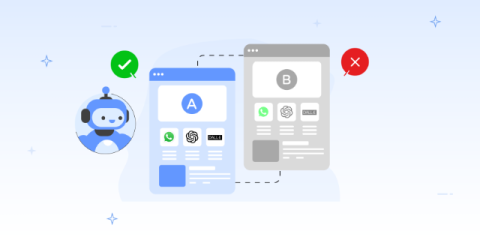
A quick search for “ChatGPT” or “DALL·E” on a mobile app store today reveals dozens of lookalikes. Each promises “AI chat,” “image generation,” or “smart assistance.” Yet beneath these polished logos lies a troubling truth — not all clones are created equal. Some are harmless wrappers that simply connect to genuine APIs. Others are opportunistic adware disguised as AI tools.

Report: Organizations Are Struggling to Keep Up With AI-Powered Attacks

76% of organizations are struggling to keep up with the sophistication of AI-powered attacks, according to CrowdStrike’s latest State of Ransomware Survey. “Most organizations (87%) consider AI-generated social engineering tactics more convincing than traditional methods,” the report says.