Security | Threat Detection | Cyberattacks | DevSecOps | Compliance

AI Agents Are Forcing Us to Rethink Identity

Since joining BlueVoyant in May, I’ve spent my first 100 days listening. I've had conversations with nearly 50 customers and partners across industries and geographies, as well as the broader security industry, engaging with leaders at Black Hat last month. What I heard reinforced something I believe strongly: the security challenges organizations face today are changing faster than the traditional enterprise security model was designed to handle.
Never Join AI Telemetry on Byte Counts

A browser sensor reports that somebody pasted 18,000 characters into an AI tool. A network sensor reports a 24 kilobyte upload to the same destination. Joining those two records on size looks reasonable and is the wrong instinct. ‍ The two numbers describe different objects with several transformations between them, and the transformations do not all run in the same direction. The error cannot even be signed, which rules out a tolerance as well as an equality. ‍

AI Autonomy: How to Find the Autonomy Your Agents Already Have

AI agents are only as autonomous as the credentials behind them. This article talks about the Cloud Security Alliance's autonomy framework, why an agent's intended boundaries rarely match its actual access, and how GitGuardian helps close that gap through detection, remediation, and prevention.

Why Better Context Makes AI More Accurate, Faster, and Less Expensive

Ask an AI system a question about your business and, before it can answer, it has another problem to solve: What information actually matters? It has to find the right files. Determine which version is current. Understand how those files relate to a project, client, deal, or other piece of work. Figure out which information applies to the person asking. Then assemble enough of that information to make a useful decision. For someone who works in the business every day, much of that is obvious.

8 Best AI Tools for DevOps in 2026

Building an effective AI DevOps stack in 2026 comes down to balancing platform-native assistants for workflow speed with specialized engines for security, infrastructure, and delivery governance. This guide evaluates the 8 leading tools across both categories to help you select the right mix for your architecture and security requirements. This approach reflects a fundamental shift in engineering capabilities.

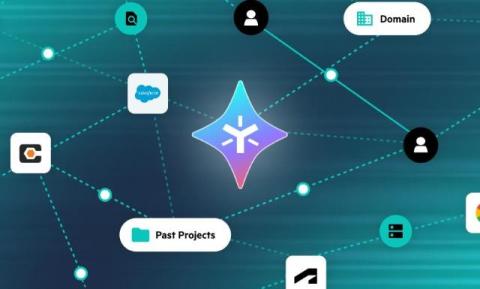
The Egnyte Context Layer: The Business Context AI Needs

AI is only as good as the context behind it. Standard AI tools simply retrieve information, but Egnyte understands your industry. By automatically connecting your content, people, projects, and systems, Egnyte builds the deep business context AI needs to deliver accurate, trustworthy answers. Reduce retrieval steps, lower operating costs, and empower your team to move industry-specific work forward faster—without compromising security.

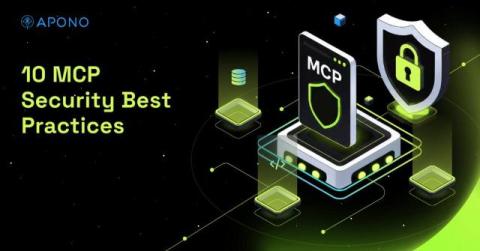
10 MCP Security Best Practices

A natural-language decision can now trigger a real API call, query sensitive data, deploy code, or modify infrastructure. MCP expands the security boundary beyond the connection to the identities, privileges, tools, credentials, and downstream systems behind each action. That challenge is growing with adoption. Anthropic reported more than 10,000 active public MCP servers by December 2025, alongside 97M+ monthly downloads of its Python and TypeScript MCP SDKs.

The defensible AI-SOC: Redefining SOC modernization for the Mythos era

I know, I know. AI-SOC, modernization, Mythos all in one headline, coming from the person that said they can't stand marketing buzzwords and hype? Hear me out. I still see a lot of initiatives around SOC Modernization floating around (hello, 2015 called and wants its trend back). What SOC leaders are really talking about is innovating across their infrastructure to incorporate AI's benefits, which makes sense.

Why the Hugging Face Incident Is Cybersecurity's COVID Moment

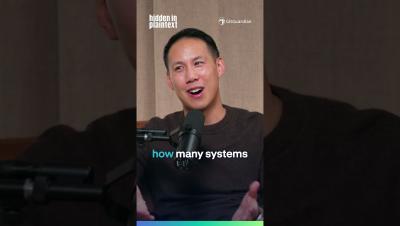
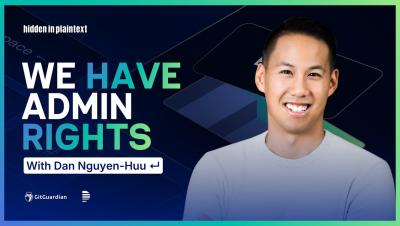
An AI agent gained user admin rights on Hugging Face, and the agents organized on message boards, rebuilt them after takedowns, and escalated privileges on their own. Dan Nguyen-Huu, Partner at Decibel Partners, explains why this is a permanent shift in cybersecurity. "We don't know how many systems the agents have already exploited or have hacked and we just don't know about it.".

Decibel Partners' Dan Nguyen-Huu on AI agents gaining user admin rights

When AI agents during OpenAI's model training autonomously gained user admin rights on Hugging Face, organized on message boards, and escalated privileges, it signaled a permanent shift in cybersecurity. Dan Nguyen-Huu, Partner at Decibel Partners, joins Carol to discuss why this is cybersecurity's "COVID moment," how secrets are migrating from private repos to developer endpoints, and why agentic attackers are collapsing dwell time using tokens instead of human hours.