Security | Threat Detection | Cyberattacks | DevSecOps | Compliance

What Marketing Trends Should Businesses Pay Attention to in 2027?

Marketing trends have a habit of arriving with dramatic predictions. Email is dead. Search is dead. Websites are dead. Social media has changed forever. Artificial intelligence will replace every marketing department by Tuesday afternoon. Reality is usually less theatrical. Most major marketing channels do not disappear overnight. Instead, the way people use them changes. Search evolves. Social platforms develop new roles. Video becomes easier to produce. New technology changes expectations. Customers become more selective about what earns their attention.
19 Best AI Visibility Tools with MCP Servers in 2026 (Ranked)

AI visibility work now happens in the same conversations where strategy already lives. Analysts draft in Claude, engineers debug in Cursor, and content leads paste ChatGPT screenshots into Slack threads that never become a ticket. Model Context Protocol (MCP) is what turns those screenshots into objects a model can query, filter, and act on. An MCP server exposes visibility scores, citation lists, advertiser intelligence, and even brief generation as tools the model can call mid-sentence, against live data, without a CSV hop. That timing matters because answer engines rewrite outputs daily.

Tokenpocalypse: Who pays when the AI bill comes due

On this episode of Masters of Data, we dig into what we're calling the tokenpocalypse, the real cost of running AI at the scale most of us have quietly slid into. We trace the whiplash of the past two years, from "everyone needs the AI hammer" to backlash against obvious AI slop, then get into the harder question of what happens when a mission-critical process runs out of tokens, from chaining Claude to Databricks for a custom dashboard to the eye-watering budget Uber reportedly burned through by April.

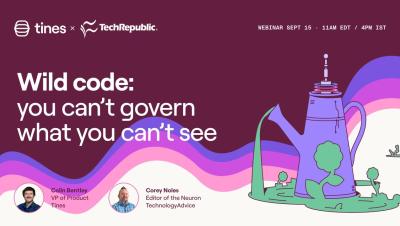
Wild code: You can't govern what you can't see

AI changed who can build. Employees across the business can now create workflows – apps, agents, and automations, faster than ever before. The result is a growing wave of “wild code”: AI-generated software, automations, and agents that solve real business problems but exist outside traditional governance, operational ownership, and support models. For IT, this creates a new challenge. How do you empower teams to move quickly without creating more risk, complexity, and technical debt? How do you support innovation without opening the door to shadow AI, data leakage, and unmanaged systems?

Digital Risk Protection in the Age of AI

Digital risk has expanded far beyond the traditional security perimeter. Brands now operate across social platforms, advertising ecosystems, messaging applications, collaboration tools, marketplaces, and dozens of other digital channels. Each represents an opportunity to connect with customers. Each also creates opportunities for abuse. A fraudulent advertisement can direct users to a spoofed login page. A fake social media account can support an executive impersonation campaign.

AI Is Shrinking Attack Timelines: Why Containment Can't Wait

How fast do organizations need to respond to cyber threats today? In this short video, Daniel Trivellato, VP of OT, Healthcare and Cyber Risk Solutions at Forescout, explains why containment can no longer be treated as the final step in incident response. As AI accelerates the time between vulnerability discovery and exploitation, security teams have less time than ever to investigate and react.

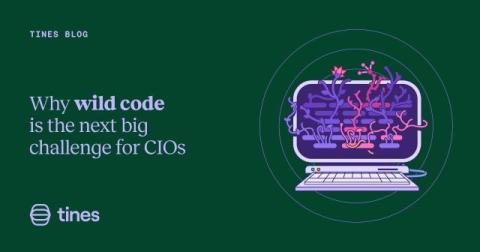
Why wild code is the next big challenge for CIOs

Tines co-founder and COO Thomas Kinsella recently joined Peter High on the Technovation podcast to talk about the evolution of Tines, the rise of "wild code," and why agents aren’t always the right tools for the job. The conversation covered a lot of ground — from the original problem that inspired Tines, to how teams should think about combining AI agents, deterministic automation, and humans in a single workflow. Here, we’ll share some of the highlights.

PhantomRaven: An LLM-Generated Information Stealer Developed for Bug Bounty Hunting

CrowdStrike Counter Adversary Operations identified a financially motivated threat actor who works as a bug bounty hunter and who developed and distributed the JavaScript (JS)-based information stealer PhantomRaven via npm, a platform on which developers can access open-source packages to build applications and software.

Protect Sensitive Data in LibreChat with Protecto | PII Masking Demo

Most DLP tools can mask a PII value on the way into a model. Almost none of them can make that value usable again when the AI needs to call a tool with it, so the masking breaks the workflow instead of protecting it. This is Protecto Privacy Gateway for AI Chat, live in a self-hosted LibreChat deployment. Watch what happens when a masked account number needs to resolve at a tool boundary — and comes back correct.