Security | Threat Detection | Cyberattacks | DevSecOps | Compliance

Friday Flows Special Edition: Change Control with AI Summary

Tyler Talaga, Staff Engineer at MyFitnessPal, is one of the early adopters of Tines' AI capabilities. In this special "Wednesday Workflows," Tyler walks through a story he built to improve the visibility of Change Control requests. This workflow routes Change Control requests to Slack with a detailed summary provided through the AI Action, helping the team quickly approve (or deny) a change. The MyFitnessPal team is building many new, helpful automations with the AI capabilities, including one to summarize vulnerabilities fixed in MacOS updates.


Operation Grandma: A Tale of LLM Chatbot Vulnerability

Who doesn’t like a good bedtime story from Grandma? In today’s landscape, more and more organizations are turning to intelligent chatbots or large language models (LLMs) to boost service quality and client support. This shift is receiving a lot of positive attention, offering a welcome change given the common frustrations with bureaucratic delays and the lackluster performance of traditional automated chatbot systems.

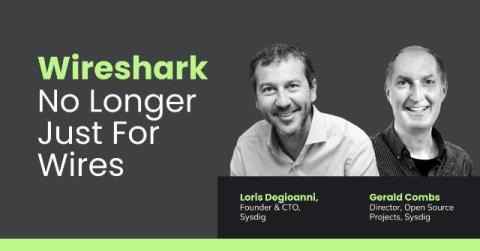
Wireshark: Ethereal Network Analysis for the Cloud SOC

Remember Wireshark from the good old days of your IT degree or early engineering adventures? Well, guess what? It’s still kicking and just as relevant today as it was back then, and guess what else? It is still open source! Do your engineering or security teams use it? There’s a good chance they do if you’re on-premises. Believe it or not, Wireshark isn’t just for the land of wires and cables anymore. With some help from Falco and Kubernetes, it has a place in the cloud SOC.

New Phishing Tactics: Cloudflare Workers, HTML Smuggling, and GenAI

Cybersecurity researchers are ringing the alarm on new phishing campaigns exploiting Cloudflare Workers, HTML smuggling, and generative AI (GenAI) to target user credentials. These innovative techniques highlight the sophisticated strategies cybercriminals are deploying to bypass security measures and harvest sensitive information.

AI Autonomy and the Future of Cybersecurity

Have you ever wondered how Artificial Intelligence (AI) could mimic consciousness and autonomously control various tasks? It sounds rather daunting. However, it may not be as intimidating as it seems under the right conditions. Moreover, Would AI perform tasks independently in the same manner as humans? And what implications does this hold for cybersecurity? In the present day, we are observing the rise of self-driving cars that operate with minimal human input.

A Brief Look at AI in the Workplace: Risks, Uses and the Job Market

Anyone remotely wired into technology newsfeeds – or any newsfeeds for that matter – will know that AI (artificial intelligence) is the topic of the moment. In the past 18 months alone, we’ve borne witness to the world’s first AI Safety Summit, a bizarre and highly public leadership drama at one of the world’s top AI companies, and countless prophecies of doom. And yet, even after all that, it seems businesses have largely failed to take meaningful action on AI.

Three Questions to Ask About Your Cloud Security Posture

For most organizations, the decision to adopt cloud technologies is a simple one. Cloud apps streamline operations and costs while enabling users to access resources from anywhere and on any device. But migrating to the cloud has also introduced some complexity, which comes with new risks. Instead of everything residing neatly within your corporate perimeter, your data now resides within countless apps and is being handled by users and endpoints that operate outside of your sphere of influence.

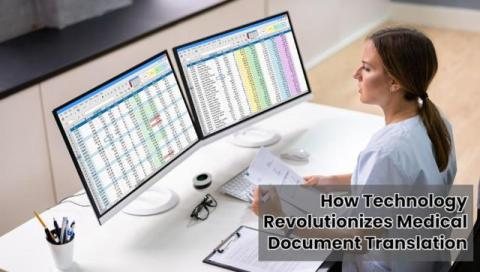
How Technology Revolutionizes Medical Document Translation

Are you also a medical worker struggling with traditional documentation? Technology augments and advances are making medical document translation increasingly significant and influential, helping healthcare workers, patients, and researchers to communicate across languages.

Penetration Testing of A.I. Models

Penetration testing is a cornerstone of any mature security program and is a mature and well understood practice supported by robust methodologies, tools, and frameworks. The tactical goals of these engagements typically revolve around identification and exploitation of vulnerabilities in technology, processes, and people to gain initial, elevated, and administrative access to the target environment.