Security | Threat Detection | Cyberattacks | DevSecOps | Compliance

Unlocking the Power of AI in Cybersecurity: Key Takeaways from the HMS Belfast Breakfast Briefing

In the rapidly evolving landscape of technology, the fusion of Artificial Intelligence (AI) and cybersecurity is creating both exciting opportunities and formidable challenges. The recent breakfast briefing on the historic HMS Belfast served as a critical forum for industry leaders to explore these issues in depth.
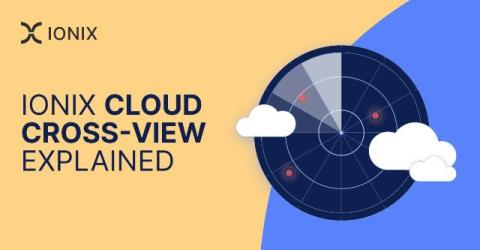

Cloud Cross-View for Complete Attack Surface Visibility

IONIX’s Cloud Cross-View (CCV) uses cloud integrations to broaden the scope of attack surface mapping and coverage beyond traditional methods of monitoring. CCV extends asset analysis to consider aspects that are specific to cloud environments. This complements CSPM and CNAPP solutions by enriching them with broader attack surface data obtained through IONIX’s EASM capabilities.

Secure AI tool adoption: Perceptions and realities

In our latest report, Snyk surveyed security and software development technologists, from top management to application developers, on how their companies had prepared for and adopted generative AI coding tools. While organizations felt ready and believed AI coding tools and AI-generated code were safe, they failed to undertake some basic steps for secure adoption. And within the ranks, those close to the code have greater doubts about AI safety than those higher up in management.

Triage Your Cloud Security: Risk Prioritization Methods

It’s a familiar post-disaster scene in seemingly every television medical drama. A ferry has crashed, or a train has derailed. Patients flood into the ER, each requiring urgent medical attention. The impossibly attractive medical staff must quickly assess and prioritize patients based on the severity of their injuries and the likelihood of survival. Someone with great hair likely says an inspiring quote and jumps immediately into action.

Monitor AWS WAF activity with Datadog

In Part 2 of this series, we looked at Amazon’s built-in monitoring services for AWS WAF activity and audit logs. In this post, we’ll demonstrate how Datadog complements your WAF’s existing protection and extends its capabilities to not only offer protection at the perimeter but also to the APIs and services within your network.

Key metrics for monitoring AWS WAF

AWS WAF is a managed web application firewall that monitors network traffic to your AWS applications and resources. As a perimeter-based firewall, AWS WAF is designed to secure the boundaries between your applications and the public internet. This means that it’s capable of protecting all of the various elements of your AWS architecture, including Amazon API Gateways, load balancers, and Amazon CloudFront distributions.

Top 5 Most Commonly Used IoT Protocols and Their Security Issues

What happens when devices meant to make your life easier become tools for intrusion? Your smart TV could become a surveillance device, your fitness tracker could leak your health data, and your connected car could be remotely hijacked. In the world of IoT vulnerabilities, the technology designed to serve you could turn against you. The Internet of Things promises convenience and connectivity. The risks of cyberattacks targeting these devices are growing exponentially.

The Rise of the Co-author: Will AI Invade Our Writing Space?

The writer's life has always been a dance between solitude and collaboration. We yearn for the quiet focus of crafting a sentence but also crave the spark of shared ideas. Now, a new partner enters the scene: Artificial Intelligence. AI writing assistants are rapidly evolving, blurring the lines between human and machine authorship. But will these tools become our unwanted and uninvited co-authors, or can they be valuable collaborators, enhancing our creativity?

Pseudonymization vs Anonymization: Key Differences, Benefits, & Examples

When it comes to protecting personally identifiable information (PII), organizations have two main options: pseudonymization and anonymization. Both methods aim to prevent unauthorized disclosure of sensitive PII data, but they differ in their implementation, advantages, and regulatory implications. In this blog, we’ll explore the key differences between pseudonymization vs anonymization, their benefits, practical examples, and how to choose the best method for your organization’s needs.