Security | Threat Detection | Cyberattacks | DevSecOps | Compliance

AI just became the world's most dangerous exploit writer. Here's why Sophos Endpoint is built to stop it.

AI just became the world's most dangerous exploit writer. Here's why Sophos Endpoint is built to stop it. AI-generated zero-days are here. Sophos Endpoint was architected to stop exploits that have never been seen before — blocking the techniques every attack must use, at the moment of execution, with no signature, no cloud lookup, and no configuration required.


CVE-2026-42208: Pre-Authentication SQL Injection in LiteLLM Exposes API Credentials

A critical vulnerability in LiteLLM is turning AI infrastructure into an open vault; no login required. Tracked as CVE-2026-42208, this vulnerability allows attackers to extract API keys, cloud credentials, and provider authentication tokens without any credentials or prior access to the system. The root cause is fundamental lapse in input handling. LiteLLM’s API key validation blindly injects the Bearer token from the Authorization header into a SQL query without sanitization.

Defending Against CORDIAL SPIDER and SNARKY SPIDER with Falcon Shield

Since October 2025, CrowdStrike Counter Adversary Operations has observed a shift in intrusion tradecraft: Threat actors are executing high-speed, SaaS-centric attacks that bypass traditional endpoint visibility. CORDIAL SPIDER and SNARKY SPIDER exemplify this evolution as distinct adversaries conducting rapid data theft and extortion campaigns with striking operational similarities.

Copy Fail (CVE-2026-31431): What Linux administrators need to know now

Copy Fail, or CVE-2026-31431, is a Linux kernel local privilege escalation vulnerability that can let an unprivileged local user corrupt page-cache-backed file data under specific conditions and potentially escalate privileges. Exposure depends on the running vendor kernel and backported fixes. Installing a vendor-provided kernel fix is the primary remediation, with temporary mitigations available in some environments if patching is delayed.

Surviving the Vulnpocalypse: How to Prepare for the AI-Driven Security Reckoning

The cybersecurity landscape is facing an unprecedented shift, and industry experts are sounding the alarm about what many are calling the “vulnpocalypse.” This isn’t just another security buzzword or overhyped threat. It represents a fundamental transformation in how vulnerabilities are discovered, exploited, and defended against in the age of artificial intelligence.

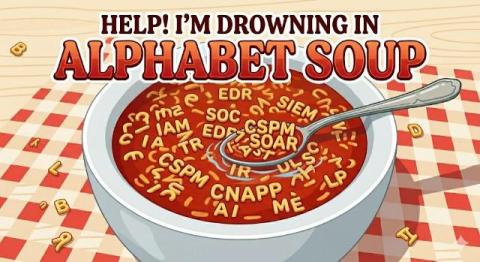
Help! I'm Drowning in Alphabet Soup

The cybersecurity industry is currently drowning in an “alphabet soup” of over 500 different category acronyms, a trend that is creating unnecessary noise and silos rather than helping practitioners. This hyper-niche branding often forces security teams to manage fragmented dashboards that don’t communicate with each other, adding to their workload instead of reducing it.

lightning PyPI Compromise: A Bun-Based Credential Stealer in Python

On April 30, 2026, two malicious releases of the popular lightning PyPI package were published, affecting the deep learning framework formerly distributed as pytorch-lightning. Versions 2.6.2 and 2.6.3 ship a hidden _runtime directory that downloads the Bun JavaScript runtime from GitHub at import time and uses it to execute an ~11 MB obfuscated credential stealer. The last clean release is 2.6.1, published January 30, 2026.

Critical Vulnerability Alert: CVE-2026-41940 in cPanel, WHM, and WP Squared

A critical vulnerability CVE-2026-41940 has been identified in cPanel, WHM, and WP Squared, affecting cPanel & WHM versions after 11.40, as well as WP Squared. These web hosting control panels are commonly used to manage websites, email, databases, and server configurations, making unauthorized access a serious security concern.

CVE-2026-41940: Critical Exploited Authentication Bypass Vulnerability in cPanel & WHM

On April 28, 2026, cPanel patched a critical authentication bypass vulnerability affecting cPanel and WebHost Manager (WHM), tracked as CVE-2026-41940. The issue stems from a flaw in the login and session handling process that allows Carriage Return Line Feed (CRLF) injection, enabling remote threat actors to bypass authentication and gain unauthorized access to the control panel.