Security | Threat Detection | Cyberattacks | DevSecOps | Compliance

The Value of Vulnerability Management

There’s nothing that makes you feel older than realizing how much of your life you have dedicated to a single topic. At what point do you consider yourself an expert? After more than 17 years in vulnerability management, I’m starting to come around to the idea that I might be an expert in the field. Although, the main reason I feel that way is because, at this point, I’ve seen pretty much everything.
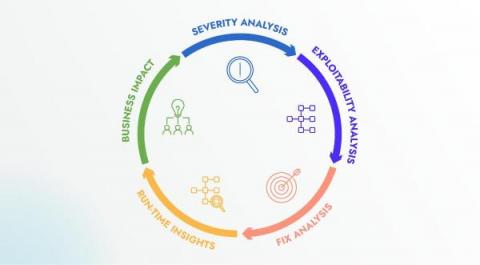

How to Deal with Hundreds of Fixes? Choosing the Right Vulnerability Management Solution

Relying solely on the Common Vulnerability Scoring System (CVSS) is insufficient when it comes to effective vulnerability management. While the CVSS score provides a quantitative measure of a vulnerability’s severity, it fails to capture the contextual nuances that can significantly impact the actual risk to an organization. In this article, we will discuss how best to choose a vulnerability management solution.

How to strengthen security in your CI/CD pipeline

DevSecOps refers to the integration of security practices into DevOps process. With modern development cycles, you can't afford to leave security until the end. It should be baked in at every stage. Continuous integration, continuous delivery (CI/CD) security is a big part of the DevSecOps picture. It's critical that you secure your pipelines and that the automated systems used to implement CI/CD are not vulnerable to attack.

Enhance SBOMs with runtime security context using Datadog Application Vulnerability Management

Software today relies heavily on open source, third-party components, but these reusable dependencies sometimes inadvertently introduce security vulnerabilities into the code of developers who use them. Some of the most serious vulnerabilities discovered in recent years—like the OpenSSL punycode vulnerability, Log4Shell (Log4j), and Dirty Pipe (Linux)—reside in popular open source packages, making them so widespread that they could compromise almost the entire software ecosystem.

Proof of Concept Developed for Ghostscript CVE-2023-36664 Code Execution Vulnerability

Ghostscript, an open-source interpreter for the PostScript language and PDF files, recently disclosed a vulnerability prior to the 10.01.2 version. This vulnerability CVE-2023-36664 was assigned a CVSS score of 9.8 that could allow for code execution caused by Ghostscript mishandling permission validation for pipe devices (with the %pipe% or the | pipe character prefix). Debian released a security advisory mentioning possible execution of arbitrary commands.

Cyberattack Spotlight: The Zero-Day Exploit

A zero-day attack takes advantage of a weakness in a target’s network, software, or infrastructure—without the target even knowing. These type of cyber attacks can be devastating because the attack will continue unimpeded until it’s eventually spotted (that’s if it’s spotted at all). This article shines a spotlight on the danger. We define the features of zero-day incidents and consider some famous case studies.

Session management security: Best practices for protecting user sessions

Session management security is an essential component of web application development. It safeguards user sessions and prevents unauthorized access. Managing sessions secures the confidentiality, integrity, and availability of sensitive user data. It also protects user privacy at large — which is essential to maintaining user trust in an application. When we manage sessions securely, we establish processes to destroy session tokens when users log out or their session ends.

What is Juice Jacking?

Juice jacking is a security exploit in which devices are compromised when plugged into an infected USB charging station, port or use an infected charging cable. This type of security exploit takes advantage of the fact that many people need to charge their devices, especially when traveling, and use the provided USB cables to do so. Apart from charging devices, USB cables are also used to sync data which is how attackers are able to take advantage and extract data from devices.

How Cloudflare Images addressed the aCropalypse vulnerability

Acropalypse (CVE-2023-21036) is a vulnerability caused by image editing tools failing to truncate images when editing has made them smaller, most often seen when images are cropped. This leaves remnants of the cropped contents written in the file after the image has finished. The remnants (written in a ‘trailer’ after the end-of-image marker) are ignored by most software when reading the image, but can be used to partially reconstruct the original image by an attacker.