Security | Threat Detection | Cyberattacks | DevSecOps | Compliance

Understanding DNS attacks: Identifying and patching vulnerabilities

The Domain Name System (DNS) translates domain names into IP addresses. Every device and website has an IP address that other devices, websites, and online services use to communicate with it. IP addresses are a string of numbers usually formatted as 000.000.000.000. However, we use domain names since people can’t easily remember these numbers.

5 Stages of the Vulnerability Management Process

The threat landscape in IT is ever-evolving, with new risks arising practically daily. Trying to anticipate the next type of threat can feel a little like playing whack-a-mole. Instead, IT teams are focusing on vulnerability management: reducing the opportunities for hackers and other bad actors to find a weakness in cyber defenses. Vulnerability management is an iterative process that allows companies to proactively defend valuable assets, no matter how the threat landscape changes.

Snyk's new native integration with Bitbucket Cloud emphasizes dev-first security

Snyk is excited to announce a new, native integration with Atlassian Bitbucket Cloud. This new release improves Snyk’s functionality within Bitbucket Cloud, making installation faster, and easier to implement. Our Bitbucket integration is the first out-of-the-box embedded security experience within the Atlassian UI, enabling users to access high vulnerability counts and rich contextual information right from their native Bitbucket workflow.

Wrapping up CSAM 2022 with Vulnerability Management Advice for Everyone

As we wrap up Cybersecurity Awareness Month (CSAM) 2022, the final topic we’ll cover is updating software and patching vulnerabilities. According to the 2022 Data Breach Investigations Report (DBIR) from Verizon one of the top paths threat actors use to infiltrate organizations is exploiting vulnerabilities. And there appears to be no end in sight as the number of unique security vulnerabilities rose almost 10% in 2021, up to 20,142 from 18,351 in 2020.

Node.js multithreading with worker threads series: worker_threads tutorial

Node.js provides a single-threaded JavaScript run-time surface that prevents code from running multiple operations in parallel. If your application typically employs synchronous execution, you may encounter blocks during long-running operations. However, Node.js itself is a multi-threaded application. This is evident when you use one of the standard library’s asynchronous methods to perform I/O operations, such as reading a file or making a network request.

Attack Surface Management vs. Vulnerability Management

Cyber innovation and digital transformation are moving at increasing speeds. With the shift to cloud-based software and assets, SaaS (software-as-a-service) applications, and the need for remote working, businesses are changing the way they approach risk management and the security of their digital assets.

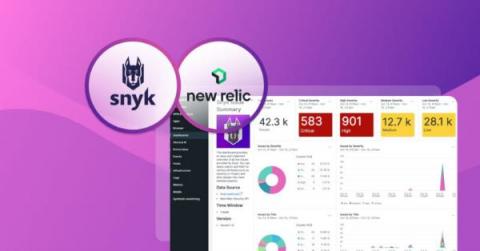
How to send Snyk vulnerability data to the New Relic observability platform

Security and observability data go hand in hand when it comes to application health. If you can put those two sources of data behind a single pane of glass you can make your life a lot easier. By leveraging the different options that the Snyk platform provides, you can send all your application security vulnerabilities found by Snyk directly to your New Relic observability platform. Let’s see how!

What is Vulnerability Remediation?

Vulnerability remediation is the process of finding, addressing, and neutralizing security vulnerabilities within an organization’s IT environment, which can include computers, digital assets, networks, web applications, and mobile devices. Remediation is one of the most important steps in the vulnerability management process, which is critical for securing networks, preventing data loss, and enforcing business continuity.