
Security | Threat Detection | Cyberattacks | DevSecOps | Compliance

Snyk integrates with AWS CloudTrail Lake to simplify security audits

Since organizations around the globe began investing more aggressively in their digital transformation by migrating and modernizing applications within the cloud, the value of audit logging has shifted. It has expanded from industries like finance and healthcare to nearly any company with a digital strategy.


CVE-2022-0185: Kubernetes Container Escape Using Linux Kernel Exploit

On Jan. 18, 2022, researchers found a heap base buffer overflow flaw (CVE-2022-0185) in the Linux kernel (5.1-rc1+) function “legacy_parse_param” of filesystem context functionality, which allows an out-of-bounds write in kernel memory. Using this primitive, an unprivileged attacker can escalate its privilege to root, bypassing any Linux namespace restrictions.

Analyzing the PwnKit local privilege escalation exploit

What do Linux vulnerabilities and natural disasters have in common? Something seemingly dormant can suddenly spring to life, exposing activity beneath the surface. Several days ago, a security researcher published a high-severity vulnerability named PwnKit that impacts most major Linux distributions. The scary part? It’s existed since May of 2009. Polkit is a component for controlling privileges in Unix-like operating systems and is included by default on most major Linux distributions.

Critical Capabilities for Mobile Vulnerability Management

As organizations enable employees to work remotely, mobile devices and wireless networks will be key tools for maintaining communication and remaining productive. Allowing employees to work productively from any device and any location can open users to the risks that come with the shared nature of a mobile device. When your employees work from a personal device with access to corporate data, the device's health must be taken into account. It must be assessed for compliance with corporate security and risk policies.

The PwnKit vulnerability: Overview, detection, and remediation

On January 25, 2022, Qualys announced the discovery of a local privilege escalation vulnerability that it identified as PwnKit. The PwnKit vulnerability affects PolicyKit’s pkexec, a SUID-root program installed by default on many Linux distributions. The same day of the announcement, a proof of concept (PoC) exploit was built and published by the security research community.

Detecting and mitigating CVE-2021-4034: "Pwnkit" local privilege escalation

A new advisory from Qualys discloses a local privilege escalation bug in SUID-set program ‘pkexec’. The flaw has been designated the CVE ID of CVE-2021-4034 and nicknamed “pwnkit” by the vulnerability finders. The CVSSv3 base score is calculated to be a high 7.8 out of 10.0. The vulnerable program is a part of Polkit, which manages process privileges.

CVE-2020-0696 - Microsoft Outlook Security Feature Bypass Vulnerability

During an investigation of a malware campaign, I discovered that multiple emails were bypassing a specific email security system. Interestingly, there were no bypass techniques used. Instead, the flood of spear-phishing emails made the email security system allow some of the emails, at which point I began my research on Microsoft Outlook. The issue in this case was that the specially crafted malicious link parsing on the security system was weak.

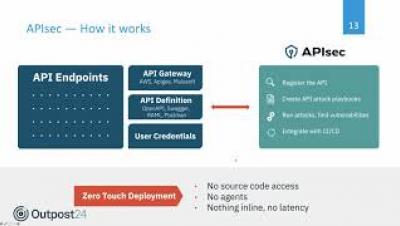
Outpost24 Webinar - API security 101 and how to secure your web applications

APIs are a key part of modern web applications and a growing security challenge that isn’t well understood by developers and application security managers, leading to exposed APIs that give hackers access to sensitive data. Find out how to secure your APIs and prevent vulnerabilities from making it into production.

CVE-2021-4034: A Walkthrough of Pwnkit - the Latest Linux Privileges Escalation Vulnerability

Since 2009, more than 12 years ago, all major Linux distributions have been incorporating a high severity security hole that remained unnoticed until just recently. The vulnerability and exploit, dubbed “PwnKit” (CVE-2021-4034), uses the vulnerable “pkexec” tool, and allows a local user to gain root system privileges on the affected host. Polkit (formerly PolicyKit) is a component for controlling system-wide privileges in Unix-like operating systems.