Security | Threat Detection | Cyberattacks | DevSecOps | Compliance

Understanding and mitigating CVE-2020-8566: Ceph cluster admin credentials leaks in kube-controller-manager log

While auditing the Kubernetes source code, I recently discovered an issue (CVE-2020-8566) in Kubernetes that may cause sensitive data leakage. You would be affected by CVE-2020-8566 if you created a Kubernetes cluster using ceph cluster as storage class, with logging level set to four or above in kube-controller-manager. In that case, your ceph user credentials will be leaked in the cloud-controller-manager‘s log.


NSA list: what you need to know about the top vulnerabilities currently targeted by Chinese hackers Part 2

In our previous blog we covered the first 10 of the NSA vulnerabilities currently targeted by Chinese hackers, here the remaining ones, again demonstrating the predictive power of our risk based vulnerability management tool Farsight

NSA list: what you need to know about the top vulnerabilities currently targeted by Chinese hackers Part 1

This week NSA published a list of the top 25 vulnerabilities that Chinese hackers are actively exploiting, and unsurprisingly the list included some of the most prominent CVEs that we’ve covered in our previous risk based vulnerability management blogs.

Track open source security exposure with Snyk and Datadog

Using open source code makes it easier to build applications, but the freely available nature of open source code introduces the risk of pulling potential security vulnerabilities into your environment. Knowing whether or not customers are actually accessing the vulnerable parts of your application is key to triaging security threats without spending hours fixing an issue that doesn’t affect end users.

6 top risk factors to triage vulnerabilities effectively

Common Vulnerability Scoring System (CVSS) scores have been viewed as the de facto measure to prioritize vulnerabilities. Vulnerabilities are assigned CVSS scores ranging from one to 10, with 10 being the most severe. However, they were never intended as a means of risk prioritization. If you’ve relied on CVSS scores alone to safeguard your organization, here’s why you’re probably using them incorrectly.

Full Stack Blues: Exploring Vulnerabilities In The MEAN Stack

Full stack development is all the rage these days, and for good reason: developers with both front-end web development skills and back-end/server coding prowess clearly offer substantially more value to their respective organizations. The ability to traverse the entire stack competently also makes interacting and cooperating with operations and security an easier affair—a key tenet of DevOps culture.

Elasticsearch Vulnerability: How to Remediate the most recent Issues

An Elastic Security Advisory (ESA) is a notice from Elastic to its users of a new Elasticsearch vulnerability. The vendor assigns both a CVE and an ESA identifier to each advisory along with a summary and remediation details. When Elastic receives an issue, they evaluate it and, if the vendor decides it is a vulnerability, work to fix it before releasing a remediation in a timeframe that matches the severity.

Understanding and mitigating CVE-2020-8563: vSphere credentials leak in the cloud-controller-manager log

While auditing the Kubernetes source code, I recently discovered an issue (CVE-2020-8563) in Kubernetes that may cause sensitive data leakage. You would be affected by CVE-2020-8563 if you created a Kubernetes cluster over vSphere, and enabled vSphere as a cloud provider with logging level set to 4 or above. In that case, your vSphere user credentials will be leaked in the cloud-controller-manager‘s log.

Domain controller patch alert! Vulnerability grants domain admin access in 10 seconds

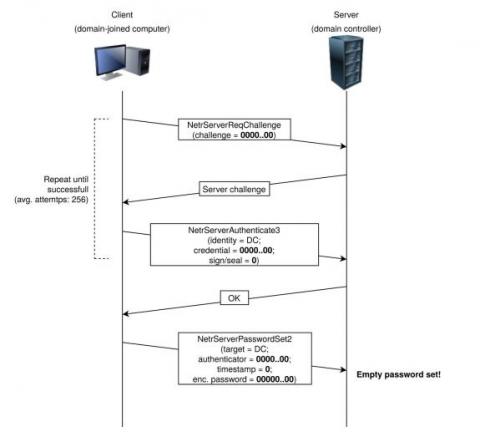
A critical Active Directory vulnerability (CVE-2020-1472) has been making headlines for being the most notorious elevation of privilege bug because it can affect all computers and domain controllers in an organization. This high-risk vulnerability, dubbed Zerologon, gives threat actors easy, instant access to domain controllers without requiring any additional privileges. This attack does not even require a user to be authenticated; the user just needs to be connected to the internal network.

Fix now: High risk vulnerabilities at large, October 13th

This time around, the MySQL vulnerabilities caught our attention because of their low CVSS scores compared to their high likelihood risk rating. This is something we see often when working with our customers, and demonstrates how a risk based approach to vulnerability management changes as organizations focus on where there is a real risk of compromise.