The need for “Zero Trust” today is no longer the same as what we talked about years ago when the term was first coined. Back then, businesses only had a handful of remote workers signing in to the corporate network. The common wisdom of the day dictated that you couldn’t implicitly trust the authentication of those remote users any longer because they weren’t on the company LAN and the common solution was installing two-factor authentication.
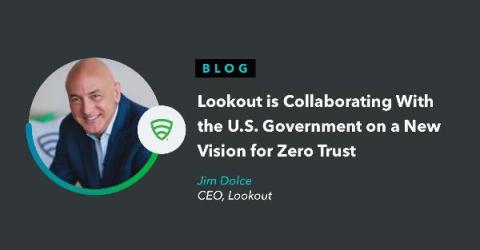
Public sector organisations are in the middle of a massive digital transformation. Technology advances like cloud, mobile, microservices and more are transforming the public sector to help them deliver services as efficiently as commercial businesses, meet growing mission-critical demands, and keep up with market expectations and be more agile.
Zero Trust is not something you purchase. Zero Trust is a security strategy you build out using the working assumption that there are no safe network zones, no perimeters, no safe users, and no safe devices. The Spectra Alliance helps enable a Zero Trust model across the scope of six elements including applications, data, networks, infrastructure, identities, and devices.
People love to talk about zero trust right now, for a number of reasons. It has the word “zero” in there, which has some history in the information security world (e.g., zero-day vulnerabilities). It’s also a simple and eye-catching phrase, so it fits well into product marketing exercises.
Five worthy reads is a regular column on five noteworthy items we’ve discovered while researching trending and timeless topics. This week, we explore why organizations should implement Zero Trust in 2021. In 2010, John Kindervag introduced the concept of “Zero Trust” which has become a touchstone for cyber resilience and persistent security. Zero Trust is not a security product, architecture, or technology.
As more companies migrate to the cloud, the way that companies protect data changes as well. In a traditional on-premises network architecture, companies were able to follow the “trust but verify” philosophy. However, protecting cloud data needs to take the “never trust always verify” approach. Understanding what a Zero Trust Architecture is and how to implement one can help enhance security.
When it comes to Data protection, we used to talk about securing the perimeter with firewalls, VPNs, cybersecurity training for employees, to prevent data leaks - remember those days?? Well, these days, things are a little different as we now have remote working to contend with. As a result, Zero Trust has crept in and tilted the formula for Data security and securing network perimeters is no longer effective.
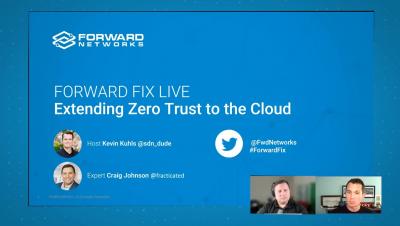
With the constant rise of modern cyber threats, many businesses are aiming for zero-trust infrastructure to keep themselves and their customers safe. But a zero-trust environment, where only authorized people can access information and resources, is often more difficult to implement than anticipated. If security teams and network engineers cannot visualize the network and its possible traffic paths and behaviors, they can’t possibly secure the environment.