Security | Threat Detection | Cyberattacks | DevSecOps | Compliance

The Latest Cybersecurity News & Insights From Around The World


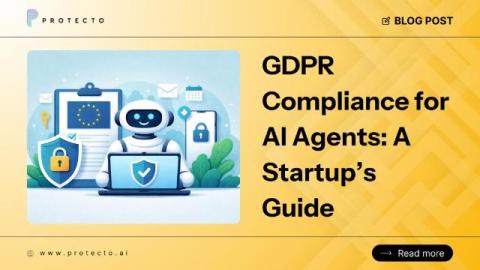
GDPR Compliance for AI Agents: A Startup's Guide
AI agents are moving fast. They book meetings, draft emails, summarize calls, search internal knowledge bases, and increasingly act on behalf of users. And as more teams adopt these systems, a familiar question surfaces almost immediately: How does GDPR apply to AI agents? What we’ve learned—working with startups rolling out AI features across support, sales, HR, and engineering—is that GDPR is not a blocker.
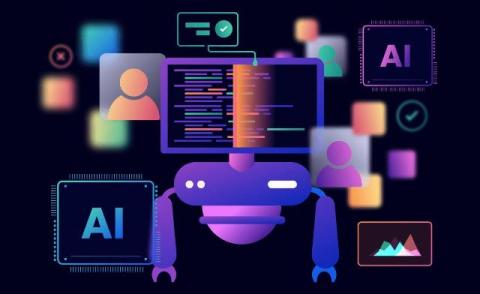
Old AI Security vs Evo: Watch Agentic Security Replace Weeks of Manual Work
From intelligent chatbots to autonomous agents, innovation has never moved faster thanks to GenAI. But with the rate of velocity comes a massive new challenge: a class of complex, non-deterministic security risks that traditional cybersecurity methods are simply not equipped to handle. AI-native applications are already running in production. Across industries, teams are deploying copilots, RAG systems, autonomous agents, and AI-powered workflows faster than traditional security processes can keep up.

INETCO's Bijan Sanii on Conversations Live: 'Cybersecurity is an arms race. AI today, quantum tomorrow'
At the recent Conversations Live with Stuart McNish panel on cybersecurity — part of the thoughtful public affairs dialogue series produced in partnership with the Vancouver Sun — industry leaders gathered to unpack the real-world risks shaping organizational resilience and national security. The event, held on Dec. 10, 2025, brought together experts from across the cybersecurity landscape to go beyond headlines and explore strategies for responding to evolving threats.

Bridging the Global Cybersecurity Language Gap: How MachineTranslation.com Empowers Security Professionals
In today's hyperconnected digital world, cybersecurity isn't local, it's global. Criminals and nation-state attackers operate across borders, publish in multiple languages, and exploit ambiguities that arise when technical details get lost in translation. Meanwhile, defenders rely on timely threat intelligence, vulnerability disclosures, compliance guidance, and incident response playbooks, often issued in dozens of languages by vendors, cybersecurity agencies, CERTs, and independent researchers.
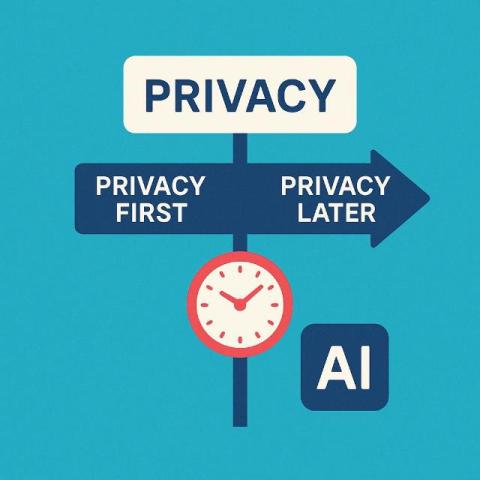
Privacy First vs. Privacy Later: The Cost of Delaying in the AI Era
In the startup world, speed is oxygen. The mantra is familiar: move fast, ship the MVP, and break things if you have to. When you are fighting for traction, especially when building generative AI applications, privacy usually feels like a “nice-to-have.” It’s something you bolt on later once you have actual users and revenue. But treating data protection as a post-launch feature creates a specific, dangerous kind of liability.
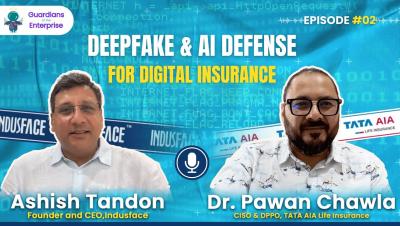
Deepfake & AI Defense for Digital Insurance | Dr.Pawan Chawla (CISO & DPPO, Tata AIA Life Insurance)
In Episode of Guardians of the Enterprise, Dr. Pawan Chawla (CISO and DPPO, Tata AIA Life Insurance) joins Ashish Tandon (Founder and CEO, Indusface) to discuss the emerging cyber challenges facing the insurance industry. He highlights how cybercrime marketplaces are lowering barriers for attackers, the rise in third-party and internal risks, and other evolving threats shaping security priorities for insurers.
AI Pentesting in Action: A TL;DV Recap of Our Live Demo
If you missed the live walkthrough of Aikido AI Pentesting, here is the short version of what happened. We set up a real application, configured the assessment, and watched the agents test live flows, explore the app, and surface confirmed findings with full traces.
The 2025 Cloudflare Radar Year in Review: The rise of AI, post-quantum, and record-breaking DDoS attacks
The 2025 Cloudflare Radar Year in Review is here: our sixth annual review of the Internet trends and patterns we observed throughout the year, based on Cloudflare’s expansive network view.
CrowdStrike Secures Growing AI Attack Surface with Falcon AI Detection and Response
Artificial intelligence is transforming how organizations operate, innovate, and compete. From employees using GenAI tools to boost productivity to engineering teams building sophisticated AI agents and applications, AI has become central to modern business operations. AI now operates across every part of the enterprise, spanning endpoints, applications, identities, cloud services, data, and SaaS platforms.