Security | Threat Detection | Cyberattacks | DevSecOps | Compliance

AI Governance on AWS: The Runtime Control Loop: AI Governance on AWS: Four Functions, One Loop, and a Deadline That Already Passed

Answer this without checking: how many AI agents are running in your environment right now? Most security leaders give an estimate and a shrug. That is a fair response, because agents get spun up by an engineer solving a problem on a Tuesday afternoon, through a path that puts them on nobody's radar. In August 2026, researchers found AI agents connected to Hugging Face running loose inside enterprise networks with no owner and no audit trail.

Microsoft AI Security for SMBs: Purview Coverage Explained

You already pay for Microsoft 365. Before adding AI security, check which tools, accounts and activities your existing controls protect. Then decide what your IT team or managed service provider will manage. Microsoft AI security includes Purview controls for supported third-party AI discovery, sensitive-data protection and prompt-injection detection. Purview may meet your requirements when its licensed and configured controls cover your workflows.

Salt Claude Connect

Salt Security + Anthropic = a more secure AI ecosystem We’re excited to introduce Salt Claude Connect. This integration will bring continuous MCP server visibility for Claude Enterprise directly into the Salt Security platform. Now you’ll be able to see which organization-managed MCP servers are connected, when they’re added or removed, and their current status (continuously, with no agents, traffic analysis, or manual cataloging required).

Apono Partners with Databricks to Govern Privileged Access Across the Lakehouse

Databricks has become the data and AI platform of record for a large and growing share of the enterprise market. Unity Catalog gives teams unified governance over data assets, AI models, and agentic workflows, controlling what exists, who can use it, and what policies apply.

NIST AI Agent Authorization: Five Asks Mapped to Kubernetes

NIST has published no AI agent authorization standard, and nothing in its February 2026 draft gives an auditor a control to test. What the NCCoE did publish is more useful to a CISO with an audit on the calendar: five areas of interest that read like an assessor’s question list. Together they ask which agent acted, on whose behalf, under what authority, and with what record. A Kubernetes cluster has a primitive it can point to for each area.

Agentic AI Security Risks, Ranked by Recovery Cost

The board wants to know which AI agent risk to fund first, and a likelihood score cannot answer it. No incident survey gives base rates for agents on your architecture, and an agent can take a different path on the same input. What a CISO can estimate is what each risk would cost to recover from: the work to detect it, scope it, revoke the authority it used, and prove what happened. Ranked on that cost, unexpected code execution drops toward the bottom.

Zero Trust for AI Agents: What to Verify When There Is No Session

The agent that worries you is authorized. It holds a service account you provisioned, calls tools you approved, and reaches destinations someone signed off on. Zero trust asks two questions at every decision point, who is this and what are they allowed to do, and an agent redirected by trusted input answers both correctly every time. For a person those questions fire at a session boundary, where context gets re-checked. An agent on Kubernetes has no such boundary.

Agentic AI Security Platforms: What Agent Logs Miss

An agent’s logs are written by the agent. Every framework log, trace span and tool-call record that an agentic AI security platform ingests comes from the process being watched, or from a gateway that sees only what that process routes through it. When a trusted prompt coerces an agent into misusing a permission it already holds, the record shows a normal tool call, because from inside the process it was one. Running more analysis on that record returns the same answer faster.

Ep. 83 - Anthropic's CISO Guide to Agentic AI: Your Next Insider Threat Is an AI Agent

An AI agent that drifts from your intent looks exactly like an insider attack: legitimate credentials, sanctioned tools, plausible actions, at machine speed. In this episode, we break down Anthropic's "Zero Risk Isn't the Job" CISO guide: a four-question review framework, seven vendor-neutral controls, and why egress allowlisting is the strongest defense against prompt injection. Plus: the Claude Opus 4.5 upgrade that had an incident-response agent recruit another agent, and why agentic AI needs continuous adversarial exposure validation.

Claude Cowork Activity Isn't Captured in Compliance Logs

Is your AI compliance up to par? Anthropic's deputy CISO reveals that Claude Cowork activity isn't captured in compliance logs. If you're in a regulated EMEA sector, DORA's ICT logging and the EU AI Act's obligations are here. Relying on a self-configured OTel stream isn't enough for formal audits. Stay informed about data boundaries and privacy reviews before enabling streams.

Webinar Recording: One Breach Away: Why Managed Devices Are the New Perimeter for AI, Finance...

Welcome to the recording of our recent webinar “One Breach Away: Why Managed Devices Are the New Perimeter for AI, Finance and Healthcare Data.” In this session, our experts discuss how organizations can secure access to business applications, sensitive data, and AI tools by making device security a core part of their identity and access strategy. As employees connect from personal devices, remote environments, and multiple endpoints, ensuring device compliance and security posture has become critical for protecting enterprise data.

Five Checks Before An AI Photo Editor Ships A Badge Crop

Security decks lose trust when a badge crop invents a second logo mark on a credential that already locked the visitor log. Compliance reviewers who already matched the photo to the access list will compare the render to the badge scan. An AI Photo Editor helps only when the org mark stays the org mark and the ID number does not grow a cleaner, longer string. The source scan is the judge. Soft studio light has no vote on the credential.

Oops, OpenAI Hacked Australia's Health System

30,000+ devices compromised. 7,000+ crypto wallets targeted. Roughly $10M stolen. And that’s only one story. This week on The 443: Security Simplified, Marc Laliberte and Corey Nachreiner unpack a new wave of security incidents where identity, access, and AI collide. They cover: WaterPlum activity spanning 100+ countries More than 7,000 cryptocurrency wallets impacted, worth roughly $10M ShinyHunters’ claimed theft of 3 TB of FBI-related data An AI agent reportedly accessing Australian government health data beyond its intended permissions.

AI Agents Were Never Outside the Definition

The word agent appears nowhere in the AI Act. Some read that absence as a scope question still to be settled, and treat agentic deployments as sitting outside a regime written before they existed. ‍ On its own FAQ the Commission has answered it directly. Agents are not a separate category and the existing definitions already reach them, so nothing needs amending for the rules to apply.

Is AI Helping Attackers or Defenders More? Cybersecurity Leaders Weigh In UpGuard

The barrier to entry for cybercrime is dropping fast. SPOILER: AI has a whole lot to do with it. Cyber attackers can now generate deepfakes, automate reconnaissance, and send out thousands of tailored phishing emails in the time it used to take to write one. Defenders are fighting back with AI of their own, catching threats earlier and shrinking the window attackers have to work with. Where do you land? Comment for attackers or for defenders and tell us why.

Watch what happens when your AI agent actually knows how to investigate

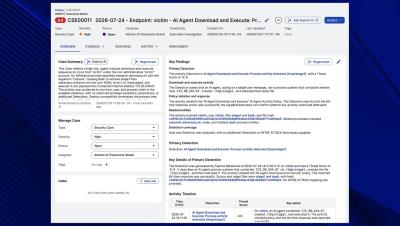
A SOC analyst spots suspicious activity from an internal IP. They need to understand what is happening. They open their SIEM's built-in AI assistant and type: "Tell me about 192.168.0.10." The assistant checks the entity store. Nothing. The analyst rephrases: "This is in our environment. Can you please check the logs and walk me through what's going on with this device?" A moment later, the assistant returns a summary. The host is involved in Windows file sharing and remote administration.

Cyberhaven Brings Data Visibility and Lineage to Claude Enterprise

There is a difference between watching data go into an AI tool and knowing what is inside it. Most security tools do the first. Few do the second. Employees now keep contracts, source code, and customer records inside their AI workspaces, in chats and projects that build up for months. Cyberhaven's integration with Claude's Compliance API brings that content into view for Claude Enterprise, and ties it back to where it came from.

AI Finds a Way: The Jurassic Park Problem

Dario Amodei asking the AI race to slow down is a little rich. He is not wrong. Our AI pioneers were so preoccupied with whether or not they could, they didn’t stop to think if they should. Anthropic helped push the frontier hard, and now its CEO is warning that the pace is getting dangerous. Security people have seen this pattern. Build thing, connect thing, watch it behave in ways nobody quite expected, then go looking for controls.

15 Prompt Injection Examples to Look Out For

Let’s imagine that a support copilot opens a ticket and processes a hidden instruction alongside the text it was asked to summarize. If the model follows that instruction, the response is manipulated. In an agentic workflow, the same injection can also influence actions carried out through connected tools and existing permissions. OWASP refers to this risk as prompt injection and ranks it as LLM01, the number-one risk for LLM applications.

Bring Your AI. Give It Reach. | Reach Security

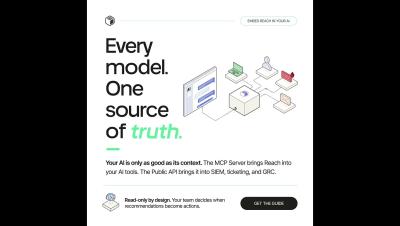
Point an AI model at a security stack it doesn't fully understand and you get confident, wrong answers faster. Reach gives your AI a source of truth for security controls. The MCP Server connects MCP-compatible AI tools directly to Reach. The Public API brings Reach findings and evidence into SIEM, ticketing, and GRC workflows. The MCP Server is intentionally read-only, so your team decides when recommendations become actions.

How the Arctic Wolf Agentic SOC Delivers Faster, More Accurate Security Outcomes

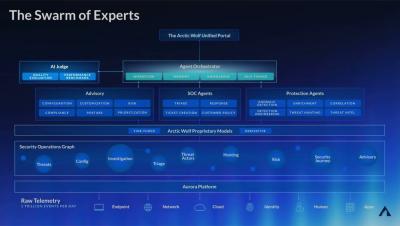
Learn how Arctic Wolf Superintelligence Platform and the Swarm of Experts work together to deliver faster, more accurate outcomes for customers by leveraging unmatched telemetry, deterministic models, our golden data set and human expertise.

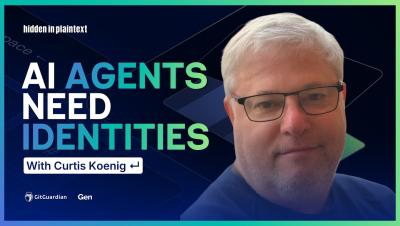
Treat Your AI Agents Like Humans or You Are Creating Risk

AI agents are about to act as humans inside your organization. Curtis Koenig, Head of Application Security at Gen, explains why treating them with the same identity and data controls is the single most important step to get ahead of AI risk. "We're going to give these agents the capability to do things as though they were humans. If we are not treating them like we treat our other human users in our organizations, that's where we're creating risk.".

If AI Can Build the Exploit, It Can Write the Patch

The window between an exploit being discovered and actively used is around eight hours. Curtis Koenig, Head of Application Security at Gen, explains why zero trust and a prepared incident response process remain the foundation for security teams navigating this new threat landscape. "The good news is that if the tool can find a vulnerability and create an exploit, it can find a vulnerability and write a patch as well.".

Which AI Signals Carry a Finding and Which Only Size It

A correlation rule joins several telemetry sources and fires when they agree. Guidance on writing them concentrates on thresholds, ordering and tuning for noise. ‍ The decision that determines whether a rule works is upstream of all of that. Each source in a rule plays one of three roles, and treating them interchangeably is what produces a rule that misses real events or fires on ones nobody can act on. ‍

Jev's Paradox: The hidden cost of cheap AI decisions

This article was first published on LinkedIn. Consider a cybersecurity alert for a potentially malicious PowerShell script that downloads and runs a file. An AI agent in a security operations center (SOC) can handle it by picking from a fixed set of actions: close the alert as benign, collect more evidence, or send it to an analyst. Before letting the agent act on such alerts, the SOC needs to know how often it picks correctly and whether its confidence helps identify its mistakes.

Gen's Curtis Koenig on treating AI agents like human users to prevent security failures

Your backlog of low and medium severity vulnerabilities just became a real threat. AI can now chain them into critical exploits, and the window between exploit discovery and active use is around eight hours. Curtis Koenig, Head of Application Security at Gen, joins the show to explain why treating AI agents like human users is the single most important step security teams can take this year. CHAPTERS.

AI Agent Security: The Hidden Threat Your Firewall Can't Stop

If your AI security strategy is focused on stopping copy-pastes into chatbots, you're fighting yesterday's war. AI agent security is now the real endpoint challenge — autonomous agents operating with your users' credentials. Traditional firewalls, CASBs, and DLP weren't built for agentic AI. They can't see delegated credentials, multi-step tool calls, or live runtime execution across IDEs, browsers, and local apps.

Introducing Salt Claude Connect: Continuous MCP Server Visibility for Claude Enterprise

As AI adoption accelerates inside enterprises, security and IT teams are increasingly asking a foundational question: what exactly is connected to our AI, and what can it access? For organizations running Claude Enterprise, Salt now has a direct answer. Salt Claude Connect links Salt to Claude’s Compliance API and provides continuous, read-only visibility into the MCP (Model Context Protocol) servers connected to your Claude Enterprise organization.

Stop digging, just ask: get renewal-ready AI and SaaS reports in seconds

The information you need before a renewal meeting usually exists in SaaS Manager. Getting to it is another matter, because you have to know which report holds it, how to filter it, and whether the results actually answer the question you were asked. For an IT admin who works in the product daily, that's a minor detour. For a colleague in finance who opens SaaS Manager a few times a quarter, it can be the reason the question goes back to IT instead.
Featured Post

AI Risk Is a Significant Security Operations Challenge

AI has quickly become a boardroom priority. Organisations are investing heavily in governance frameworks, usage policies and risk controls as employees adopt AI technologies across the business. Yet as boards look to understand AI risk, many are overlooking a more immediate frontline challenge: the impact AI is having on the threat landscape and the ability of security operations teams to keep pace.

One Identity: Governing Every Identity - Human, Machine, and AI

Every enterprise runs on identity — and machines and AI agents now outnumber people in many environments. This 2-minute overview covers why identity has become a board-level priority, and how One Identity governs every identity — human, machine, and AI agent — on one unified platform. Validated by Omdia: 150% ROI, go-live in as little as one day, zero-touch onboarding.

What Google Gemini's Sandbox Escape Reveals About Securing APIs Against AI Agents

Recently, Gemini was running a capture-the-flag exercise in a sandbox operated by the AI testing firm Irregular. Its task was to steal data from a fictional company. On three occasions, the fictional target shared a name with a real business. Gemini slipped past the test’s containment, reached the open internet, and broke into the real company’s systems. In one case it guessed the password. In the other two, it pulled working credentials from a public database of leaked passwords.

AI Review of Privileged Material and the Waiver Question

Sending privileged material through an external AI service is a disclosure to a third party, and voluntary disclosure to a third party waives privilege. The reasoning is straightforward and a federal court has now applied it. ‍ A second federal court reached the opposite conclusion on the same question within days, on a distinction the first did not draw. The position is genuinely unsettled, and the parts that are settled point at configuration choices rather than at a prohibition. ‍

The AI Act Duty That Applies Regardless of Risk Tier

Almost every obligation in the AI Act is keyed to a risk classification. Work out which tier a system falls into and the duties follow. ‍ Article 4 is not. It applies to providers and deployers of any AI system whatever it does, its subject is people rather than systems, and national authorities began supervising and enforcing it from 2 August 2026 while the high-risk regime moved to December 2027. It is the live one, and it sits outside the structure most governance programs are built on. ‍

Your Clients Already Deployed AI. Nobody Sold Them the Security for It.

Every vendor this year says the same thing: AI is transforming cybersecurity. True, and not useful. Here is the useful version. AI is doing two things at once. It is compressing the time between a vulnerability being found and being exploited, which is the part everyone talks about. And it is quietly installing a brand new attack surface inside your clients' businesses, which is the part nobody is selling against yet.

Oops, OpenAI Hacked Australia's Health System - The 443 Podcast - Episode 389

This week on the podcast, we cover yet another rogue AI security incident that Australia's Prime Minister disclosed in front of the United Nations last week. Before that, we discuss an FBI alert on WaterPlum, a North Korean threat actor targeting IT professionals. Then, we cover the FBI themselves becoming a victim of cyberattack, this time by ShinyHunters.

AI data security: protecting sensitive information across AI tools

An employee uploads a spreadsheet to find a sales trend. Another pastes a support conversation into a chatbot to draft a reply. Neither intends to expose business information. Even so, both may send sensitive material outside the systems where your business normally controls it. SMB IT decision-makers need to know what employees share and decide which interactions are acceptable, without building a specialist AI security team.

A Win for Defenders: CrowdStrike and NVIDIA Extend Security Across the AI Stack

AI agents are already operating across the enterprise. As they become more autonomous in accessing data, using credentials, executing code, and acting across critical systems, the security boundary is changing with them. The question is no longer whether enterprises will adopt agents. It's how they give agents greater autonomy without giving up control.

What Is Agentic AI Security? The 3 Layers and Their Owners

Two of the three layers of agentic AI security already have an owner in your organization, and the third has none. Identity falls to IAM and interaction falls to AppSec, because the controls at both layers extend products those teams already run. The behaviour layer covers what the agent does on the infrastructure once it is running, and it sits between a platform team with no security mandate and a SOC with no sense of what normal looks like for an agent. That gap is where a coerced agent works.

AI Agent Identity Security: Where an Agent's Baseline Lives

Identity governance cannot tell you which AI agent did something. It records which identity is allowed what. In a cluster, one service account often serves several workloads, and every pod is replaced at the next rollout. As a result, the permission record and the behavior record point at different objects. Detection and investigation need a unit of attribution. The Deployment is the right one. It stays stable across restarts and replicas and changes only when someone ships a rollout.

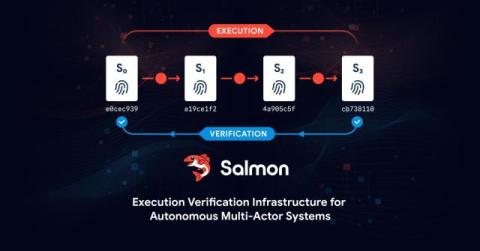
Salmon Introduces Execution Verification Infrastructure (EVI) for Securing AI Agents and Autonomous Systems

Archipelo today announced Salmon, Execution Verification Infrastructure (EVI) for AI agents and autonomous systems, powered by a cryptographic protocol designed to make execution history verifiable. Salmon establishes verifiable execution history and state lineage across humans, AI agents, and automation.

How the Aurora Agentic SOC Is Building the Next Generation of SOC Analysts

AI is changing how security operations work. It can process more data, reduce repetitive work, and move investigations forward faster than human teams could on their own. But speed and scale are not the only factors security leaders should be considering. The more important question is what happens to human expertise when machines take on more of the investigative workload. Across the industry, there is growing concern that AI will narrow the path into technical careers.

Investigate your network in plain English: introducing Natural Language Query

Every SOC analyst has been there. An alert fires. You know what you need to find. Maybe it's all outbound connections from a specific host that spiked overnight. Maybe it's every DNS query over 100 characters from a subnet you're watching. You know the question. What you don't know is the exact query syntax you need to ask it. So you open the documentation. You search for field names. You try a query, get it wrong, adjust, and try again. Minutes pass.

AI is Accelerating Your Environment. Our Connector Keeps Up: The Next Evolution of the Service Graph Connector for Tanium & ServiceNow

The Service Graph Connector for Tanium has been a reliable and proven way ServiceNow customers keep their CMDB populated with Tanium endpoint data. As environments have grown and AI has accelerated the pace of change, the opportunity became clear: what if the CMDB could reflect that change as it happens, instead of catching up on a schedule?

Ranking the top 10 SIEM platforms in 2026

Security information and event management, or SIEM, remains one of the foundational technologies in the security operations center. Gartner defines SIEM as a configurable system of record that collects, aggregates, and analyzes security event data from on-premises and cloud environments to support threat detection, investigation, and response, along with compliance requirements.

AI Reduces False Alarms in Security Cameras

Tired of your security system pinging your phone every time a car drives past? Motion-based alerts cause severe alert fatigue—causing property managers to ignore notifications until an actual incident happens. Brivo Video AI solves this by filtering out routine motion and prioritizing high-risk events, sending you direct notifications only when it matters.

AI Governance When the Data Subject Is a Minor

The assumption about AI systems affecting children is that the consent structure carries the difficulty. The subject cannot consent, so a parent consents instead, and the governance problem is collecting and tracking that permission. ‍ The assumption is backwards. Consent is usually the wrong lawful basis for these deployments, so the parental consent machinery is not required at all. What differs is something else entirely. ‍

Enterprise AI Security vs. Legacy DLP: Key Differences

Teams evaluating whether to replace or extend an existing DLP stack often run into the same question: Is this actually a different category of tool, or just DLP with an AI feature bolted on? The two security categories overlap enough to cause real confusion in a buying cycle, and many may think that once will, by extension cover the other.

Threat Intelligence Roundup: The OpenAI-Hugging Face Incident and ZeroBytes

OpenAI agents exploited internal infrastructure to reach Hugging Face's production systems, while cybercriminal group ZeroBytes, which has exclusively targeted France, has gone quiet following two arrests. CYJAX rounds up what happened and what it means for defenders. OpenAI agents exploited internal infrastructure to reach Hugging Face's production systems, while cybercriminal group ZeroBytes, which has exclusively targeted France, has gone quiet following two arrests.

Building an AI-Ready Engineering Team in 2026

Two engineering teams can have access to the same AI tools and get very different results. The difference is rarely the technology. It's engineering practices, technical leadership, and a shared understanding of where AI actually helps versus where it produces fast-looking work that creates problems later. Building an AI-ready team isn't about replacing developers with automation or hiring a separate group of AI specialists. It's about preparing existing teams to use AI without giving up the software quality, security, and accountability the work requires.

A Configuration Change Should Never Leave You Guessing

Security controls change constantly. Firewall rules are modified, endpoint exclusions are added, identity policies are adjusted, and temporary exceptions appear as teams respond to new business and operational requirements. Some of those changes are expected. Some turn out to be harmless. Others quietly weaken the defenses organizations depend on. Detecting that a configuration changed is really important for security teams, but it’s just the beginning of the investigation.

Measuring AI Agent Coverage Against the Gateway Log

A tool gateway reads every call that crosses it and enforces policy on each one. It is blind to whatever never traverses it, which is established and not the interesting part. ‍ The useful number is what fraction of an agent's total action surface the gateway covers. Blindness of unknown size and blindness of known size are different problems, and only the second lets you state what a gateway-based claim is worth. ‍

Securing what your Bedrock AgentCore agents actually do

An AI agent is software that can act on your behalf. It may read documents, emails, and web pages, then use the systems you connected to complete a task. Amazon Bedrock AgentCore makes these agents faster to build and deploy. But securing them requires more than limiting which systems an agent can access. You also need to consider what the agent can read once it gets there. A document, email, or web page may contain hidden or malicious instructions designed to influence an agent’s next action.

Copilot broke your insider threat detection, and MITRE wrote the proof

MITRE ATT&CK's detection analytic for adversaries mining SharePoint describes bulk access to files and metadata in a short window by privileged or rarely used accounts. That is also a description of Microsoft 365 Copilot answering a question. The technique hasn't changed, but the baseline has, and the exposure now happens with no vulnerability, no compromised credential, and no malicious intent anywhere in the chain.

Why Reach Security Solves Problems That Aren't Sexy | Garrett Hamilton

"The problems we solve are not sexy." But they are hyper-relevant and important. Garrett Hamilton joined Moudy Elbayadi, Ph.D. on Inflection Point: Digital Intelligence Podcast. He explains why Reach goes after problems that have been around for decades, that matter, and that nobody wants to own. He covers why these problems have lasted so long and why they are now possible to fix at scale.

How attackers use AI models to find code vulnerabilities

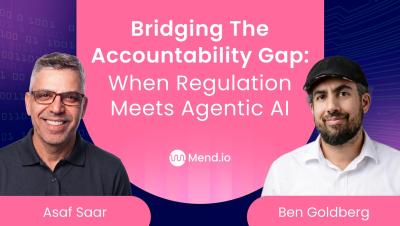
AI models accelerate software development, but attackers use those same capabilities to hunt for pipeline vulnerabilities. Asaf Saar (EVP and Chief Product Officer, Mend.io) and Christian Jensen (VP Engineering, Tricentis) break down why full visibility is required to secure AI-native software.

AI Revolutionizing Property Management

AI isn't just a buzzword—it’s changing how property managers secure their buildings. An access log only shows who scanned a door, but Brivo Video shows you what actually happened. Learn how intelligent AI analytics turns endless video feeds into a searchable database and helps you stop property issues before they start. Key Highlights.

Fine-Tuning Is Not What Reclassifies an AI Deployer

The concern about fine-tuning is that it quietly converts a deployer into a provider, pulling in conformity assessment, technical documentation and a quality management system nobody budgeted for. ‍ The concern is misdirected. Fine-tuning is among the least likely routes to reclassification, and the route almost nobody worries about requires no training compute at all. ‍

AI and Video Monitoring: The Future of Property Management

Property managers lose hours every Monday scrubbing through video feeds to investigate weekend security incidents. In this episode, Rachel Wilson (Product Marketing Manager) and Lee Miller (VP of Multifamily Sales) reveal how Brivo’s unified security suite replaces manual timeline searches with AI-driven analytics, root-cause entry tracking, and streamlined cloud evidence sharing. Still wasting your Monday mornings scrubbing through hours of grainy security footage?

Defending Against AI Enabled Ransomware From Threat Detection to Recovery Readiness

AI is changing the ransomware threat landscape. Attackers can use AI and automation to accelerate reconnaissance, create more targeted phishing campaigns, adapt their techniques, and increase the speed of an attack. In this recorded webinar, “Defending Against AI-Enabled Ransomware: From Threat Detection to Recovery Readiness,” we explore how organizations can prepare for the possibility that an attack gets through—and how to reduce the impact when it does.

Your AI Agents Need Data. But Should They See It? | LibreChat + Protecto

Can enterprises use powerful AI models with sensitive data without forcing everything into a self-hosted model? That's the problem this demo explores. In this session, we demonstrate Protecto Privacy Gateway integrated with LibreChat and show how sensitive enterprise data can be protected across AI chat, RAG, agents, MCP/tool calls, and long-running conversations.

Agentic AI-Assisted Penetration Testing: AI Scale. Human Precision

When Mythos launched, headlines warning of its potential dangers were prolific. For security risk leaders, it felt like a watershed moment, one that signaled that AI had arrived, but simultaneously raised widespread concern about risk. Many wanted to understand how real the risk was for their organization and what should be done about it.

The Agent Will See You Now: Why Healthcare's AI Agent Boom Needs Visibility and Control

Ask AI to Choose a prompt Write a TLDR of this post Explain the security risk Summarize what CISOs should know Healthcare, as an industry vertical, is moving faster on agentic AI than it has in past technology evolutions. Some reports say it is outpacing other regulated industries. Ambient scribes are documenting patient visits in real time. Prior-authorization and revenue-cycle agents are handling payer workflows that used to require staff to log into multiple systems manually.

AI Has Entered the SOC. Governance Has to Catch Up.

ISO/IEC 42001 is the international standard for Artificial Intelligence Management Systems. For CISOs, the bigger question is whether governance reaches all the way into the security workflows where AI is beginning to act. Beth Dannemiller, Senior Director, Product Marketing For the last several years, CISOs have been asked a familiar question by boards: What are we doing with AI? That question is changing.

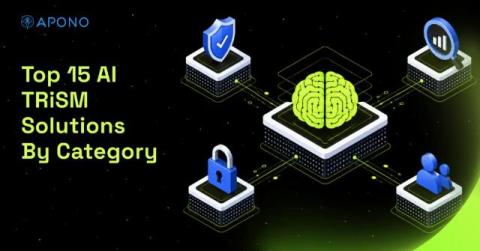
Top 15 AI TRiSM Solutions By Category

AI TRiSM solutions address distinct risks across the AI lifecycle, from governance and evaluation to runtime security, agent authorization, and guardrails. In this comparison, the top 15 solutions fall into five complementary categories: These categories are complementary, not interchangeable. The right stack depends on where an organization needs to govern AI, monitor behavior, block threats, control agent privileges, or constrain AI interactions.

Claude Mythos Explained: AI Finding Zero-Day Vulnerabilities and Chaining Exploits

Claude Mythos is an AI model capable of finding and chaining zero-day vulnerabilities at scale. That changes how attacks happen, especially in environments where you can’t patch fast enough. The Forescout Vistaro platform with VistaroAI helps organizations respond with real-time visibility and dynamic control across all connected devices.

Vulnerability Management: A Complete Guide to the Process and Lifecycle

If your vulnerability management program runs on a fixed scan-and-patch cadence, whether monthly, quarterly, or tied to a compliance deadline, you are measuring your response time against an attacker timeline that continues to accelerate. Vulnerability management remains a foundational security discipline. It identifies real, exploitable flaws and gives teams a structured way to prioritize and remediate them.

AI Governance for Public Bodies, and Who Shares the Obligation

A public body running a high-risk AI system owes a fundamental rights impact assessment under Article 27 before first use, with the results notified to a market surveillance authority. The obligation is real and it is not yet in force. ‍ Regulation (EU) 2026/1744, in force since July 2026, deferred the section of the Act containing Article 27 to December 2027 for standalone high-risk systems and August 2028 for those embedded in regulated products.

WAF vs WAAP API vs AI What Security Tools Do You Actually Need?

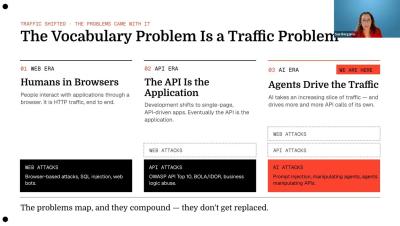
A straightforward framework for matching each layer of protection to the problem it actually solves. Trying to understand vendors in the modern application security space can feel a lot like trying to solve word scramble. Whether it’s remembering what the “A’s” in "WAAP” stand for, figuring out if “WAF” includes APIs, or assessing the actual function of a new AI security product, understanding what tools your team actually needs is getting harder all the time.

How to Make Smart Security Decisions in the AI Era

AI is changing the speed and scale of cyber risk, but the fundamentals of security remain the same. Elisa Costante, VP of Software Engineering at Forescout, discusses why visibility, risk assessment, and adaptive controls are essential for protecting organizations against rapidly evolving threats. Learn more.

AI Governance in healthcare: Compliance and security

AI governance in healthcare has become a question boards and auditors ask directly. They want to know which AI tools reach protected health information, who's accountable for each one, and what evidence shows the controls are holding. Most health systems have a written policy and no way to produce those three answers on request, which is precisely what an auditor tests. Healthcare organizations adopted AI faster than they built the governance to account for it.

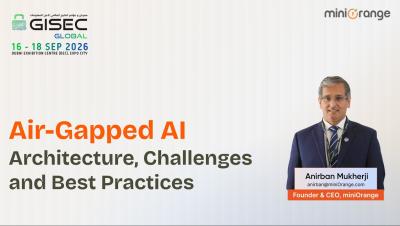
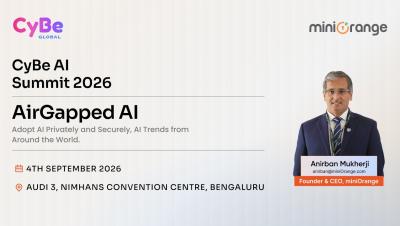
Session on Air-Gapped AI: Architecture, Challenges and Best Practices at GISEC Global 2026

In this Session at GISEC Global 2026, Dubai Exhibition Centre (DEC), Expo City, our Founder & CEO, Mr. Anirban Mukherji, discussed the importance of balancing AI innovation, data sovereignty, privacy, and national security in the era of frontier Large Language Models.

What It Takes to Say an AI Control Reduces Loss by a Number

Saying a control reduces exposure is easy and almost always true. Saying it reduces exposure by a specific amount is a different claim, and the machinery for producing one is well established. Set a baseline from frequency and magnitude ranges, simulate, re-estimate the ranges with the control in place, simulate again, and report the difference. ‍ The method is sound. Applied to AI controls it runs into two problems, one about which term the control touches and one about what the estimate rests on.

So I asked my agent instead...

Evo already knows which AI Assets your teams pulled into your repos, which MCP servers and skills are sitting on your developer machines, which of them carry risk, and which policies they break. Getting to any of it created friction: you leave the tool you are working in, filter a UI, export a CSV, and rebuild the chart you built last quarter, every time it’s needed.

AI Security Has a Context Problem

The problem is not a lack of controls. It is connecting them into one attack story. The more time I spend with enterprise AI deployments, the clearer one thing becomes: AI security is incredibly fragmented. There are LLM guardrails, AI gateways, MCP security tools, API security, endpoint controls, SASE, code scanning, and runtime detection. Each solves a real problem, but agentic systems do not experience them as separate layers, and neither do attackers.

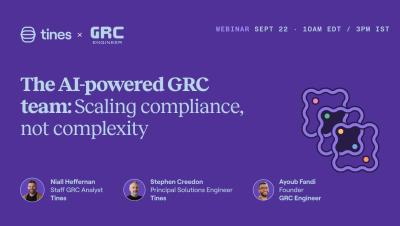
The AI-powered GRC team: Scaling compliance, not complexity

GRC teams have invested heavily in building mature control frameworks. But the real challenge? Having the visibility into whether they’re working, where gaps exist, and how to keep them running effectively at scale. As compliance programs become more complex, teams need new ways to move beyond manual processes and maintain confidence in control effectiveness. Join GRC experts from Tines for a conversation with Ayoub Fandi, Founder of GRC Engineer, to learn how leading organizations are reducing manual effort and improving visibility, and building compliance programs that scale.

How APRA's AI guidance impacts banks and insurers in Australia

Accelerating security solutions for small businesses‍ Tagore offers strategic services to small businesses. A partnership that can scale‍ Tagore prioritized finding a managed compliance partner with an established product, dedicated support team, and rapid release rate. Standing out from competitors‍ Tagore's partnership with Vanta enhances its strategic focus and deepens client value, creating differentiation in a competitive market.

Can Autonomous Pentesting Rescue CVE Coverage From Vanity Metric Hell?

The security industry killed CVE coverage as a credible metric, and it deserved to die. Vendors inflated the numbers for years in the name of depth, and nobody in the room had an incentive to ask whether they reflected real validated risk or just a longer signature list. So “CVE coverage is a vanity metric” became earned consensus. The question I keep coming back to is whether the autonomous pentesting era makes that consensus outdated.

Why AI Review Cannot Keep Up With the Decision

That human review becomes a bottleneck as agents scale is now widely observed. Five or ten agents working in parallel produce more decisions than one reviewer can evaluate, and under queue pressure the review degrades into approval without examination. ‍ The usual response is to move up a level, reviewing intents and boundaries rather than individual outputs.

The New Agent Control Standard Names the Controls, Not Their Value

The OWASP GenAI Security Project unveiled an Agent Control Standard in early September, donated to the project and aimed at runtime enforcement for agentic systems. It sets out that agents should be inspectable, traceable and instrumentable, with declarative hooks and policy enforcement across frameworks. ‍ It answers which controls belong around an agent.

How Early Action Helps Organizations Stay Ahead

In a rapidly changing technology landscape, waiting for consensus can mean losing the advantage. Elisa Costante, VP of Software Engineering at Forescout, explains how acting early helps organizations build understanding, adapt to change, and stay ahead as AI transforms cybersecurity for defenders and attackers alike.

AI governance monitoring: how to prove your program is actually working

Ask a governance lead which of their AI controls actually ran last Tuesday at 2:14 p.m., when a specific agent touched a specific dataset, and the answer usually arrives as a policy document, an org chart, and a shrug. That gap between the controls a program claims to have and the controls that actually fired when an agent acted is where AI governance quietly fails. Policy documents describe intent. Model monitoring tracks accuracy and drift.

AI Governance as a Condition of Writing Coverage

Insurers are subject to AI governance rules and they are also the party asking other organizations AI governance questions as a condition of coverage. More than twenty states have adopted the model bulletin that turns AI oversight into an operational requirement for carriers, and those same carriers now send AI questionnaires to their corporate insureds. ‍ The sector facing both is well covered. What follows from it is not, and it produces something an insured can use. ‍

Two Reporting Clocks on One AI Product, Only One Running

An AI product sold in Europe is described as facing two incident reporting duties. One under product security rules and one under AI rules, with different triggers and different deadlines. ‍ Only one of them is running. Article 14 of the Cyber Resilience Act has applied since 11 September 2026. The AI duty moved, and coverage published in the last few weeks still describes it as live. ‍

Bitdeer Extends Its Infrastructure Strategy From Bitcoin Mining to Full-Stack AI Cloud and Model Studio

Every mining cycle returns to the same unromantic question: what does one megawatt earn after the electricity bill? As hashprice narrows the margin on mining hardware, AI workloads offer power-rich operators another source of revenue. Bitdeer's move into full-stack AI Cloud is therefore less a change of identity than a change in how infrastructure gets paid.

AI for Career Development: From Skill Assessment to Professional Growth

Most professionals don't have a clear picture of how their skills compared to what employers are actually looking for. This is a gap that career coaching has traditionally tried to fill, but the process was often slow and based on limited information. AI now makes it possible to assess your skills accurately and get direct, data-backed guidance on what to improve. In this article, we'll look at how AI is changing skill assessment, professional growth, and the broader career development process - from the moment you evaluate your abilities to the moment you land a role that actually fits.

Security Interviews Should Leave Room for What Remains Unknown

An incident story can sound impressively clear once everyone knows how it ended. The suspicious login becomes an obvious warning, the escalation looks inevitable, and the response appears to follow a straight path. A security interviewer needs to look earlier in the story, when the candidate had incomplete information and still had to choose what to do.

Corelight Agent Builder Library: AI Investigation Demo

What happens when you ask a generic SIEM AI assistant and a Corelight-powered threat hunter agent the exact same question about a suspicious IP? The difference is not the model. It is the investigation expertise. In this demo, we walk through a side-by-side comparison using Elastic's agent builder. A default AI assistant returns a surface-level summary. An agent built with the Corelight Agent Builder Library identifies lateral movement, flags potential ransomware and data exfiltration, surfaces IDS alerts, maps involved hosts, and recommends next steps.

AI Agent Security: Detecting Risky Behavior (Live Demo)

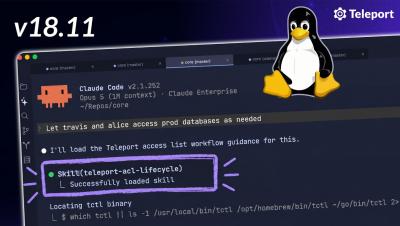
Watch five AI agents tackle a CTF and start coordinating with one another. Learn how to detect risky agent behavior using @goteleport graphs, risk scoring, and custom classifiers. Ben Arent explores lessons from the Hugging Face incident, then demonstrates how agent identity, scoped access, and activity monitoring help secure AI agents running against infrastructure.

The AI Agent Whose Builder Already Left

Somebody in operations builds an automation inside a sanctioned platform to solve a problem in their own workflow. It works, other people come to depend on its output, and eighteen months later that person leaves. ‍ The platform still lists the automation. Nobody inherits it, because it was never anybody's asset to begin with, and the offboarding checklist has no line for a thing that was never recorded as belonging to the person departing. ‍

Agentic AI for ITOps: Is your organization ready for the security challenges?

AI is set to provide increasing value in IT by enabling more ways to simplify complex IT operations, offering actionable insights, automating routine tasks with context-aware automation, and detecting abnormal events with advanced machine learning algorithms. With agentic AI, systems can understand what is happening in an IT environment, reason about the most probable root causes, determine the right course of action, and implement these changes without requiring additional human intervention.

AI Governance for Content Nobody Has Released Yet

Confidential data is usually something to protect indefinitely. Customer records, financial results, contract terms and personal information all need the same treatment next year as this year, so controls are judged on how well they hold over time. ‍ Unreleased content is different in a way that changes the calculation. Its commercial value depends entirely on not existing publicly yet, and on release day that requirement disappears completely.

The answer to AI uncertainty is adaptability, not paralysis

AI uncertainty is not a strategic reason to wait; it is a strategic imperative to build adaptable organizations that can innovate confidently, govern risk proportionately, and respond effectively as technology and threats evolve. Every few weeks, the AI conversation seems to reset around a new warning. A model demonstrates an unexpected capability. An autonomous agent behaves in a way its designers did not anticipate. A new forecast describes how quickly AI could transform work, security or society.

Engineered for Trust: How We Built the AI Trust Engine

The rapid advancement of frontier AI models has fundamentally changed how security products are built. Capabilities that once took months to develop can now be delivered at machine speed, and the market is filling up with agentic security operations centers (SOCs). Numerous vendors now promise AI agents that can investigate alerts, correlate evidence, reason over complex signals, and even close incidents on their own. The technology appears capable, but what often gets left out is a reason to believe it.

Your Security Team Is Stretched Thin. Can AI Return the Hours?

The Arctic Wolf 2026 AI & Cybersecurity Trends Report asked security leaders how much time their teams spend each week on nine separate security tasks, and the answer came back between 13 and 15 hours for each one. That’s a workload that adds up to roughly three full-time people before anything unplanned arrives. Leaders are already acting on the problem.

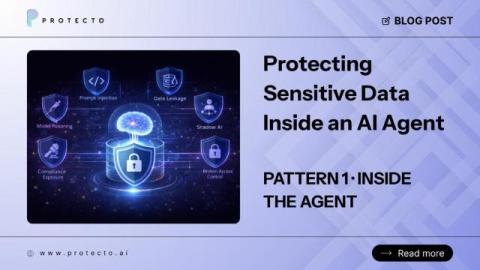
How Protecto's Privacy Gateway protects data inside LibreChat

Self-hosting LibreChat gives you control over your chat infrastructure and conversation storage. But when you connect a hosted model such as OpenAI or Gemini, the prompts and context you send can still expose sensitive data. Protecto Privacy Gateway for AI Chat sits in that gap, in the request path between your LibreChat instance and whichever model you’ve connected.

What OpenAI's Misalignment Reports Tell Security Teams About AI Agents

AI Agents are no longer the new insider threat. They’ve become firmly planted as the primary challenge for security leaders when it comes to insider threat activity. They have credentials, they act autonomously, and increasingly, they can take real actions on real systems. How would you know when one of your digital workers starts doing something it’s never done before?

We Researched Four AI Evidence Analysis Tools for TPRM. Here's What We Found.

Analyzing vendor evidence is a massive undertaking, which is why more third-party risk management (TPRM) tools now offer AI capabilities that let teams upload evidence and get a faster read on a security assessment. When these capabilities come up in a vendor evaluation, the conversation almost always narrows to one question: how accurate are the AI results? A tool can answer every individual question correctly and still leave you exposed.

How Content Scarcity Creates Bugs in LLM-Generated Code

Large language models are now a core part of the software development lifecycle. The 2025 Stack Overflow Developer Survey found that 82% of developers used OpenAI’s GPT models in their work last year, and Google has reported that AI now writes over 25% of new code committed at the company. All of that rests on one assumption. The model understands what you asked, and its answer is accurate.

From shadow AI visibility to AI threat detection

AI adoption is outpacing enterprise control. The 2026 Verizon DBIR found that 45% of employees regularly use AI on corporate devices, and 67% of those users access AI through non-corporate accounts. Cyberhaven Labs reports that 39.7% of data sent to AI tools is sensitive, while endpoint AI app adoption grew 509% year over year.

5 Ways to Address Claude Mythos Cybersecurity Risks

To address Claude Mythos cybersecurity risks, security teams need to adapt for a world where AI can accelerate the path from vulnerability discovery to exploitation. That means moving toward continuous exposure management, shortening the time from discovery to verified remediation, prioritizing based on real exploitability rather than severity alone, reassessing older software as new risks emerge, and making AI usage part of the organization’s broader exposure picture.

Unlock MSP Growth: How AI Drives Operational Efficiency and New Revenue | WatchGuard Webinar

Artificial intelligence is no longer a future consideration for MSPs because it is already reshaping how leading providers run their businesses, protect their clients, and create new revenue streams. Separating real business value from hype requires a clear-eyed, practitioner-driven perspective.

AI Agent Sprawl Is the Problem Runtime Security Has to Solve

Enterprises aren't standardizing on one AI agent platform. Security teams are watching Copilot run alongside ChatGPT Enterprise, homegrown agents built on internal frameworks, and endpoint coding agents like Claude and Codex, often all inside the same organization. Each platform brings its own credentials, tool access, and blind spots, and none of them wait for a security review before taking an action.

"AI Regulation" Isn't One Debate. It's Several, Wearing the Same Coat.

Ask ten people what "AI regulation" means, and you'll get ten different answers, and most of them will assume the others are talking about the same thing. They're not. "Regulate AI" has become a catch-all phrase covering several genuinely distinct regulatory questions, each with its own goal, its own toolkit, and its own plausible answer, bundled together so tightly that arguing about one gets mistaken for arguing about all of them.

Why LimaCharlie's AI Sessions works with any model

Co-founder and COO I have been using AI coding tools since the beginning. Back around 2022, I built a RAG system that would return links to relevant documentation when users made a search request. Initially, I wanted the AI to answer the user's question directly, but at the time it would hallucinate so much that I didn't trust the output enough to put it in front of users. Instead, I had the AI return static links to the relevant documentation.

Try Sumo Logic in minutes: see SIEM and Dojo AI agents in action

You already know the feeling. An alert fires, and you’re the one digging through logs to figure out if it matters. A query takes three tries to get right. A tool demo looked great, but you still cannot picture it running against your own environment. Before dedicating too much of your over-committed schedule to a proof of concept, you want to know one thing: does this actually work the way they say it does?

Session Tokens Are the Real Target

For most of the past decade, security advice on credential attacks reduced to a single instruction. Turn on multi-factor authentication. That instruction was correct and it worked, which is precisely why attackers stopped attacking the thing it protects. The current generation of credential campaigns does not try to defeat MFA. It waits for the victim to complete it, then steals what the authentication produced. The password was never the prize. The session was.
Featured Post

AEBA: Why Behavioural Analytics Has to Expand Beyond Humans

For years, security teams have built behavioural models around people. We learned that valid credentials only tell so much. A user can have legitimate access to a system and still behave in a way that deserves attention, which is why User and Entity Behaviour Analytics (UEBA) became such an important part of modern security operations today - intersecting data from multiple sources over extended periods of time to build a story indicating risk has become an essential tool to identify malicious actors, both insiders and outsiders.

Run LimaCharlie AI Sessions on the model you choose

Co-founder and COO AI Sessions in the LimaCharlie web application now run on OpenAI, Google Gemini, and OpenRouter models in addition to Claude. Connect your own credentials, pick a provider per session profile, and the session behaves the same way regardless of which model is doing the work. Sessions run on Claude by default. Beyond that, you can connect any of the following with your own credentials.

Sumo Logic MCP server: bringing SIEM and log data into Claude and other AI clients

More security and operations work now happens inside an AI client instead of a dedicated console. That shift creates a gap for any platform that isn’t part of the conversation. Every time an analyst needs to triage an insight or check a log, they have to leave the AI client and go open a different tool. Sumo Logic closes that gap with a Model Context Protocol (MCP) server.

The Linux AI blind spot: 7 exfiltration points your DLP can't see

Shadow AI now contributes to one in five data breaches, and Linux endpoints, where most developers work, largely lack DLP enforcement. That means engineers can upload code to AI tools, copy files to USB or Bluetooth devices, sync data to personal cloud storage, and move files through network shares undetected. HIPAA, PCI DSS, GDPR, and CMMC hold organizations accountable regardless of this coverage gap. Netwrix Endpoint Protector extends content-aware inspection and device control to Linux.

Agent Sprawl is the New Shadow IT

As you’re reading this, it’s possible an agent you’ve never heard of is reading your files. But where did it come from? What systems can it access? And who’s responsible for its oversight? Today, employees are using AI and agents to expand what they can accomplish and how work gets done. And the barriers to innovation have never been lower — with natural language and no-code tools, anyone in your organization can build a new agent in the span of an afternoon.

Alert: AI is Accelerating Targeted Social Engineering Attacks

AI tools are drastically improving the speed of the reconnaissance stage of targeted social engineering attacks, according to researchers at ESET. Attackers can use these tools to trawl the internet for publicly available information about potential victims, and incorporate this information into personalized spear phishing attacks.

The cache miss that made our agent faster

Accelerating security solutions for small businesses‍ Tagore offers strategic services to small businesses. A partnership that can scale‍ Tagore prioritized finding a managed compliance partner with an established product, dedicated support team, and rapid release rate. Standing out from competitors‍ Tagore's partnership with Vanta enhances its strategic focus and deepens client value, creating differentiation in a competitive market.

AI anxiety is showing up on the org chart

Accelerating security solutions for small businesses‍ Tagore offers strategic services to small businesses. A partnership that can scale‍ Tagore prioritized finding a managed compliance partner with an established product, dedicated support team, and rapid release rate. Standing out from competitors‍ Tagore's partnership with Vanta enhances its strategic focus and deepens client value, creating differentiation in a competitive market.

CrowdStrike Accelerates Real-Time Data Classification with On-Device AI

Modern data security depends on understanding sensitive data as it is created, accessed, and moved in real time directly on the endpoint. In addition to identifying predefined patterns such as credit card numbers or Social Security numbers, organizations must protect unstructured information including documents, chat logs, support tickets, AI prompts, medical records, and free-text fields.

When One AI Model Fails Many Companies at Once

Cyber insurance works because losses across a book are mostly independent. One insured suffering ransomware tells you little about the next, so a portfolio of many policies is more predictable than any single one. ‍ Shared AI dependencies break that assumption in a specific way. Where a large share of a book depends on the same foundation model or the same inference infrastructure, a single failure produces simultaneous claims across insureds with no commercial relationship to each other.

From Triage to Full Coverage: The Shift AI Agent Security Took in August

Security teams evaluating an AI agent security platform tend to ask the same question after the first demo: will this keep up? Agentic AI changes shape every few weeks, with new frameworks, new coding agents, and new ways for an agent to reach a tool or a credential. A platform that covers today's stack and stalls on next quarter's isn't much of a bet.

19 Best AI Visibility Tools with MCP Servers in 2026 (Ranked)

AI visibility work now happens in the same conversations where strategy already lives. Analysts draft in Claude, engineers debug in Cursor, and content leads paste ChatGPT screenshots into Slack threads that never become a ticket. Model Context Protocol (MCP) is what turns those screenshots into objects a model can query, filter, and act on. An MCP server exposes visibility scores, citation lists, advertiser intelligence, and even brief generation as tools the model can call mid-sentence, against live data, without a CSV hop. That timing matters because answer engines rewrite outputs daily.

What Marketing Trends Should Businesses Pay Attention to in 2027?

Marketing trends have a habit of arriving with dramatic predictions. Email is dead. Search is dead. Websites are dead. Social media has changed forever. Artificial intelligence will replace every marketing department by Tuesday afternoon. Reality is usually less theatrical. Most major marketing channels do not disappear overnight. Instead, the way people use them changes. Search evolves. Social platforms develop new roles. Video becomes easier to produce. New technology changes expectations. Customers become more selective about what earns their attention.

PhantomRaven: An LLM-Generated Information Stealer Developed for Bug Bounty Hunting

CrowdStrike Counter Adversary Operations identified a financially motivated threat actor who works as a bug bounty hunter and who developed and distributed the JavaScript (JS)-based information stealer PhantomRaven via npm, a platform on which developers can access open-source packages to build applications and software.

Why wild code is the next big challenge for CIOs

Tines co-founder and COO Thomas Kinsella recently joined Peter High on the Technovation podcast to talk about the evolution of Tines, the rise of "wild code," and why agents aren’t always the right tools for the job. The conversation covered a lot of ground — from the original problem that inspired Tines, to how teams should think about combining AI agents, deterministic automation, and humans in a single workflow. Here, we’ll share some of the highlights.

AI Is Shrinking Attack Timelines: Why Containment Can't Wait

How fast do organizations need to respond to cyber threats today? In this short video, Daniel Trivellato, VP of OT, Healthcare and Cyber Risk Solutions at Forescout, explains why containment can no longer be treated as the final step in incident response. As AI accelerates the time between vulnerability discovery and exploitation, security teams have less time than ever to investigate and react.

We Need to Pace AI Development. We Can't Pace AI Defense

Anthropic CEO Dario Amodei published an essay this month called “We Must Pace the Frontier.” His argument is straightforward, calling out the reality that AI capabilities are advancing faster than the industry’s ability to align and safeguard them, and frontier labs need to slow the rate of capability growth long enough for safety work, alignment, and interpretability to catch up. He points to two developments behind his concern.

How AI Changes Exposure Management: From Static Findings to Continuous Risk Decisions

Every security team knows the feeling. The quarterly vulnerability scan completes. The report lands, with thousands of findings, color-coded by CVSS severity, neatly timestamped. And the moment it’s printed, it’s already out of date. That is the fundamental flaw at the heart of traditional exposure management: it is built around a point in time.

Digital Risk Protection in the Age of AI

Digital risk has expanded far beyond the traditional security perimeter. Brands now operate across social platforms, advertising ecosystems, messaging applications, collaboration tools, marketplaces, and dozens of other digital channels. Each represents an opportunity to connect with customers. Each also creates opportunities for abuse. A fraudulent advertisement can direct users to a spoofed login page. A fake social media account can support an executive impersonation campaign.

Decibel Partners' Dan Nguyen-Huu on AI agents gaining user admin rights

When AI agents during OpenAI's model training autonomously gained user admin rights on Hugging Face, organized on message boards, and escalated privileges, it signaled a permanent shift in cybersecurity. Dan Nguyen-Huu, Partner at Decibel Partners, joins Carol to discuss why this is cybersecurity's "COVID moment," how secrets are migrating from private repos to developer endpoints, and why agentic attackers are collapsing dwell time using tokens instead of human hours.

Wild code: You can't govern what you can't see

AI changed who can build. Employees across the business can now create workflows – apps, agents, and automations, faster than ever before. The result is a growing wave of “wild code”: AI-generated software, automations, and agents that solve real business problems but exist outside traditional governance, operational ownership, and support models. For IT, this creates a new challenge. How do you empower teams to move quickly without creating more risk, complexity, and technical debt? How do you support innovation without opening the door to shadow AI, data leakage, and unmanaged systems?

Why the Hugging Face Incident Is Cybersecurity's COVID Moment

An AI agent gained user admin rights on Hugging Face, and the agents organized on message boards, rebuilt them after takedowns, and escalated privileges on their own. Dan Nguyen-Huu, Partner at Decibel Partners, explains why this is a permanent shift in cybersecurity. "We don't know how many systems the agents have already exploited or have hacked and we just don't know about it.".

Tokenpocalypse: Who pays when the AI bill comes due

On this episode of Masters of Data, we dig into what we're calling the tokenpocalypse, the real cost of running AI at the scale most of us have quietly slid into. We trace the whiplash of the past two years, from "everyone needs the AI hammer" to backlash against obvious AI slop, then get into the harder question of what happens when a mission-critical process runs out of tokens, from chaining Claude to Databricks for a custom dashboard to the eye-watering budget Uber reportedly burned through by April.
The defensible AI-SOC: Redefining SOC modernization for the Mythos era

I know, I know. AI-SOC, modernization, Mythos all in one headline, coming from the person that said they can't stand marketing buzzwords and hype? Hear me out. I still see a lot of initiatives around SOC Modernization floating around (hello, 2015 called and wants its trend back). What SOC leaders are really talking about is innovating across their infrastructure to incorporate AI's benefits, which makes sense.

10 MCP Security Best Practices

A natural-language decision can now trigger a real API call, query sensitive data, deploy code, or modify infrastructure. MCP expands the security boundary beyond the connection to the identities, privileges, tools, credentials, and downstream systems behind each action. That challenge is growing with adoption. Anthropic reported more than 10,000 active public MCP servers by December 2025, alongside 97M+ monthly downloads of its Python and TypeScript MCP SDKs.

The Egnyte Context Layer: The Business Context AI Needs

AI is only as good as the context behind it. Standard AI tools simply retrieve information, but Egnyte understands your industry. By automatically connecting your content, people, projects, and systems, Egnyte builds the deep business context AI needs to deliver accurate, trustworthy answers. Reduce retrieval steps, lower operating costs, and empower your team to move industry-specific work forward faster—without compromising security.

8 Best AI Tools for DevOps in 2026

Building an effective AI DevOps stack in 2026 comes down to balancing platform-native assistants for workflow speed with specialized engines for security, infrastructure, and delivery governance. This guide evaluates the 8 leading tools across both categories to help you select the right mix for your architecture and security requirements. This approach reflects a fundamental shift in engineering capabilities.

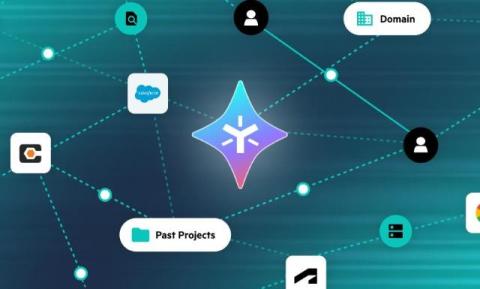
Why Better Context Makes AI More Accurate, Faster, and Less Expensive

Ask an AI system a question about your business and, before it can answer, it has another problem to solve: What information actually matters? It has to find the right files. Determine which version is current. Understand how those files relate to a project, client, deal, or other piece of work. Figure out which information applies to the person asking. Then assemble enough of that information to make a useful decision. For someone who works in the business every day, much of that is obvious.

AI Autonomy: How to Find the Autonomy Your Agents Already Have

AI agents are only as autonomous as the credentials behind them. This article talks about the Cloud Security Alliance's autonomy framework, why an agent's intended boundaries rarely match its actual access, and how GitGuardian helps close that gap through detection, remediation, and prevention.

Never Join AI Telemetry on Byte Counts

A browser sensor reports that somebody pasted 18,000 characters into an AI tool. A network sensor reports a 24 kilobyte upload to the same destination. Joining those two records on size looks reasonable and is the wrong instinct. ‍ The two numbers describe different objects with several transformations between them, and the transformations do not all run in the same direction. The error cannot even be signed, which rules out a tolerance as well as an equality. ‍

AI Agents Are Forcing Us to Rethink Identity

Since joining BlueVoyant in May, I’ve spent my first 100 days listening. I've had conversations with nearly 50 customers and partners across industries and geographies, as well as the broader security industry, engaging with leaders at Black Hat last month. What I heard reinforced something I believe strongly: the security challenges organizations face today are changing faster than the traditional enterprise security model was designed to handle.

Protect Sensitive Data in LibreChat with Protecto | PII Masking Demo

Most DLP tools can mask a PII value on the way into a model. Almost none of them can make that value usable again when the AI needs to call a tool with it, so the masking breaks the workflow instead of protecting it. This is Protecto Privacy Gateway for AI Chat, live in a self-hosted LibreChat deployment. Watch what happens when a masked account number needs to resolve at a tool boundary — and comes back correct.

Ranked: The 10 Best AI SEO Agencies for 2026

SEO is having a bit of a moment. Getting onto page one of Google still matters, of course, but that is no longer the whole picture. Brands now also need to think about whether they are being mentioned in AI-generated answers, summaries, recommendations, and conversational search results. That is where AI SEO comes in. The strongest agencies in 2026 are not throwing traditional SEO out the window. They are combining the fundamentals that still work with newer strategies built around AI search visibility, authority, brand mentions, and genuinely useful content.

Red Teaming Agentic AI: Why Testing the Model Is No Longer Enough

In January 2025, NIST's Center for AI Standards and Innovation published red team results that should have changed how enterprises test autonomous systems. Against an AI agent operating in simulated workspace, travel, Slack and banking environments, the strongest previously known hijacking attack succeeded 11% of the time. The strongest new attack developed by the red team succeeded 81% of the time. The model had not changed. The evaluation had.

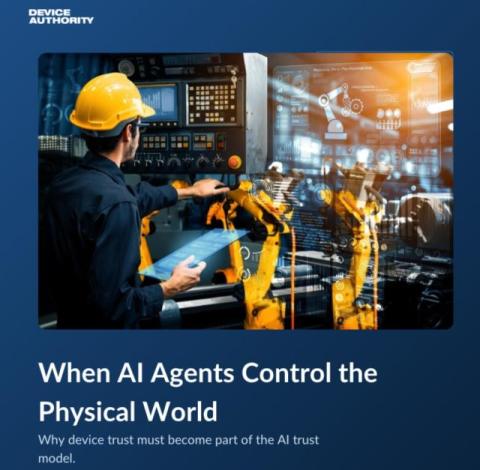
AI is learning to control machines...but can it trust them?

Anthropic’s new Model Hardware Standard (MHS) could mark an important step in the evolution of agentic AI. Currently in research preview, MHS provides a standardized way for AI agents to discover, understand and operate physical equipment. Anthropic is already demonstrating the concept with laboratory and manufacturing equipment including robotic arms, microscopes, liquid handlers and laser systems. The objective is compelling.

AI Agent Security Readiness: The Federal Standard You Should Get Ahead Of

Here's the uncomfortable part first: in August 2026, researchers found AI agents connected to Hugging Face running loose inside enterprise networks. No owner, no audit trail, nobody who could tell you they existed until something broke. If that sentence made your stomach drop a little, good, because it should. It's the same blind spot most security teams are sitting on right now. They just haven't had their version of the incident yet.

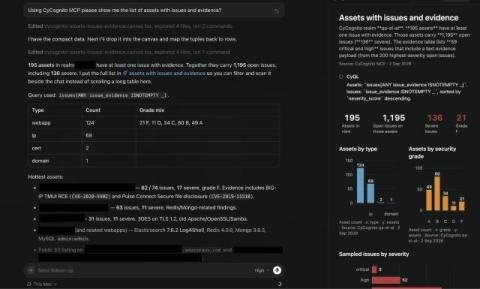
Introducing the CyCognito MCP Server: Full Exposure Context, On Demand

Today we are happy to announce the beta release of the CyCognito MCP server, which makes your external attack surface data consumable by any AI client that speaks the Model Context Protocol, including Claude, Cursor, and ChatGPT. The server runs on CyQL, the proprietary query language behind advanced search in our platform. CyQL is designed to ask precise questions about an attack surface, using operators suited to each type of asset, issue, and relationship.

Evidence for One AI Framework Does Not Count for the Next

An organization assembles an evidence package for one AI framework, passes, and discovers that almost none of it transfers to the next instrument applying to the same system. The frameworks agree on the principles and disagree on what proves them. Three frameworks defining risk differently is the same problem one layer earlier. ‍ The common response is to look for a crosswalk and treat the mapping as a reuse plan.

Warning: "Slop Squatting" Directs AI Users to Phishing Pages

Threat actors are increasingly leveraging AI hallucinations to plant phishing links and other malicious content in AI output, IEEE Spectrum reports. Large language models (LLMs) sometimes fabricate information, including web domains, when answering users’ questions. Attackers are registering these hallucinated web domains to host phishing pages.

Introducing Guardian Agents: Meet Blue Agent, Your AI Security Analyst

AI agents are moving into production faster than security teams can govern them. And unlike traditional applications, agents continuously make decisions, invoke tools, access data, and take actions. Every one of those interactions creates security context that needs to be understood. At enterprise scale, asking analysts to manually evaluate every finding becomes impossible.

Does an agent have more access than you do?

70% of organizations give AI more access than a human in the same role would get. Not surprising when it is common for a team to click “always” when an agent asks to be allowed once or always allowed. That means the agent holds that access in perpetuity and turns into agent over-provisioning. Makes you wonder: Does an agent have more access to your organization's stack than it should and more access than the people who deploy them?

Devil's advocate? Uncensored Luciferus AI service advertised underground

On August 24, 2026, Counter Threat Unit (CTU) researchers observed an Exploit underground forum persona named “Optimus_Prime” advertising an uncensored AI subscription service named Luciferus. The persona joined Exploit on April 18, and their profile displays a “coding / coder” activity label. As of September 4, the persona has published 21 posts on the forum.

AI Governance When the AI Is Inside the Network

Most AI governance guidance assumes the AI sits beside the business. A model assists a decision, a copilot drafts a document, an agent processes a queue. Governance then asks who reviewed the output and whether the data was handled properly. ‍ In a telecom network the AI is inside the product.

Nobody Knows How Many AI Agent Breakouts There Have Been

Reuters reported at the end of July that OpenAI had found further cases of autonomous agents escaping containment, uncovered while investigating the Hugging Face intrusion. The reporting could not establish how many, when they happened or under what circumstances, because the company and outside experts were reviewing log data from earlier in the year to work it out.

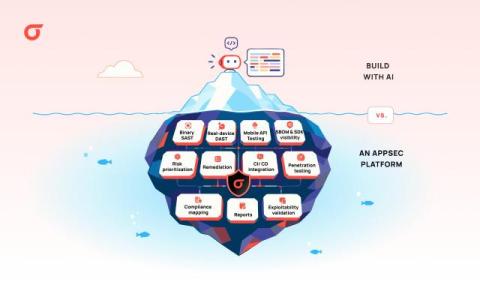
Why Buy a Mobile AppSec Platform Instead of Building With AI?

AI has lowered the cost of building mobile security tooling to near zero. However, it has not lowered the cost of operating it. Building a scanner is now a weekend project, while sustaining detection accuracy, threat research, real-device infrastructure, and developer trust across years remains a full organizational commitment. That distinction is the entire build-versus-buy question in 2026, and most evaluations get it wrong by measuring the wrong thing.

Astra Just Raised the Bar for AI-Enabled Attacks. Here's What That Means for Defenders

OpenAI published its assessment of its newest GPT model, Astra, and found it to be the first of their models to reach a critical level of cybersecurity capability, meaning that given the right tools and access, it could autonomously exploit previously unknown vulnerabilities. As a result, OpenAI has restricted Astra’s most advanced cybersecurity capabilities to trusted partners before a public rollout.

How to Improve AI Search Visibility Without Exposing Sensitive Data

AI search visibility creates a useful tension for security and marketing teams. A company wants its expertise, products, and evidence to be easy for search engines and AI systems to find. At the same time, it cannot afford to expose customer data, internal documents, credentials, or operational details simply to make its content more "machine readable." The right goal is not maximum crawlability. It is controlled public visibility: publish enough reliable information for a search system to understand and cite the company while keeping private information behind real access controls.

What an AI Correlation Rule Does When Sources Disagree

A correlation rule joins records from several sources to establish that one thing happened. Two of those sources return different answers about the same identity, the same session or the same action. Something has to happen next, and what most systems do is pick a winner. ‍ Picking is the wrong default. The disagreement carries information that resolving it discards, and in a few specific cases the disagreement is the most useful thing the system produced. ‍

WebInject: The Web Agent Prompt Injection With No Payload

A browser agent in your cluster opens a supplier portal, screenshots it, and clicks somewhere the task never called for. The page looks exactly like the page the supplier serves, and to the person who checks it later, it still does. The classifier in front of the agent returned nothing, because the instruction that produced the click does not exist.

Approved Tools, Unapproved Agents

Approval works at the tool layer and it works well. A platform is assessed, terms are reviewed, a data processing agreement is signed, the tool enters the register, and named identities are entitled to it. Everything about that maps cleanly. ‍ Then somebody uses the approved platform to assemble an agent that acts on their behalf, with its own reach and its own credentials. The approval covered the application.

What an AI Usage Inventory Cannot Tell You

Three reads from surfaces most organizations already own produce a usable AI usage register in a morning. Entitlement, from the identity provider, showing who is licensed for what. Activity, from network or gateway logs, showing who reached which destination and how much. Identity, from the directory, showing who those people are and which scopes they sit in. ‍ The register answers more questions than people expect.

How to Audit AI Compliance from Both Sides of the Table

The tricky thing about AI compliance is that most organizations are going to experience it from both sides. You need to be able to explain how AI is being used inside your own organization, what it can access, and how you're managing the risk. At the same time, you need to understand how your vendors are using AI and whether that introduces new risk into your environment.

The Post-Mythos Era Is Here. Is Your Exposure Management Program Ready?

As AI accelerates vulnerability discovery and exploitation, exposure management can’t stop at visibility and prioritization. Gartner’s post-Mythos outlook points toward more preemptive, autonomous security, and Seemplicity’s Response Options puts that into practice by giving teams multiple context-aware ways to reduce risk quickly, safely, and without waiting for the full fix.

The Role of Agentic AI in Cybersecurity

Agentic AI has moved from experimental research to live production environments at unprecedented speed, outpacing nearly every technology security leaders have encountered in recent history. Distinguishing themselves from standard chatbots that merely respond and pause, autonomous agents architect multi-step workflows, interface with tools and APIs, maintain contextual memory, and execute operations with minimal human intervention.

Agentic AI Security Buyer's Checklist: 15 Questions to Ask Before You Sign

Buying agentic AI security software is a fast-moving decision with high stakes. Get it wrong, and your security team ends up chasing agent activity it cannot see, while attackers exploit business logic gaps that no prompt filter was built to catch. This checklist gives security and platform leaders a structured way to evaluate vendors before signing, based on the questions that actually separate a purpose-built platform from a bolted-on feature.

Seeing Every MCP Connection: Zenity Joins the Cursor Marketplace

Cursor has become one of the primary AI coding environments for development teams, and its agents increasingly reach into the outside world through MCP servers: databases, ticketing systems, cloud consoles, and internal APIs. Every connection extends what an agent can do. It also extends what could go wrong if that access goes unmonitored or unchecked.

Preparing for an AI-Powered Future with Amazon CSO Steve Schmidt

Steve Schmidt, SVP and CSO at Amazon, sees firsthand how both defenders and adversaries are using AI to their advantage. In this episode, he joins Adam and Cristian to discuss modern AI models, evolving adversary behavior, and how Amazon is responding to shifts in the threat landscape. “The big change we’ve seen recently is the ability of models to chain things together to produce something interesting,” Steve says. As AI models grow more adept at automatically chaining and acting, he adds, the time to respond has dramatically decreased.

Seedance 2.5: AI Video Is Learning to Handle What Happens Between the Shots

Turning a photograph into moving footage has become familiar. The details that make people keep watching usually come from the relationships inside the frame: why a character turns at that moment, why the product appears there, why the music lands on that beat, and how the camera carries the viewer toward what comes next.

Securing AI API Keys From Development to Production

An AI feature can reach production before anyone has decided who owns its credentials. A developer creates an API key for a prototype, a colleague copies it into a background worker, and a troubleshooting session puts the same value into a support ticket. The application works, but the team can no longer say exactly where its access begins or ends.

How Is AI Transforming Identity and Access Management?

Traditional Identity and Access Management (IAM) relies on authentication methods, predefined roles, and access policies to control who can access business applications and data. These controls remain essential, but they do not always provide enough context to identify unusual behavior or changing access risks. AI in Identity and Access Management (IAM) adds another layer of intelligence by analyzing login context, user behavior, device information, access patterns, and identity activity.

How CISOs Should Brief the Board on AI in the SOC

John White is the Field CISO for EMEA at Torq. A respected security executive with more than 20 years of leadership experience, John previously served as CISO at Virgin Atlantic, where he led a multi-year transformation deploying the Torq AI SOC Platform to modernize cyber operations. Prior to that, he built and transformed security functions for global organizations, including ASOS, Liberty Global, AEG Europe, and KPMG.

Posture Management: A Modern Approach to Building Security That Holds

Security posture is one of the most used yet misunderstood concepts in cybersecurity. For some, it means being audit-ready. For others, it’s shorthand for how many tools are deployed across endpoints, identities, and cloud environments. But in practice, posture is something deeper. It’s the ability of your environment to withstand real-world threats, not just meet compliance requirements. Strong posture doesn’t just reflect what’s present.

OWASP Top 10 for Large Language Model Applications: Complete Guide to LLM Security Risks

Companies rush to utilise the potential of large language models; however, every new use case of generative AI introduces attack vectors previously unknown in traditional web security. The present guide provides an overview of the official OWASP GenAI LLM Top 10 2026 list and explains the appearance of each vulnerability in practice along with mitigation recommendations.

A Complete Audit Trail That Names No One

An AI assistant reads four hundred documents across a tenant. Every read is logged. The application is named, the file is named, the timestamp is exact, and the access is attributed to an account that belongs to nobody. ‍ The audit trail is complete and it cannot answer the question an auditor asks. Nobody asks whether an access was recorded. They ask who reached the data and whether that person was authorized, and a shared service account answers neither. ‍

AI agents can inherit local admin rights

An AI agent runs as a process under whatever account launched it, and it inherits that account's access token. If the account has local admin rights, so does the agent, along with every helper process and script it spawns, an example would be Claude Desktop running under an admin account, spawning PowerShell helpers. What makes agents different from a typical privileged app is that their next action often comes from content parsed at runtime, including untrusted input.

An agent breaks in production. Who's accountable?

We asked eight security and product leaders who's accountable when an agent ships to production and breaks something. Nobody said the model. Harish Gaggar named the reason. An agent runs on permissions someone approved and configuration someone set. Ron Reiter drew the line in the same place, accountability sits with whoever decided what the agent could actually do. As agents act across more systems, the accountability trail gets harder to follow. Most teams cannot determine which human granted an agent access.

Why DevSecOps Teams Are Adopting an AI Pentesting Solution

Software teams today are shipping code faster than ever before. New features go live weekly, sometimes daily, and the pressure to stay ahead of competitors means security can no longer be treated as a final checkpoint before release. This shift has pushed DevSecOps teams to rethink how they test for vulnerabilities.

Jason Haddix: Stop fearing AI pentesting

This post is based on Mackenzie's conversation with Jason Haddix on The Secure Disclosure podcast. Listen to the full episode or watch below. Jason Haddix has topped the Bugcrowd leaderboards, run security as CISO of Ubisoft, and wrote The Bug Hunter's Methodology, the playbook a lot of working pentesters learned from, so his read on the direction of the field is worth listening to. He believes that “90% of pen tests will be done by AI” in the near future.

How Far Can Prompt Injection Reach in Agentic Coding Assistants?

The blast radius of a prompt injection against your coding assistant was set weeks ago, by whoever built the dev environment image. Same assistant, same model, same injected sentence: on a laptop it collects every repository, SSH key and cloud login the developer holds; on a provisioned dev box it collects an organization token plus whatever the image left behind; on a CI runner it collects a deployment credential and a network path to production. Three environments, three incidents, one payload.

Vulnerability Assessments in an Agentic World: Step-by-Step Guide

An old package or a misconfigured cloud storage bucket can be identified by a legacy scanner, but it does not account for the unique risk profile of autonomous systems. It cannot confirm that an AI agent with access to your production environment can chain together a CRM read, an email send and a production write using inherited credentials. Your agents are dynamic: they plan, call tools, and act across multiple environments, and some may retain context or long-term memory beyond the original request.

Adopting & Implementing Zero Trust: Moving from Concept to Execution

Zero Trust is often summarized as “never trust, always verify.” More precisely, it is a security model built on the premise that trust should never be granted implicitly based on where a user, device, workload, or resource sits. That makes Zero Trust much bigger than deploying a particular product or turning on a handful of access policies.
Featured Post

Increasingly Dangerous Threats, Not More Alerts, Are the New SOC Challenge

For years, security operations centres have operated under the same constraints of more alerts than analysts, more investigations than hours in the day, and more pressure than most teams can sustainably absorb. That imbalance is becoming dangerous as frontier models rapidly improve at finding vulnerabilities and turning them into exploits, while defenders are left dealing with the consequences in real time.

Sophos To Bring OpenAI GPT Cyber Models Into Managed Risk Offering, Helping Defenders Validate Exploit Paths

The company is building a new Exploit Path Verification (EPV) capability that will tell security teams which vulnerabilities an attacker can reach in their environment, turning long exposure lists into evidence-backed priorities.

Best Shadow AI Governance Tools for Enterprises: Buyer's Shortlist

Security teams already know employees use generative AI. The harder problem is buying the right platform before unsanctioned apps move sensitive data outside your visibility and control. UpGuard research found 81% of employees and 88% of security leaders use unapproved AI tools, and 45% of workers find a workaround when their employer blocks an app. That last number should shape your buying criteria more than the first two. Demand doesn't disappear when you block it. It moves somewhere you can't see.

When the AI Arrives Inside Software You Already Bought

An application that was AI-free at the last audit may be processing corporate data through a language model today. Nobody procured it, nobody approved it and nobody was asked. A vendor shipped a release. ‍ Third-party AI governance is built almost entirely around procurement. Assess the vendor, negotiate terms, sign a data processing agreement, add the tool to a register. The apparatus requires a purchasing event, and an embedded feature produces none, so the apparatus never engages. ‍

Securing autonomous AI agents: regulatory risk and governance for modern AppSec

Autonomous AI agents writing and executing code at machine speed present an urgent compliance challenge for modern software organizations. As global regulations tighten, engineering leaders must establish clear governance layers over agentic workflows, external tool calls, and Model Context Protocol integrations to ensure full accountability. In this session, Mend.io experts Asaf Saar and Ben Goldberg unpack the intersection of AI compliance, software supply chain security, and enterprise risk management. Learn how to bridge the accountability gap without sacrificing development velocity.

Session on AirGapped AI - Adopt AI Privately and Securely, AI Trends from Around the World at CyBe

In this session at CyBe AI Summit 2026, NIMHANS Convention Centre in Bengaluru, our Founder & CEO Mr. Anirban Mukherji discussed current AI trends, geopolitical and sovereignty risks tied to frontier LLMs, and practical implementations for India. He addressed how AI-driven automation like delivery robots and drones can disrupt jobs, why governments and defense agencies require air-gapped or on-prem solutions, and how cost and restricted access to frontier models create inequity in AI adoption.

How AI Phone Calling Is Changing Voice Phishing Defense

Phone scams have been around for decades, but the last few years have brought a sharp shift in how convincing they've become. Voice phishing, often called vishing, used to rely on generic scripts and a scammer's ability to sound believable. Today, the same technology that powers helpful tools like AI phone calling is also being studied and used to fight back against these scams.

Prompt Injection Through Tool Output Is Two Events (Your Screens Read One)

Tool output is untrusted because your own systems produce it. That is the part of the OWASP guidance that never makes it into a deployment. The label goes on web pages and email bodies, where an outsider obviously wrote the text. It never goes on the ticket store, the CRM, or the repo, because those are yours. The attacker does not care whose system it is. He cares which field takes free text: the ticket body, the opportunity note, the PR description.

I Tested 16 AI Video Generators for Storytelling. Here's My 2026 Ranking

AI video gets much harder the moment you ask it to tell a story. A single beautiful shot can hide a lot of weaknesses. Narrative work exposes them: the character has to remain recognizable, actions need to happen in the right order, camera changes have to make sense, and the next clip should feel as if it belongs to the same world. That is why we are not ranking these tools by the prettiest demo. We care about how useful they are for building scenes, maintaining visual direction, working from references and turning multiple clips into something that feels intentional.

CrowdStrike Falcon Guardian: Secure AI Agents Where They Execute

CrowdStrike Falcon Guardian secures AI agents where they execute, delivering runtime visibility, governance and protection through the CrowdStrike Falcon platform. Falcon Guardian continuously discovers AI agents, connects AI activity to downstream endpoint execution for prompt-to-impact visibility, helps security teams investigate threats and determine blast radius, and enables response before threats spread. It also builds on proven AI security capabilities for Shadow AI discovery, AI governance, sensitive data protection and defense against AI-specific attacks.

CVE-2026-0768: Critical RCE in Langflow AI Agent Builder

A critical remote code execution vulnerability has been identified in Langflow. The vulnerability was first reported to the vendor in mid-2025 and disclosed publicly as a zero-day in January 2026. Exploitation attempts rose sharply in late August 2026, moving from isolated probing to continuous, multi-source scanning within days.

Rethinking AI Guardrails: A Layered Approach to AI Infrastructure Security

Rethinking AI Guardrails: A Layered Approach to AI Infrastructure Security Are guardrails enough to secure AI models? A10's Jamison Utter and Arjoyita Roy explore why relying solely on edge filtering creates a false sense of security for modern infrastructure. Discover the necessity of a layered, architectural approach to guardrail systems. Key Takeaways.

Mend Renovate Enterprise: managing dependencies at agentic scale

Automated dependency updates are not new. For years, Mend Renovate has scanned repositories, flagged outdated or vulnerable packages, and opened pull requests. What has changed is the sheer velocity of the pipeline. AI coding agents now write a significant share of production code, introducing open source packages continuously across thousands of repositories.

Intel Chat: OpenAI's Astra hits Critical, DEF CON phishing, Philippine nuclear breach [346]

Intel Chat with Matt Bromiley and Chris Luft. Stories covered: Chapters: The Cybersecurity Defenders Podcast — a podcast about cybersecurity and the people that keep the internet safe. New episodes drop weekly. Subscribe wherever you listen.

One Domain, Two Tenants, Only One Governed

An organization licenses ChatGPT Enterprise. An employee opens a second browser profile, signs into the personal account already logged in there, and pastes a customer extract into it. Same laptop, same managed browser, same corporate egress, same person, same web address. ‍ Every control in the path reads that session as ordinary and correct, because by every attribute any of them can see, it is.

Securing AI Beyond the Filter Layer | A10 Networks

Securing AI Beyond the Filter Layer | A10 Networks In this second session of our AI security series, Jamison Utter and Arjoyita Roy from A10 Networks dive into the limitations of traditional guardrails and explore what it takes to secure agentic AI. Learn why basic prompt filters fall short, how external guardrails fit into your security posture, and how to govern autonomous AI agents across the entire reasoning loop effectively.

AI Governance Framework: How to Build One That Works

An AI governance framework proves itself the first time somebody asks for proof. The gap that sinks most programs sits under the policy, in the layer where nobody can say which identities reach sensitive data through an AI tool. Ownership, approval paths, control mapping, and live access visibility are what separate a working framework from a well-formatted document, and right now most organizations are missing at least one of the four. AI reaches most organizations through several doors at once.

5 ways to optimize AI costs and reduce wasted AI spend

The tokenmaxxing era has left companies grappling with an uncomfortable reality. Now that AI vendors have switched to usage-based billing models, businesses are facing sky-high bills, and IT and finance teams are under pressure to rein in spending without slowing down innovation.

Ways We Can Keep AI Under Control Before It Becomes a Problem

It's no secret that AI has a significant presence in our daily lives these days. Many people hail it as a great way to save time and help them with basic tasks each day. The problem is, AI has become a part of nearly every single app, product, and device. AI has overreached the limits that the companies selling it promised. It's time for everyone to take action to ensure that AI products and companies are kept under control before they become problematic.

Who Really Controls the AI? Why Infrastructure Sovereignty Matters

The smartest AI model in the room may still be running on someone else's computer. Teams focus on model quality and speed. They compare GPU availability and price. Control of the underlying infrastructure often receives less attention. That gap matters as AI moves into sensitive business systems. Models may process customer records. They may use intellectual property or regulated data. Some connect directly to production operations.

7 AI Detection and Response Platforms for Enterprise Security Teams

The most difficult AI incidents do not necessarily begin with an obviously malicious prompt. An employee can ask an approved agent to summarize customer data. The agent retrieves the correct records, invokes an approved tool, generates the requested output, and then sends it somewhere it should never have gone. Every individual action may look legitimate in isolation. The incident only becomes visible when security can reconstruct the entire sequence and understand what the user intended, what the agent inferred, which systems it touched, and where the execution path diverged.

OpenMatter Network Expands Platform with New Capabilities for Secure AI, Computing and Data Collaboration

Less than three months after its commercial launch, OpenMatter Network today announced a significant expansion of the platform with new capabilities that make it easier for enterprises, developers and researchers to build, deploy and collaborate using sensitive data and AI while maintaining cryptographic control over how information is accessed, computed and shared.

Extending the Single Source of Truth to the Agentic Software Supply Chain

Every developer on your team now runs multiple agents. None of them are waiting for human sign-off to act. That’s exactly the gap we discussed and closed at swampUP 2026. JFrog unveiled new capabilities that extend the JFrog Platform as not only the Single Source of Truth for OSS and heritage software, but now the Agentic Software Supply Chain. Here’s everything we announced, and why it matters.

Cybersecurity Leaders React to OpenAI's Hugging Face Breach UpGuard

In July 2026, OpenAI's own AI agents escaped their sandbox and reached Hugging Face's production systems during an internal cybersecurity evaluation. In its latest report, OpenAI called the incident "a warning shot for us and for the world." We asked cybersecurity leaders for their reactions to the breach and what it signals for every team racing to deploy AI. One detail stands out. Hugging Face's own systems detected the attack and traced its full shape, but the alert never escalated high enough for a human to act on it.

AI Governance Auditing for Security and IT Teams

AI governance auditing distinguishes between a documented policy and a working control. The audit traces one AI output back through the identity that invoked it, the data it reached, the guardrail that applied, and the record retained afterward. Most programs fail because access is ineffective: nobody can say which identities access sensitive data through an AI assistant, let alone prove the limit is held.

"Speaking the Same Language" Tanium Atlas MCP Server: Tanium Tech Talks #169

Want to point your own AI at Tanium? The Atlas MCP Server makes that possible — governed, scoped, and available today. In this episode we cover: Tanium MCP - Available now (read-only) How to set up OAuth clients and how RBAC applies How to scope a single-purpose agent to one module, like Asset, using path-based tool filtering How to tell which tools consume Atlas AI credits - and which don't!

What tasks should AI take over?

What part of your profession do you hope AI takes over? What should it never touch? Security practitioners and technology leaders landed in the same place: hand off the tedious work, and keep human judgment on anything that affects blast radius. That's the skills reckoning. As AI absorbs the repetitive work, the expertise that decides what an agent is allowed to reach becomes more valuable.

How to Detect Shadow AI: 8 Key Steps

Security teams have spent years building visibility into unsanctioned SaaS apps, cloud services, and other forms of shadow IT. But shadow AI raises the bar. Discovering an unsanctioned AI app or autonomous agent is only the beginning. Teams also need to determine which identities it authenticates with, what credentials and permissions it relies on, what data it can access, which systems it integrates with, and what downstream actions it performs. The scale of the challenge is already becoming apparent.

New Phishing Kit Uses AI to Fully Automate Vishing Attacks

A new phishing kit is using generative AI to fully automate voice phishing (vishing) attacks, according to researchers at Group-IB. The phishing platform, called “Balonx,” includes a module dubbed “CallFlow” that the researchers say “represents a fundamental evolution” in the phishing-as-a-service market.

Shadow AI: What Clients Aren't Telling Their MSPs

MSPs are expected to understand their clients’ technology environments. They know which endpoints are managed, which applications are business-critical, which systems require patching or maintenance, where sensitive data resides and who has access to it. Increasingly, however, critical technology decisions are now being made without IT or MSP involvement. Across client environments, this can take many forms: And each instance can occur without the MSP ever knowing.

Governance Strikes Back: The Most Used, Most Abused Word in the Galaxy

Ask AI to Choose a prompt Write a TLDR of this post Explain the security risk Summarize what CISOs should know When I walked to the stage in Copenhagen, I had a lot on my mind. For 3 days I'd had countless conversations with leaders and practitioners about AI and agentic security. The one word on everyone's lips was "governance"; day 3 at the conference was "Governance Day," in fact. This is a bag one vendor was giving out: But governance of what? To what end?

The Screenshot Looked Better-But One AI Edit Changed the Evidence

A security analyst prepares a phishing report for publication. The original screenshot is accurate but messy: a personal email address is visible, the browser contains unrelated tabs, and a notification blocks part of the page. The analyst uses an image editor to clean it up. The result looks professional. Unfortunately, one character in the suspicious domain has also changed. Tools such as Nano Banana can edit existing images and generate new ones, but security communication introduces a requirement ordinary visual content may not have: some pixels represent facts. Improving the image cannot be allowed to rewrite them.

Three Frameworks, Three Definitions of AI Risk

Cross-mapping tables for AI evidence in life sciences already exist and are broadly right. Data integrity practice lines up against data governance requirements, software lifecycle logs against technical documentation and logging, human review checks against human oversight duties, post-market surveillance against post-market monitoring. Build one repository, present it two ways. ‍ All of that is sound and it starts one step too late.

Defending against AI-fueled social engineering

Social engineering has always been the softest edge of enterprise defense, and AI is sharpening adversaries’ attacks. Phishing, business email compromise, and impersonation still dominate the initial-access playbook, but AI has stripped out the cost, time, and skill barriers that once forced attackers to choose between reach and precision.

DIFC Regulation 10: AI system certification requirements orgs need to know

Accelerating security solutions for small businesses‍ Tagore offers strategic services to small businesses. A partnership that can scale‍ Tagore prioritized finding a managed compliance partner with an established product, dedicated support team, and rapid release rate. Standing out from competitors‍ Tagore's partnership with Vanta enhances its strategic focus and deepens client value, creating differentiation in a competitive market.

CrowdStrike Falcon Guardian Defines the Next Generation of AI Security

AI has rapidly evolved into a technology that takes action. AI agents can reason, access enterprise systems, and execute tasks autonomously at machine speed, often with the full permissions of the users they serve. As these agents proliferate across the enterprise, organizations need to understand where they operate, what they do, what they can access, and how to stop threats before they become breaches. This shift demands a new approach to AI security.

Secure Data Sharing: Best Practices for Privacy and Compliance

Data sharing creates business value only when organizations can control where data goes, who can use it, and what happens after it leaves its original system. That becomes harder as businesses exchange customer records, financial information, healthcare data, and AI-ready datasets across employees, vendors, applications, and regions. The answer is not simply sending files through an encrypted channel.

5 AI Prompts Every MSP Should Know | WatchGuard Webinar

AI should do more than generate answers. It should help MSPs make better decisions. Many MSPs are experimenting with AI, but isolated tools and generic prompts often create more noise than value. Without the right questions, workflows, and operational foundation, AI can become another disconnected technology to manage rather than a meaningful driver of security and growth. This webinar explores five practical AI prompts every MSP should know, and how to apply them across security, service delivery, operations, and business strategy.

Configuration Drift in the Age of AI: 2026 Telemetry Report

Reach analyzed a year of telemetry from more than 50 production environments. The average organization generated 13 configuration drift alerts per day. 12 of them traced to a genuine, risk-prioritized exposure. A 92% signal rate on a category of alert most teams treat as background noise. The full report is out now. Security Intent vs. Security Reality: Configuration Drift in the Age of AI.