Security | Threat Detection | Cyberattacks | DevSecOps | Compliance

Win The AI Wars To Enhance Security And Decrease Cyber Risk

With all the overwrought hype with ChatGPT and AI…much of it earned…you could be forgiven for thinking that only the bad actors are going to be using these advanced technologies and the rest of us are at their mercy. But this is not an asymmetric battle where the bad actors use AI and the rest of us are struggling using our pencils and abacuses to catch up. It is the good side that invented and is accelerating AI. It is the good scientists that made ChatGPT and all of its competitors.
Recent Artificial Intelligence Hype is Used for Phishbait

Anticipation leads people to suspend their better judgment as a new campaign of credential theft exploits a person’s excitement about the newest AI systems not yet available to the general public. On Tuesday morning, April 11th, Veriti explained that several unknown actors are making false Facebook ads which advertise a free download of AIs like ChatGPT and Google Bard.

The Impact of AI on Cybersecurity: Predictions for the Future

The impact of artificial intelligence (AI) on cybersecurity is quickly becoming a major topic as organizations across the world begin the race to adopt AI technology into their products, business models, or security programs. AI is quickly emerging as a field that has the potential to revolutionize the field of cybersecurity. However, the use of AI in cybersecurity brings on new challenges and risks just as much as it provides new and innovative solutions.

"We are hurtling toward a glitchy, spammy, scammy, AI-powered internet."

This MIT Technology Review headline caught my eye, and I think you understand why. They described a new type of exploit called prompt injection. Melissa Heikkilä wrote: "I just published a story that sets out some of the ways AI language models can be misused. I have some bad news: It’s stupidly easy, it requires no programming skills, and there are no known fixes.

Is Your AI Fast Enough?

Artificial intelligence has arguably overstayed its welcome as a buzzword in the technology realm, leading to debates around the efficacy of the tool and definition of the term for the better part of two decades. But in the world of cybersecurity, businesses are just beginning to reap the benefits of advanced machine learning models that can actually keep up with ever-changing threats from cybercriminals with nothing but time on their hands to break algorithm-based defenses.

3 Ways AI Transforms Security

Security AI usage has surged, and enterprises are reaping the benefits. In its 2022 Cost of a Data Breach Report, IBM found that organizations deploying security AI and automation incurred $3.05 million less on average in breach costs – the biggest cost saver found in the study. According to the study, organizations using security AI and automation detected and contained breaches faster. However, while leveraging AI clearly makes a difference, organizations must implement the right architecture.

Rogue AI is Your New Insider Threat

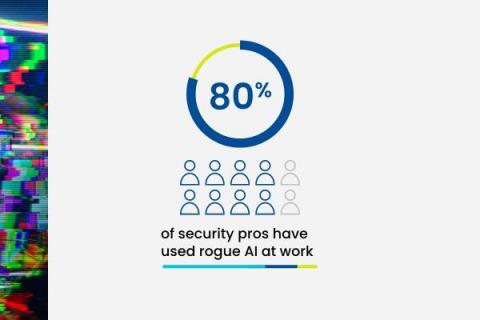
When ChatGPT debuted in November 2022, it ushered in new points of view and sentiments around AI adoption. Workers from nearly every industry started to reimagine how they could accomplish daily tasks and execute their work — and the cybersecurity industry was no exception. Like shadow IT, new rogue AI tools — meaning AI tools that employees are adopting unbeknownst to the organization they work for — can pose security risks to your organization.

Italy Bans ChatGPT: A Portent of the Future, Balancing the Pros and Cons

In a groundbreaking move, Italy has imposed a ban on the widely popular AI tool ChatGPT. This decision comes in the wake of concerns over possible misinformation, biases and the ethical challenges AI-powered technology presents. The ban has sparked a global conversation, with many speculating whether other countries will follow suit.

Social Engineering Attacks Utilizing Generative AI Increase by 135%

New insights from cybersecurity artificial intelligence (AI) company Darktrace shows a 135% increase in novel social engineering attacks from Generative AI. This new form of social engineering that contributed to this increase is much more sophisticated in nature, using linguistics techniques with increased text volume, punctuation, and sentence length to trick their victim. We've recently covered ChatGPT scams and other various AI scams, but this attack proves to be very different.