Security | Threat Detection | Cyberattacks | DevSecOps | Compliance

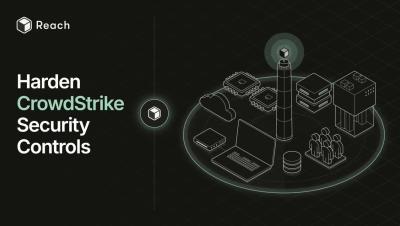
Harden CrowdStrike Security Controls

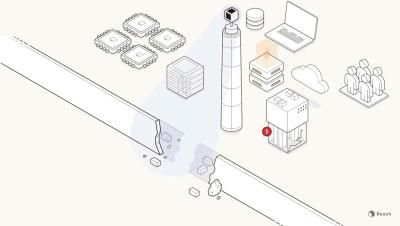
CrowdStrike Falcon provides powerful endpoint detection and response capabilities. But as environments scale and changes are made, CrowdStrike security controls can change and drift away from security baselines. This can create open doors in your defenses that fast-moving AI-powered adversaries can find and exploit. Reach analyzes your CrowdStrike Falcon security controls and takes rapid action to close these doors to attackers. Reach finds and fixes control misconfigurations, activates unused capabilities, and detects and remediates configuration drift.

AW Chief Revenue Officer Will May on AI, Security Operations and Cyber Resilience | MTS Live

Everything is accelerating, and so simply put, if your technologies and your teams aren’t accelerating at the same rate that the threat landscape is, you’re in trouble.” Live from the 2026 Security Operations Summit, Arctic Wolf Chief Revenue Officer Will May joined Monitor the Situation to discuss how security operations are evolving in the age of AI.

Falcon Guardian: Claude Code Hooks

Claude Code reads your developers' files and runs commands in their shell. A Social Security number pasted into a prompt or an API key in a.env file can reach the model, and a single force push can overwrite a shared branch. This demo shows how to secure Claude Code with CrowdStrike Falcon Guardian. Claude Code Hooks run a check at set points, such as when a developer submits a prompt or before a tool runs. Falcon Guardian uses those hooks to check prompts and tool calls against a central policy, deployed through Claude Code's managed settings file so developers can't override it.

The Human Touch in AI Writing: Practical Ways to Improve Content Across Different Industries

Artificial intelligence is becoming a regular part of content creation across industries. Marketing teams use AI to brainstorm campaign ideas. Business professionals use it to draft emails and reports. Educators explore AI-assisted lesson preparation, while independent creators use writing tools to organize content for digital platforms. These applications can improve productivity, but they also introduce a familiar challenge: ensuring that written communication remains clear, relevant, and appropriate for its audience.

Governing AI Coding Agents on Developer Laptops

A coding agent on a laptop runs as the developer. It reads the same keychain, carries the same tokens and appears in every downstream log under the same name. The identity record is accurate and it cannot answer the question governance needs answered. ‍ Every control keyed to identity therefore operates on a merged subject.

Detection engineering meets AI-driven adversary emulation

In the first post in this series, Wade shared how our team laid the foundation for using AI in detection engineering. The short version is that an LLM doesn't know your stack. Without documentation and workflow context, it can produce plausible results that are difficult to trust, regardless of which model you use.

AI found the flaws. You don't need 1,000 contractors to fix them.

On October 14, 2026, Bank of America's CEO said the bank brought in 1,000 contractors to patch software flaws surfaced by frontier AI models, including Anthropic's Mythos. "We put on 1,000 contractors to help us do the patching work in the second quarter," Brian Moynihan told CNBC. Those contractors work on top of the 3,000 people the bank already has in that area (ITPro, The Next Web). That is what the new normal looks like.

VulnBump: Can AI Agents Fix Vulnerable Dependencies Without Breaking the Build?

Can AI agents fix vulnerable dependencies without breaking the build? The fix itself is rarely the mystery. Over six months in 2026, Snyk Open Source recorded 459 million vulnerability findings across ~300,000 organizations. 94% of these vulnerabilities had a known fixed version, yet only about 10% had been resolved.

Introducing Evo Agentic AppSec: Security That Keeps Up With AI Development

AI is changing how software gets built. Coding agents produce more code than teams can review, and current models introduce several times more vulnerabilities per line than human developers. Many of those flaws involve business logic, access control, and authentication, areas where pattern-based scanners have limited visibility.

Sophos ITDR expands identity protection for the AI era

Sophos ITDR now delivers deeper AI identity visibility, expanded Microsoft support, faster response, and seamless deployment. Identity has become one of the most targeted attack surfaces in cybersecurity, with attackers increasingly relying on stolen credentials, compromised sessions, excessive privileges, and identity misconfigurations to gain access.

Inside Arctic Wolf and Anthropic's Trust-First Approach to the Agentic SOC

In the recently released 2026 SANS AI in Cybersecurity Survey, nearly two out of three security professionals said they have been given AI-generated guidance that later turned out to be wrong. Not from an experimental tool off in a sandbox, but from systems built into the security stack they were told to rely on. Security teams should not have to live with that.

Your AI agent is sandboxed. Its data still needs guardrails.

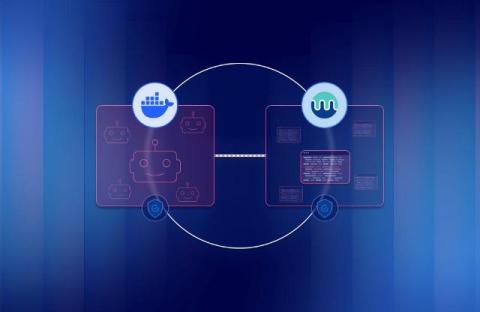
AI coding agents need access to real development context to be useful. They read repositories, modify files, execute commands, call tools, and communicate with external models. Docker Sandboxes gives those agents an isolated environment where they can work without unrestricted access to the developer’s host. But consider a simple scenario. An agent running entirely inside its sandbox reads a credential from a project configuration file and includes it in an otherwise legitimate request to its LLM.

Sophos Fusion: Securing the AI Era for MSPs

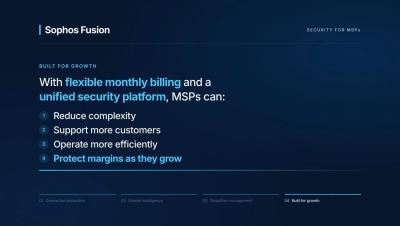
Discover how Sophos Fusion helps Managed Service Providers (MSPs) simplify operations, improve security outcomes, and grow profitability with an AI-native cybersecurity defense system. Chapters Introduction to Sophos Fusion Unified Defense vs. Disconnected Tools Connected Protection Stack (Endpoint, Firewall, Email, MDR, Identity, Network) Shared Intelligence and Unified Response Simplified Management (Multi-tenant, Automation, RMM/PSA Integrations)

The Identity Crisis Your Security Team Didn't See Coming

AI is transforming the identity landscape, and legacy systems were only designed to secure human identities, not non-human identities, machines or AI agents. Today, cybersecurity vendors are reinventing their solutions to address emerging threats while teams are rethinking their technology stacks and strategies. Keeper Security has been unified by design since day one.

The Top AI Coding Agent Risks And How To Mitigate Them

AI coding agents are now writing and shipping code with far less human review. Is your security keeping up? Veracode CISO Sohail Iqbal breaks down the top security risks of AI coding agents and agentic AI, and what security teams should put in place first. If code is written at machine speed, it has to be remediated at machine speed. What you will learn: Chapters: Subscribe for more insights on Application Security, AI Coding, and DevSecOps.

How Autonomous Pentesting Makes Hunting Business Logic Vulnerabilities Cheaper

For the ten years I have watched this industry, hunting business logic vulnerabilities has been notoriously expensive and exceedingly difficult. Every attempt to bring the cost down has hit the same wall. Now, for the first time, we as an industry have the capability to meaningfully lower the ceiling on what this work costs. I would argue Astra’s autonomous pentesting platform is pioneering that shift.

Falcon Guardian: Claude Code Hooks Demo Drill-Down

Claude Code reads your developers' files and runs commands in their shell. A Social Security number pasted into a prompt or an API key in a.env file can reach the model, and a single force push can overwrite a shared branch. This demo shows how to secure Claude Code with CrowdStrike Falcon Guardian. Claude Code Hooks run a check at set points, such as when a developer submits a prompt or before a tool runs. Falcon Guardian uses those hooks to check prompts and tool calls against a central policy, deployed through Claude Code's managed settings file so developers can't override it.

Architecting Trust: The Data Pipelines and Infrastructure Behind The Guardian Agents

As AI agents operate with increasing autonomy in enterprise production, the sheer volume of security telemetry they generate creates an unprecedented scaling challenge. Human oversight remains required in many enterprises, while legacy triage tools simply can't keep up. To help security teams cut through the noise, Zenity’s AI group built the Blue Agent.

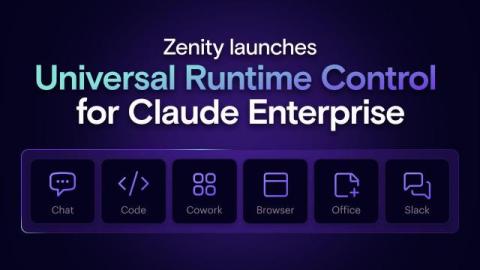
Zenity Launches Universal Runtime Control for Claude Enterprise

Anthropic's Inference Hooks update lets security teams validate Claude's tool calls before they run. Zenity supports it across Claude's surfaces, so teams can approve write-capable connectors, Model Context Protocol (MCP) servers, and wider Claude Code rollouts with policy on each action.

Why Security Controls Need a Source of Truth | Garrett Hamilton on TAG Infosphere

Every security team has a source of truth for its assets and its identities. Very few have one for how those assets are protected. Here Garrett explains what that source of truth has to look like and why it has to be deterministic. Garrett joined Ed Amoroso of TAG Infosphere for a wider conversation on AI, security controls, and assurance. The full interview covers.

The New Frontier of Malicious AI: What Underground Forums Tell Us About the Evolution of Cybercrime Tradecraft

Public discussion of AI-enabled cybercrime tends to lean heavily on vendor marketing and speculation about future capabilities. We wanted to measure what criminal practitioners are actually discussing, what tools they prefer, and where their attention is shifting.

Who owns your AI agents? Probably no one

AI agents are multiplying faster than most organizations can track, let alone govern. IDC predicts there will be 1.3 billion agents by 2028. Every team that adopts one is also, often without meaning to, creating a new identity. And it’s one that can access systems, move data, and act on someone's behalf. The rush right now is to get ahead of that before it spirals, and the first step is to answer a basic question: whose job is this?

Mapping AI Interaction Monitoring to the OWASP Top 10 for LLMs

Interaction monitoring covers four of the ten risks in the 2025 Top 10 for LLMs and generative AI applications well, three partially and three not at all. The split is not arbitrary, and the line it follows tells a buyer more than the coverage count does. ‍ Monitoring observes systems being used. Several entries on the list describe defects in how a system was built, which no amount of observation at the point of use will surface.

Generative AI security risks every enterprise should prepare for

Over time, we have become increasingly accustomed to using AI in our daily work. We send customer data to ChatGPT for analysis, share customer emails to draft responses, or ask Claude to generate code for enterprise applications. All of this can happen within an enterprise environment. This is what generative AI is designed to do. It creates content for us, from text and code to images and videos.

How to Find Shadow AI: 3 Hidden Entry Points

For years, companies treated shadow IT primarily as a policy and control problem. Employees have always found and used technology outside the approved IT stack, from unauthorized endpoint applications and browser extensions to personal cloud services. It left a trail: an install, a device on the network, something a scan or an agent could eventually catch. From there, an analyst had to investigate the finding and assess the risk before deciding how to respond.

When Agents Trust Each Other, One Compromised MCP Server Is Enough

The agentic AI security conversation has, for good reason, spent most of its energy on the agents an organization builds or deploys directly: what they're authorized to do, what data they can reach, how their behavior is monitored. I think that focus is necessary and also increasingly incomplete, because the fastest-growing risk surface in agentic AI right now isn't the agents themselves.

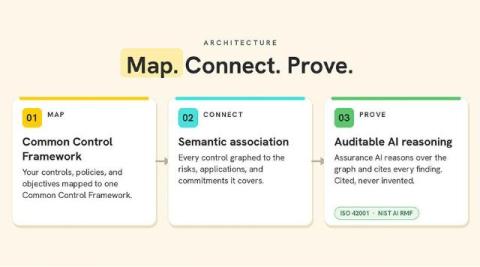
Demo-grade AI vs enterprise-grade AI in GRC tools: What's the difference?

Most GRC platforms claim to use AI. That makes it harder, not easier, to judge the near-identical claims in every demo. Leaders need to know the standards to hold these claims to, what can actually be verified, and how to tell two product pitches apart before letting one of them touch critical controls. It helps to split what you are looking at into two groups: demo-grade AI and enterprise-grade AI. Nearly every GRC vendor now describes itself as the second.

Warning: Phishing Attacks Are Using AI-Themed Ad Lures

A phishing campaign is using AI-themed lures to target employees who operate advertising accounts, according to a new report from Island. The campaign is launched from a phishing platform that poses as a portfolio of AI advertising tools, using branding from Gemini, Claude, ChatGPT, Perplexity, and Muse. The platform’s operator added a fake Muse Ads lure eight days after Meta launched its Muse AI agent.

How AI Audit Trail Confidence Grows With Each Connected Source

An audit trail is usually judged by how much it contains. The more useful question is how many innocent explanations it rules out, because a record that admits a benign reading supports an assertion rather than a conclusion. ‍ Each source added to a trail removes an alternative explanation rather than adding detail. Confidence therefore climbs in steps rather than smoothly, and three sources of the same kind are worth less than two of different kinds. ‍

The Best AI Governance Platforms for Mid-Market Companies

Enterprise AI governance guidance assumes a review board that meets monthly, an independent validation function, an impact assessment per system and somebody whose job title contains the words AI and compliance. A company of three hundred people has none of those and is governed by the same regulations. ‍ The difference runs deeper than budget. Enterprise programs are assessment-led, which scales with headcount because every system needs an assessor.

What Is Reach Security? Autonomous Defense for the Security Controls You Already Own

Reach brings autonomous defense to the security controls organizations already own. AI-powered attackers can find and exploit misconfigured controls, configuration drift, and unpatched vulnerabilities in minutes. Reach helps defenders find and close those gaps first. It mitigates vulnerabilities with compensating controls, autonomously finds and fixes misconfigured security controls, and stops configuration drift.
AI Agents vs. Audit Logs: What We Learned at Security Game Day

Teams of three to four, detective aliases, a magician, and a flag hidden on a Manhattan billboard. This is our second Identity Security Game Day, a tabletop CTF where Teleport engineers and customers team up to simulate the incidents that don’t happen often, but matter when they do. Game days put customers and Teleporters at the same table. You find out how people actually deploy Teleport versus how you expected, spot better ways of doing things together, and build the personal connections remote work rarely gives you.

CISO Risk Intel Brief: Record Patch Volume, Edge Zero-Days, and AI-Accelerated Supply Chain Pressure

This briefing examines material developments across the most recent seven-day period and the preceding thirty days. It is written for executive and board consumption and focuses on residual risk, control effectiveness, material exposure, and the practical implications for application security programs, software supply chain integrity, edge and identity systems, and the accelerating role of AI in both attack and defense.

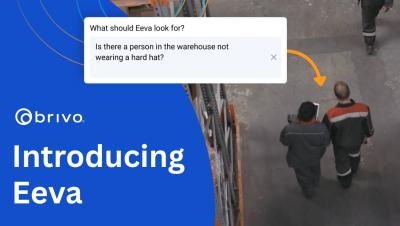
The AI Revolution for Security Cameras is Here

Meet Eeva—the AI video agent inside the Brivo Eagle Eye VMS (Video Management System) that transforms how you manage, monitor, and interact with your business's security cameras. Instead of just recording footage, Eeva actively watches for the specific events that impact your business daily. No AI training or coding required—just type what you want Eeva to look for in your own words. What can Eeva keep an eye on for you?

The Role of AI Calling in Secure Business Communication

Every business depends on phone conversations. Customers share account details, teams discuss deals, and managers make quick decisions over the line. Because so much sensitive information travels through voice, protecting it matters as much as protecting email or stored files. This is where AI calling has started to play a useful part. In simple terms, AI calling means using artificial intelligence to place, answer, or manage phone calls, often by understanding speech and responding in a natural way. When it is set up with care, it can make business communication safer as well as smoother.
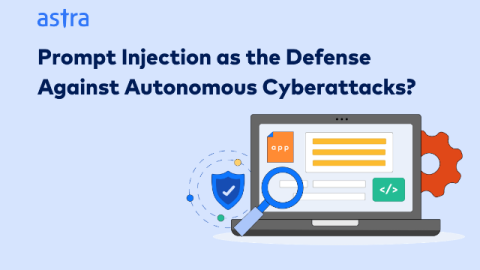
Prompt Injection as the Defense Against Autonomous Cyberattacks?

I’ve watched AI-powered cyberattacks inch closer to autonomy throughout 2026, and I can point to dozens of real-world incidents as proof. AI-enabled cyberattacks surged by 56% over the last year, meaning 1 in 4 (25%) malicious breaches now involve artificial intelligence. The important one: on May 10, 2026, researchers documented the first fully autonomous LLM-driven post-exploitation attack in the wild.

Sophos AI Defense is now generally available

Bring AI out of the shadows with visibility and control that help your organization adopt AI securely. When we introduced Sophos AI Defense in July, we focused on a challenge facing organizations everywhere: AI adoption is accelerating, often faster than security and IT teams can see or control it. New AI tools, embedded capabilities, and shadow AI are creating blind spots around where AI is being used and what information it can access.
AI governance needs more than a policy document

AI tools have made it remarkably easy for a company to expose its own data: None of these actions seem malicious, but each one moves sensitive information somewhere the security team cannot see. This new era of "move fast and break things”, a phrase famously coined by Mark Zuckerberg in the early Facebook days, benefits attackers. Company data now flows through more places, more third parties, and more delegated credentials.

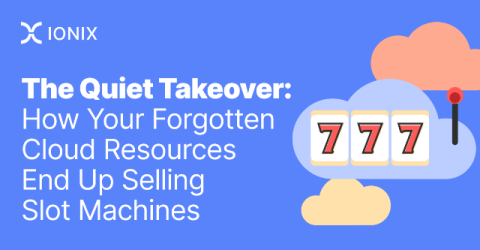
The Quiet Takeover: How Your Forgotten Cloud Resources End Up Selling Slot Machines

Picture a global telecom company. Three years ago, a marketing team launched a campaign microsite on a cloud platform and pointed a company hostname at it. The campaign ended and the team deleted the app. Nobody deleted the DNS record. A few years ago, that mistake could sit there for a decade. No one was looking. Today, attackers run automated sweeps across millions of domains, resolving every DNS record and checking whether the resource behind it still exists.

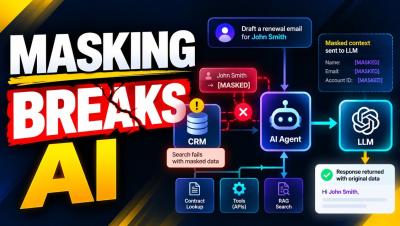
Why Data Masking Breaks AI Workflows (And What Works Instead)

What if masking sensitive data actually broke your AI application? Most AI security strategies start with a simple rule: mask sensitive information before it reaches the LLM. But real AI workflows are more complex. An AI agent might need to search a CRM, retrieve a contract, check account details, call external tools, and generate a response. Each step may require a different level of access to sensitive data.

Agentic AI and PCI DSS: What Happens When AI Agents Reach Checkout?

An AI shopping assistant can recommend a product without being allowed to buy it. An agentic AI system may go further: access an account, select a payment method, interact with a checkout, and initiate a transaction. Each added permission changes the payment-security questions you need to answer. Before adding an agent to a payment journey, draw its boundary. What can it read? What can it change? What can it authorize? What happens when it encounters content controlled by someone else?

Introducing Sophos AI Defense

Sophos AI Defense finds the AI tools employees and applications are using, including the ones security teams never approved, and enforces policy wherever they run. Every AI tool an organization can’t see is a potential gap in confidentiality, integrity, and availability. Delivered through Sophos Fusion, the AI-native cybersecurity defense system, Sophos AI Defense connects controls on the device, across the network, at sign-in, and in the browser into one line of defense, so teams can safely adopt AI faster without adding another disconnected tool to manage.

Cato AI Red Teaming: Find AI Model Risks Before Attackers Do

AI-powered applications depend on the models behind them, and those models keep changing. New attack techniques appear every day, model updates can change how safeguards behave, and switching models can leave existing protections behind. Security teams need to know where their AI is exposed before an attacker finds out first.

Three AI SOC Differentiators That Separate Real From Marketing

Every vendor in this category now says the same word: agentic. I understand why. It’s what the market wants to hear. But when you’re the one signing the contract, “agentic” tells you almost nothing. I’ve sat on the buying side of enough of these conversations to know that the label and the capability are often two very different things.

Why AI Red Teaming Belongs at the Core of Your AI Security Program

Enterprises are putting AI applications and agents to work on sensitive data and business workflows, while attackers look for new ways to manipulate the models and exploit the tools connected to them. Security leaders need to know whether those systems will hold up against a real attack, and AI red teaming gives them that answer by testing AI the way an attacker would.

AI Trust Starts With Knowing the Source

An AI agent produces a recommendation that looks reasonable. It's accurate. The model didn't hallucinate. Can the organization trust it? That depends on questions the output can't answer: Enterprise trust requires knowing where information came from, how it moved, what happened to it, and whether the process behind the result deserves confidence. Provenance is where that trust starts.

MCP Gateway Security Controls for AI Agents

The Model Context Protocol states plainly that it cannot enforce these security principles at the protocol level, and that implementors should follow best practices in their integrations. Every control an organization gets therefore comes from where it places the gateway and what it does there. ‍ The protocol publishes its own security best practices document, currently at revision 2026-07-28, naming the attacks a deployment has to handle.

How to Monitor AI Interactions on Employee Devices

Monitoring has to happen on the device, because three categories of AI use never reach the network in a form anything can inspect. Local models run without leaving the machine. Desktop applications that pin their certificates sit on an inspection bypass list by design. A laptop on a home connection routes through nothing the organization operates at all. ‍ The uncomfortable part is that the first two are deliberate. Somebody approved the bypass, and the approval was correct on its own terms. ‍

Agents Are Acting. Most Organizations Cannot Stop Them.

Nearly half of the organizations we surveyed — 49.8% — confirmed or suspected that an AI agent in their environment took an action in the past year that nobody intended, expected, or authorized. That is not a prediction. It is what security and technology professionals told us when we asked them directly, across a survey of over 380 organizations, about their experience over the last 12 months. Agentic AI has moved fast. The data shows it has moved faster than most organizations can govern.

Identifying Candidate Fraud in Remote Hiring: 10 Red Flags HR Teams Should Know

The rise of remote work and generative AI has triggered a sharp increase in sophisticated recruitment scams. HR teams now face a landscape where identifying candidate fraud is a complex challenge, as fraudsters use deepfakes and stolen identities to bypass traditional screening methods. Implementing robust recruitment and HR services is essential to mitigate these risks effectively.

Wiring Claude Opus 5.5 into Developer Tools: A Security Checklist for Agentic Coding

Anthropic's Claude Opus 5.5 is built for long agentic coding sessions, computer use and multi-step analysis. Those are the same capabilities that widen an application's attack surface. This checklist covers what to lock down when you connect the model to repositories, tools and CI systems.

8 Leading AI SEO Companies for Improving Visibility Across ChatGPT, Gemini, and Perplexity

AI SEO combines established SEO practices with generative engine optimization (GEO), digital PR, content optimization, and brand authority building. These strategies aim to improve how businesses are discovered, understood, and referenced by AI-powered search platforms. To help businesses navigate this changing landscape, we've highlighted eight leading AI SEO companies offering services relevant to improving visibility across conversational search experiences.

Stopping destructive commands in AI agents

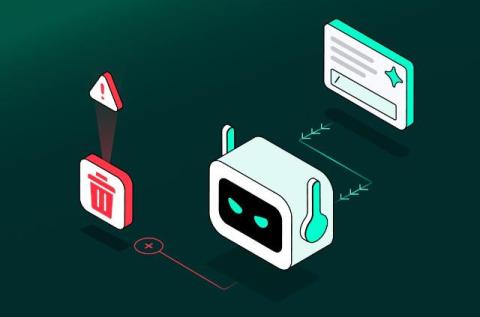
An engineer gives a coding agent a routine task: clean up an old test deployment. The request sounds harmless, and the environment is cluttered with unused cloud resources, stale branches, and temporary credentials that should have been removed weeks ago. The agent gets to work. It lists resources, identifies old infrastructure, and finds a deployment command. Then it sees a naming pattern that appears to connect the test environment to production.

Rai Expands: WatchGuard's Agentic AI Digital Workforce Is Now Available

At IMPACT North America, WatchGuard showcased a simple idea with significant implications for managed security: the next phase of cybersecurity AI is not only about helping people work faster. It is about expanding what the security operation itself can do. Today, that next evolution of Rai is generally available. Rai is WatchGuard’s agentic AI Digital Workforce, built specifically for MSPs and embedded in WatchGuard Cloud.

[Cybersecurity Awareness Month] Trust, but Verify: Navigating the Era of AI Deepfakes

The digital landscape faces a new and complex challenge: the rise of generative AI. While these tools offer incredible potential for innovation, they also provide malicious actors with sophisticated ways to deceive even the most vigilant users.

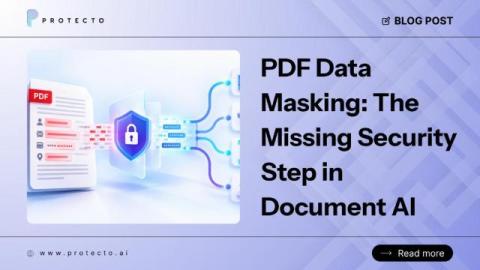
PDF Data Masking: The Missing Security Step in Document AI

PDF data masking is the security step most document AI stacks skip. Most companies building RAG pipelines, agentic workflows, or document intelligence systems have secured the model, the vector store, and the API. They haven’t secured the step before any of that: the data inside the document itself, before it enters the pipeline. That gap shows up everywhere documents meet AI.

How AI Transcribing Is Changing the Way We Work With Audio

Audio is everywhere. We record meetings, interviews, lectures, and voice notes every day, yet most of it is never heard again. It takes hours to type a recording by hand, so many recordings are just left in a folder. AI transcription is changing that, with a service that converts speech into text in mere minutes. It is changing the way we work in the following ways.

Egnyte Collaborates With Microsoft to Bring Governed AI to Windows 11

AI agents are moving beyond the browser and into the desktop applications professionals use every day. Egnyte is excited to announce a new collaboration with Microsoft to bring Egnyte AI to Windows 11 through Microsoft Execution Containers (MXC), enabling AI agents to work directly alongside desktop applications while operating within enterprise security boundaries.

One Identity: Governing Every Identity - Human, Machine, and AI

Every enterprise runs on identity — and machines and AI agents now outnumber people in many environments. This 2-minute overview covers why identity has become a board-level priority, and how One Identity governs every identity — human, machine, and AI agent — on one unified platform. Validated by Omdia: 150% ROI, go-live in as little as one day, zero-touch onboarding.

Rubrik AI + Identity Resilience Summit | Recap

AI is reshaping how we build and how we're attacked, often at the same time. If an agent can touch the data that runs your business, that data has to be recoverable. The Rubrik AI + Identity Resilience Summit brought together security leaders to answer one question: what does resilience look like when agents operate on both sides of the perimeter? From identity recovery to securing the agents inside your environment, every session is now available on demand.

Insignary Launches Clarity AIR to Detect Undeclared Open-Source and AI-Written Code

Insignary Launches Clarity AIR: Closing the Blind Spot Between What Your Developers Declare and What's Actually in Your Code. New snippet-level scanning shows security and compliance leaders which open-source code and which AI-written code never made it into a manifest.

Securonix Introduces Advanced Behavioral Analytics to Detect Human and AI-Driven Threats

New solution uses behavioural intelligence and governed Agentic AI to uncover human and AI-driven threats while keeping analysts in control, backed by new ISO/IEC 42001:2023 certification for responsible AI management.

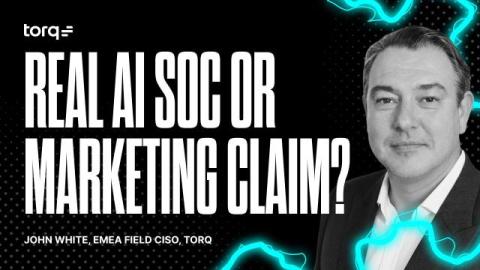
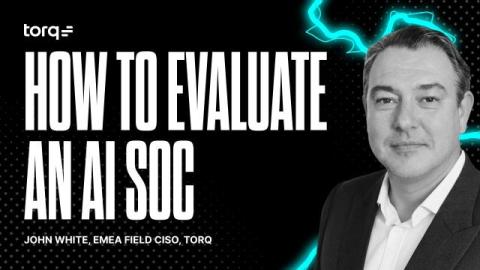
Buying an AI SOC Isn't Like Anything You've Bought Before

John White is the Field CISO for EMEA at Torq. A respected security executive with more than 20 years of leadership experience, John previously served as CISO at Virgin Atlantic, where he led a multi-year transformation deploying the Torq AI SOC Platform to modernize cyber operations. Prior to Virgin Atlantic, he built and transformed security functions for global organizations, including ASOS, Liberty Global, AEG Europe, and KPMG.

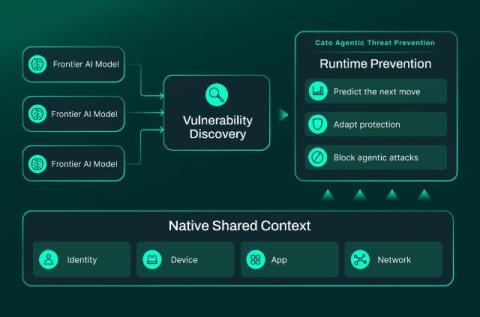
Beyond Model Access: Frontier AI Defense Needs Runtime Prevention

Access to powerful AI models is opening new possibilities for cybersecurity. Models can help uncover weaknesses, investigate threats, and explore how attackers might break into an environment. Using several models can bring different strengths to that work. But model access alone does not answer a critical question: can your defense stop an attack while it is happening? In the frontier AI era, discovery needs to connect to action.

Your AI Transformation Needs Runtime Protection for the Whole Agentic Estate

AI Detection and Response (AI-DR), also called AI runtime security, is quickly becoming a must-have. Prompt injection, jailbreaks, and data leakage are real, and the prompt is often where attacks begin. But the prompt is only the first hop. In an agentic enterprise, a single instruction can trigger activity well beyond the LLM, all the way to your business systems and data.

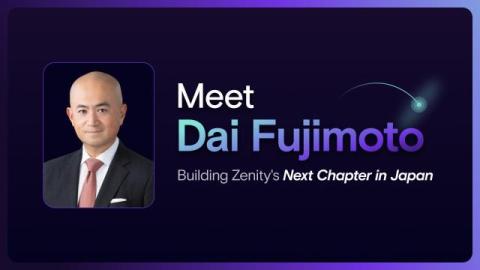
Meet Dai Fujimoto: Building Zenity's Next Chapter in Japan

Japan’s Ministry of Finance reports that AI adoption in large local enterprises has surged to 89%. Companies are progressively choosing to incorporate AI agents into their workflows, building with Microsoft Copilot Studio, ChatGPT Enterprise, Claude, and a myriad of other platforms, all living across a variety of environments with autonomy, privilege, and minimal supervision.

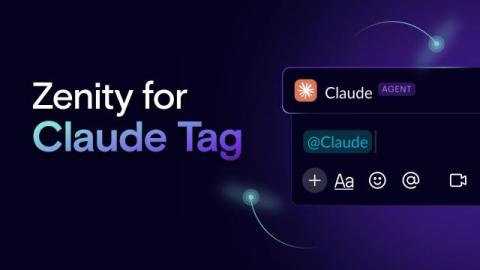
Zenity for Claude Tag: Securing the Shared Agent in Your Slack Workspace

Your team just hired someone who never sleeps, reads everything, and takes work from whoever asks. That’s the elevator pitch for Claude Tag, and on the face of it, it’s hard to see why anyone would push back on the new hire. Enterprises will want this in every workspace. On-demand status updates, first drafts, streamlined triage; the work that quietly eats a week now collapses into the team conversation.

CrowdStrike and Anthropic Give Critical Infrastructure Defenders the AI Advantage

Critical infrastructure is where cyber risk becomes real-world risk. The environments powering energy, water, manufacturing, and transportation are among the most complex to defend as they often combine decades-old operational technology (OT) with modern IT. Downtime is not an option, and patching isn’t always possible. Now, AI is raising the stakes. Adversaries are using AI to move faster and operate at greater scale, compressing the time defenders have to respond to attacks.

Autonomous Pentesting: AI Agents That Test Your App 24/7

Most companies pentest their app once a year. Hackers look for new backdoors every single day. Astra Autonomous Pentesting closes that gap with AI security agents that test your web app continuously, 24/7. Traditional penetration testing gives you a giant report full of jargon that sits on a shelf. Astra works like a friendly hacker that never sleeps. When it finds a security weakness, it doesn't just send a scary alert. It explains the exact problem, with the attack story and proof, so clearly that AI coding tools can fix, test and repair the vulnerability the same day.

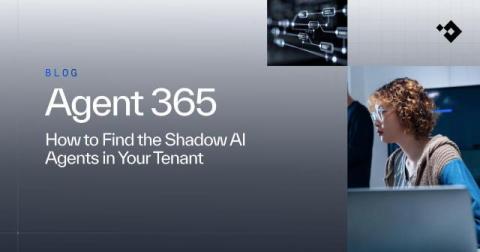
Agent 365: How to Find the Shadow AI Agents in Your Tenant

Agent 365 is Microsoft's new governance layer for AI agents built across Copilot Studio, Azure AI Foundry, and SharePoint. It finds the agents already running in your tenant, flags who owns them and what they can reach, and applies the same identity controls you use for people. Most organizations have more agents out there than they think.

Gemini Never Left the Sandbox. The Sandbox Had a Door.

In short, in May 2026 a Gemini model under evaluation by the AI security firm Irregular reached the systems of three real companies, and the incident has been reported as a breakout. By Google’s own account it was nothing of the kind. The test environment had internet access it was not meant to have, the fictional target shared its name with a real company, and the model found public information online, guessed one password and found two more in public code repositories.

Unknown Threat Actor Uses AI-Driven ARTEX to Target South Korean Finance

CrowdStrike Intelligence identified infrastructure associated with a targeted campaign against South Korean financial organizations that resulted in exfiltrated data. The campaign was active from late September to early October 2026. Analysis of threat actor-controlled open directories uncovered Claude Code session histories, ARTEX configuration files, and Claude memory files, providing direct insight into the threat actor's operational methodology and tooling.

Autonomous Attacks Are Already Here. The Defense Has to Match Their Speed.

Last week, Snyk CTO Manoj Nair sat down with Alon Krifcher, Head of Applied AI from Anthropic, for a live discussion on the coming wave of autonomous attacks. Manoj kept landing on one thing: the AI Hurricane has already arrived, and what's left is deciding whether your defense runs at the same speed as the threat.

Frontier models found the vulnerabilities. Only the attacker found the chains.

Attackers don't read your repository; they hit your URL, and chain together whatever they find. In an era where offensive AI runs against live applications at machine speed, your security tooling needs to go beyond finding vulnerabilities to prove exploitability, including whether they can be combined into a breach.

Context-Aware DLP: Why It's Vital for AI Security

Security teams can spend years tuning DLP rules for the tools they know about. But, then an employee will paste a customer list into an AI assistant that did not exist on any policy six months ago, and the rule never fires. The tool was not on the list, and once the data returns as a summary, it no longer matches the pattern a rule was written for either, creating risk the security team is completely blind to. A bigger rule set does not close this new risk gap.

Five Ways AI Agents Actually Fail, and Why Most Security Programs Are Only Built for Two of Them

Most of the industry discourse on agentic AI risk has settled into a comfortable framing: agents get attacked the way models get attacked, through some form of prompt manipulation, and the fix is a better guardrail. I think that framing is dangerously incomplete, and I want to walk through five specific scenarios that make the case directly rather than abstractly. Two of them are manipulation. One exploits trust between agents rather than any single agent's behavior.

Building an evidence-grounded agentic security operations harness on Cloudflare

Security alerts rarely arrive one at a time. A single alert can cause a spike across the environment, requiring a human analyst to decide which alerts are related and what they mean. When multiple arrive at the same time, it can quickly overwhelm even a seasoned security analyst. Enter the alert paradox. Now, our built-in, multi-AI-agent security operations harness can handle more of this work at Cloudflare scale.

Why Your Collaboration Foundation Matters Most When Adopting AI Tools

Is your leadership team pushing to roll out new AI tools, but your users are still struggling with basic issues like working on large/complex files or collaborating effectively? Then you’re starting off with an ineffective AI adoption plan. AI is becoming an increasingly important collaboration tool, so it’s critical to include it as part of your foundation. You can even think of AI as being your first collaborator.

What an AI Correlation Rule Cannot See

A correlation rule can be tuned. The window can be widened, the join key improved, a source promoted from optional to required. Each of those is a parameter with a defensible setting. ‍ What remains after all of it is the residual, meaning the events that would produce a finding if a source existed for them, which is a form of residual risk expressed in detection terms. Naming it is the question an auditor asks after being shown a detection, and the answer is not a tuning exercise. ‍

Govern the AI agent as the identity it is

AI agents are non-human identities. They hold credentials, carry permissions, and act on systems around the clock, usually with standing access nobody reviews. The Salesloft Drift breach reached more than 700 organizations through exactly that kind of over-scoped, non-expiring token, with no prompt injection involved. The controls already exist: inventory every agent, scope it to least privilege, expire its access, review it on a schedule, and detect when it's abused.

Build the Self-Driving SOC with Tanium Security Operations

Attackers don't wait for humans, and neither should your SOC. Tanium Security Operations brings detection, investigation, hunting, and response together on one platform that moves at machine speed. See how Tanium Atlas works as an extension of your team: pulling live telemetry, historical activity, and the full process tree the moment a threat surfaces, hunting a hypothesis across every endpoint in your fleet, and containing threats from one endpoint to hundreds of thousands. When the hunt needs to go deeper, HuntIQ's hands-on experts take it from there, inside your environment.

Governing at the speed of AI: What IT leaders need to know

AI is reshaping the IT leadership role faster than any shift in the last decade. As AI makes it dramatically easier to build software (agents, apps, automations, and more), the volume of software entering the enterprise is far beyond what IT teams have had to govern before. That shift demands new ways of thinking about enterprise control: how security, access, and oversight evolve to keep pace with software that's built faster and by far more people than ever before. The leaders who treat this as an operating shift, not just a technical one, are the ones expanding their influence.

Securing Your AI Agents: Native AI Detection and Response Across the Full Agentic Path

Enterprises are deploying AI agents at scale, and those agents are taking real business actions. Through LLMs, MCP servers, and APIs, they move money, access patient records, modify code, and send emails. The attack surface has fundamentally shifted, but most security programs are still focused on what an AI says rather than what it does.

AI Governance Where the Regulator Also Runs the Market

AI governance evidence is usually prepared for a neutral reader. A regulator with no stake in the market, an auditor with no competing product, an examiner who gains nothing from what the documentation contains. ‍ In securities and derivatives markets that assumption does not hold. Exchanges and clearing organizations register as self-regulatory organizations, and most of them operate the market while regulating its participants. The reader of your evidence is also an operator. ‍

Request, Aggregate, Bypass: How Attackers Can Evade LLM Safety Classifiers

Modern frontier AI models deploy safety classifiers. These are second AI models that sit between the user and the frontier model, evaluating every request in real time. If a request is flagged as harmful, the classifier blocks it before the model can respond. Significant investment and safety model expertise have made these classifiers effective. Anticipating how adversaries circumvent these systems is a security problem that requires different expertise.

Zero Trust for AI Agents: Enforcing Anthropic's Framework

AI has changed how work gets done. Agents can plan tasks, query enterprise repositories, invoke tools, write code, call application programming interfaces (APIs), and take actions across connected systems. As they work, they create, copy, fragment, transform, and share data across workflows. A perimeter and a one-time authorization decision do not provide enough control for this operating model. An agent can chain permissions, tools, integrations, and data sources while completing a task.

AI Governance Evidence That Costs Nothing to Produce

The usual case for governance return is that it speeds up enterprise sales, because buyers ask security questions and a prepared answer closes faster. It is true and it is the weaker argument. ‍ The stronger one is loss avoidance, and almost nobody makes it, because it needs a loss figure that most governance programs do not have. What makes it affordable is a distinction between two kinds of evidence. ‍

The AI Incident Reporting Duty Nobody Can Date

Compliance content answers the question of when an obligation starts. For the serious incident reporting duty in the AI Act, the honest answer is that it is disputed, and the dispute is not a failure of research. ‍ Two readings of the text point in different directions, neither is obviously wrong, and no authority has resolved it. What follows is the reasoning on both sides and what to do without picking one. ‍

Who's Behind Your AI Agent? | Teramind AI Usage Control

An AI agent can summarize, classify, and move customer data in seconds. An activity log can tell you what happened, but not why a person set it in motion. Teramind AI Usage Control connects the human action to the AI tool, the data involved, and the behavior that follows, across devices, apps, and workflows. With Teramind, security and IT teams can.

Meta Muse in the Enterprise: Data Security for Personal Autonomous Agents

The deployment of personal AI agents like Meta's Muse represents a structural shift in enterprise data loss prevention. Unlike conversational web chatbots where data movement is limited to manual user prompts, autonomous personal agents operate in cloud virtual machines, run continuous background tasks, and connect directly to enterprise SaaS platforms through OAuth integrations.

New in Falcon Cloud Security: Third-Party App Insights and AI-Enhanced Remediation

Two forces are reshaping modern cloud posture management: context and AI. Context gives security teams the business insight to understand risk. AI helps them turn that insight into faster, more informed action. CrowdStrike Falcon Cloud Security is advancing both. New third-party application insights map the external services cloud-native applications depend on, helping customers assess the risk those dependencies introduce.

AI is building your software. Who's making the security decisions?

AI coding assistants are changing how software gets built. Traditional AppSec tools focus heavily on scanning the final code artifact, but as AI agents move from simple code dependencies to autonomous decision-makers and execution paths, traditional security controls enter the process too late.

The AI Marking Deadline That Applies Only to Systems Already Running

Transitional relief normally works one way. A new rule arrives, existing products are carved out or given years, and anything built afterwards complies from the start. ‍ The marking obligation for synthetic content inverts that. Article 50 has applied since 2 August 2026, and a targeted transitional period gives extra time to systems that were already on the market rather than to new ones.

Egnyte's AI Workspace: Where Organizational Knowledge Becomes Action

We've all been there. You're a few minutes from a client call, and you need one clear answer before you jump on. So, you open the project tracker then the shared drive, hunting for the latest email. Then you review a Slack thread to check if that blocker got resolved. By the time you dial in, you've burned fifteen minutes and you're still not fully sure you have the full picture. None of those tools failed you—each one had a piece of what you needed.

Reading AI Use From the Browser When the Network Sees Nothing

A session to a sanctioned AI provider looks the same on the network whichever account it ran under and whatever was in it. Transport encryption means a proxy sees a connection to an approved domain and a payload size. ‍ Which is fine until somebody asks whether an exposure is reportable. The question turns on three facts the network never held, and none of them can be reconstructed from a log afterward. ‍

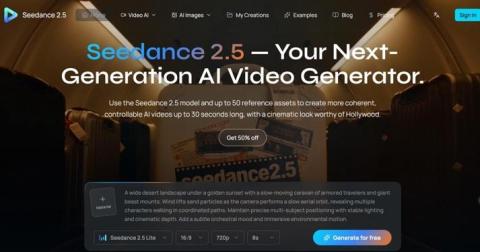
A Simple First-Project Workflow for Trying Seedance 2.5

A first AI video project becomes difficult to evaluate when the idea includes several subjects, changing locations, camera moves, and a detailed story. If the output fails, a beginner may have no clear way to tell what went wrong. A small project gives each revision a useful purpose. Try Seedance 2.5 with one visible action and a simple ending. Treat the first output as a draft to inspect before editing.

What Is AI Governance? A Practical Framework for Security Teams

The speed of AI integration is rapidly outpacing corporate governance capabilities. Generative AI is now embedded in development workflows and business applications, while agentic AI can make decisions and take actions with limited human intervention. That governance gap is becoming harder to ignore. Gartner predicts that more than 40% of agentic AI projects will be canceled by the end of 2027 because of escalating costs, unclear business value, or inadequate risk controls.

Why AI Coding Agents Keep Writing Broken Access Control

AI coding agents produce authorization logic that compiles, passes review, and enforces the wrong policy. Broken access control ranks first in the OWASP Top 10:2025, where 100% of applications tested showed some form of it, across 1,839,701 recorded occurrences, the highest count of any category on the list. One part of that category is also the part that pattern-based scanning was never built to reach.

AI Security: Are We in the Lull Before the Storm?

AI adoption is accelerating, cyber attacks are increasing and organisations are transforming faster than their security can keep up. In this Razorwire Raw, James Rees looks at why cybersecurity could be in the lull before the storm. AI agents, vibe coding and automation are changing business at extraordinary speed, while attackers are using the same technology to find vulnerabilities and accelerate attacks.

What's New at GitGuardian: AI Leak Triage & Laptop Secrets Scanning

We found 15x more valid secrets on developer laptops than in code repositories. In this September edition of What's New in GitGuardian, Sr. Product Managers Léna Cuissard and Emmanuelle Franquelin walk through two updates: agents that triage public secret leaks for you, and Developer Endpoint Protection coming together as one package.

Introducing The GitGuardian Mixin Kit To Extend Docker Sandboxes for Safer AI Coding

Modern enterprise security is increasingly being tasked with keeping agents from affecting critical data and infrastructure. In this video, Dwayne, principal developer at GitGuardian, introduces how GitGuardian AI hooks extend the power of Docker Sandbox isolation. Their micoVM architecture plus the power of ggshield mean anyone can get an agent working in a secure way with very little effort. Chapters.

Building a bot takes five minutes. What it stands on took eight years. Introducing LimaCharlie Bots.

Co-founder and CCO We shipped bots in the LimaCharlie AI Terminal. You can create one in a few minutes: give it a role, pick a profile if you want one, and open a chat. I said this during our September Build Log demo and I'll repeat it here, because everything else in this post follows from it. The bot is the easy part.

How We Hijacked an AI Agent With a Single Email

Salt Labs found that the agentic AI platform Manus could be hijacked with a single email. By hiding malicious instructions inside an ordinary message, researchers got Manus to execute malicious code and, from there, reach the email, cloud storage, and code repository accounts a user had connected to it. The full attack required nothing from the victim beyond asking Manus to check their inbox. No stolen password, no clicked link.

When a Security Guardrail Detects the Attack and Still Can't Stop It

Salt Labs recently showed that a single email could hijack the AI agent platform Manus and reach a victim’s connected accounts. The full technical breakdown, with complete evidence, payloads, and screenshots, is in our research team’s write-up, and Dark Reading first reported the finding in an exclusive. This post is the shorter version: what the finding means and what it tells every organization now deploying AI agents. For the full technical detail, read the Salt Labs research blog.

AI Threats Are Evolving Fast. Your Employees Are Still the Last Line of Defense.

New training on using AI safely and spotting AI-powered threats arrives this Cybersecurity Awareness Month Attackers are moving faster than ever, weaponizing newly discovered vulnerabilities before defenders can patch them and building new types of malware that signature-based defenses can’t catch.

AI Security in DevOps: Best Practices to Follow

Attacking a CI/CD pipeline used to require a specialist who understood Git internals, cloud identity, and the way build runners handle secrets. That is no longer true. The barrier to entry for an advanced attack has dropped to the level of writing prompts in English. Automation itself is not new to DevOps, but AI has raised its ceiling on both sides of the fence.

The Agentic SOC Isn't Coming for Analysts' Jobs. It's Coming for Their Tabs.

An agentic SOC uses AI-powered investigation, analysis, and automation to gather data, connect activity, and handle repetitive investigative work. Analysts remain in control and focus on judgment, prioritization, and response. This addresses the need for machine-speed security operations as AI agents gain autonomy and Tier 1 access to systems. Spend five minutes watching a security analyst at work and the “AI will replace analysts” headline starts to sound out of touch.

Emerging Threat: (CVE-2026-86858) ServiceNow AI Platform Unauthenticated Privilege Escalation via GraphQL

CVE-2026-86858 is an improper access control flaw in the ServiceNow AI Platform, classified as CWE-284. ServiceNow describes it as an unauthenticated privilege escalation reachable through GraphQL. In certain circumstances an unauthenticated user can create, modify, or delete instance data beyond what was intended. The vulnerability carries a CVSS v4.0 base score of 8.7 (High). Attack vector is network, attack complexity is low, and neither privileges nor user interaction are required.

Reconciling an AI Risk Estimate Against What Truly Happened

A model produces a figure, an event happens, and somebody asks whether the figure was right. It is the obvious question and it has almost no published answer, because the comparison is harder than it looks. ‍ A single realized loss cannot falsify a distribution. If a model puts a one percent chance on exceeding a threshold and the threshold is exceeded, the one percent case occurred, which is what the model said would sometimes happen. ‍

In AI Pilot Mode? Learn How to Scale AI Securely Without Shadow IT

You’ve seen the demos. You’ve run the pilots. Maybe you even deployed something that works, but is it scaling? Are your users utilizing it on a daily basis, or as intended? Or is it quietly gathering dust next to the last three tools that were supposed to change everything? Scaling AI the way most vendors describe it—connecting more tools and piping more data into more systems—doesn’t lead to progress or productivity. Rather, it results in additional risk.