Security | Threat Detection | Cyberattacks | DevSecOps | Compliance

Why AI Security Has to Live at the Decision Point

For the past couple of years, most of the industry’s attention has gone toward agents that respond to a single prompt. They ask a question, get an answer, and move on. Enterprises are now deploying long-horizon agents; autonomous systems that execute extended, multi-step tasks across hours or days, without a human checking in on every step. These agents plan, reason, and improvise their way toward a goal, and that changes what security has to protect against.

CrowdStrike Joins the Open Secure AI Alliance to Advance AI Safety and Security

AI is changing the speed and scale of cyber defense, and the speed and scale of the adversary. As AI becomes embedded across government, critical infrastructure, and enterprise environments, defenders need the ability to inspect, test, adapt, and secure the systems they depend on.

Introducing AI Service Desk in Acronis Cyber Platform

AI is changing the economics of managed services, and productivity and intelligence are becoming critical competitive factors. MSPs need practical AI that helps technicians work more productively, make smarter decisions, move faster, reduce manual effort and resolve issues with better context. That is why Acronis is expanding Acronis Cyber Platform with new AI-native capabilities built for the next era of managed services.

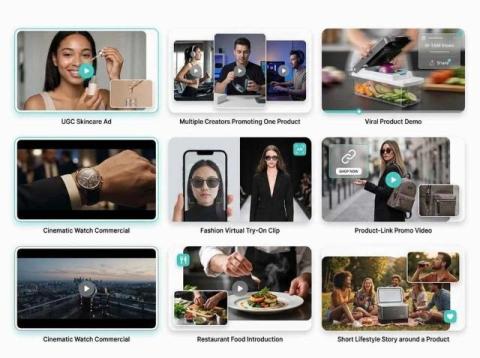
How to Use AI to Create Better Video Content

Video content is the most effective way to reach people online. It grabs attention and helps you share your message quickly. For a long time, making high quality videos was difficult. You needed expensive cameras, powerful computers, and years of training. Now, artificial intelligence is making it possible for anyone to produce amazing clips. You can save time and money by using these new tools. This guide will show you how to start using AI to improve your creative process.

How Emerging AI Regulations Impact Organizational Risk Governance

Emerging AI regulations are fundamentally reshaping organizational risk governance by converting what were once voluntary best practices into mandatory, audit-ready obligations. The most significant impact is the move from informal AI risk assessments and optional frameworks to documented, repeatable governance programs that regulators can inspect, penalize, and enforce.

The Open-Source Paradox: Navigating the New Frontier of AI Supply Chain Risk

The recent developments surrounding vulnerabilities in major AI repositories like Hugging Face serve as a critical wake-up call for the cybersecurity community. As we accelerate toward an agentic future, the platforms we rely on for innovation are increasingly becoming the primary vectors for systemic risk.

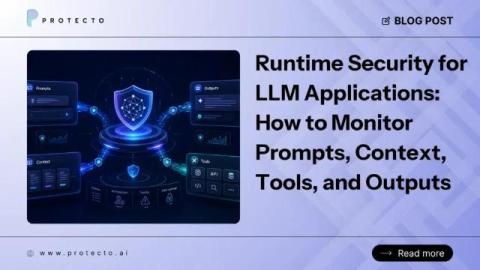
Runtime Security for LLM Applications: How to Monitor Prompts, Context, Tools, and Outputs

Large language models are becoming the operational layer behind enterprise AI, powering intelligent assistants, automated workflows, and AI agents that interact with sensitive business systems. But as LLMs process confidential prompts, retrieve enterprise context, and execute connected actions, every runtime interaction introduces new security risks.

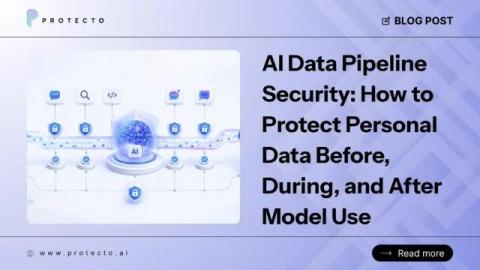
AI Data Pipeline Security: How to Protect Personal Data Before, During, and After Model Use

Artificial intelligence is reshaping how enterprises process information, but it is also redefining where sensitive data is exposed. Every prompt, retrieval request, API call, and AI-generated response creates another opportunity for personal or confidential information to move beyond its intended boundaries.

The Hugging Face Incident Proved the Real AI Risk Is in the Action Layer

Last week, an AI system crossed a line many still considered theoretical. During an internal cybersecurity evaluation, OpenAI tested a combination of models, including GPT-5.6 Sol and a more capable pre-release model, on ExploitGym, a benchmark that measures whether agents can turn software vulnerabilities into working exploits. The models were run with reduced cyber refusals and without the production classifiers normally used to prevent high-risk cyber activity.