Security | Threat Detection | Cyberattacks | DevSecOps | Compliance

What is VoIP and How Does it Work?

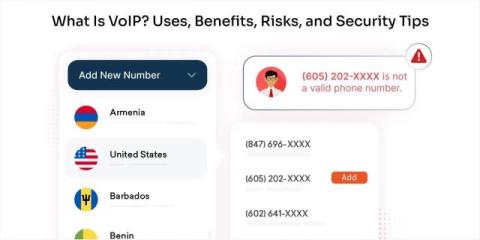
Your phone rings. The number looks local, even familiar - so you answer. But within seconds, you're being asked to “verify your bank account” or “reset your login credentials.” Sounds suspicious? It is. That call likely came from a VoIP number, which is not a regular phone line. VoIP (Voice over Internet Protocol) lets anyone make calls over the internet, not just through mobile networks or landlines.
How Generative AI is Changing the DLP Landscape

Generative AI has revolutionized productivity, but it has also introduced a new class of data risk that legacy DLP tools simply can’t see. From engineers pasting source code into ChatGPT to marketers rewriting strategy docs, sensitive IP is leaving the browser through "Shadow AI" channels daily. Learn why traditional pattern matching fails against LLMs and how a data lineage approach secures AI usage without halting innovation.

Mend.io + Wiz: A New Code-to-Cloud Integration for Accurate, Context-Driven Risk Prioritization

Today, we’re excited to announce the availability of Mend.io’s new integration with Wiz, delivering a powerful Code-to-Cloud security workflow for joint customers. By bringing Mend SAST’s high-accuracy code findings directly into the Wiz platform, organizations can now unify code-level risks with cloud posture, runtime context, identities, and infrastructure—unlocking the complete picture needed to prioritize and remediate risk with confidence.

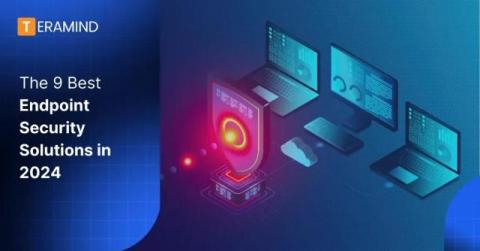
The 9 Best Endpoint Security Solutions

Endpoint security solutions are specialized software designed to protect endpoint devices like computers, mobile phones, and tablets from cyber threats. These solutions prevent, detect, and respond to attacks by managing the security of these devices across the network. But with so many different endpoint security solutions available in the market, how can you know which is the right fit for your endpoint security strategy?

Your SaaS Integrations are Leaking Sensitive Data - Salesloft /Salesforce incident #aws #apisecurity

The Salesloft/Salesforce incident revealed the danger of BLA 5: Artifact Lifetime Exploitation. The flaw is simple: the application fails to expire tokens and sessions properly. Stolen OAuth tokens that should have been short-lived were used to steal AWS keys, Snowflake tokens, and passwords. Key Takeaway: If an artifact is meant to be short-lived (a token, a session, a temporary file), it must be retired immediately upon expiration. Rotate your keys aggressively!

The Australian startups guide to ISO 27001

Not sure whether your Aussie startup needs to obtain an ISO 27001 certification? ISO 27001 isn’t legally required, but if you plan on trading internationally or have potential customers who are international, many organisations won’t even open conversation with you if you don’t have an ISO 27001 certification. ‍ To put a long story short: if you collect, store, transmit, or process data in any way, you may want to consider it.

Is AI a cost-effective solution to alert noise? #cybersecurity #AI #SOC #podcast

Security teams are drowning in alerts, and AI might not be the answer everyone thinks it is. In this episode, Erik Bloch, VP of Security at Illumio, breaks down the math on why AI-powered alert triage may be financially unfeasible for most organizations. With 85 to 90 percent of alerts being non-malicious, security teams are still sorting through massive volumes of noise to find the real threats. Many vendors are betting that AI will solve this problem by triaging alerts at scale. But the reality?

How Hackers Steal Your Identity So Fast!

Recent UK breaches highlight how commoditised attacks and dark net markets provide ready stolen credentials for intrusions. Continuous authentication and behavioural analytics shift focus from the initial login to how a user interacts with data and resources, helping detection when attackers try to impersonate genuine behaviour.

Reco + Torq: Dynamic SaaS Security, Fully Automated

See how Torq harnesses AI in your SOC to detect, prioritize, and respond to threats faster. Request a Demo Torq AMP spotlights the partners redefining what’s possible in security operations. Each partner brings a unique strength that seamlessly extends Torq’s autonomous SOC platform. Together, these partnerships help SOC teams achieve speed, accuracy, and scale that were once out of reach. Explore the future of SOC in the AMP’d Sessions video series.

How to Track Employee Time Away from the Computer (Idle & Active Time)

The time that employees spend away from the computer is known as Idle Time or Passive Time. With CurrentWare’s employee computer monitoring software solutions you can… Book a Custom Demo Learn More Want to learn more? In this article you will learn the difference between Active Time and Idle Time, how to track your employee’s Idle Time with CurrentWare’s system Idle Time tracker software, and the best practices for monitoring the Idle Time of employees. Table of Contents.

Top CISO Priorities and Global Digital Trust with Morgan Adamski

Welcome to Data Security Decoded. Join host Caleb Tolin in conversation with Morgan Adamski who leads Cyber, Data, and Tech Risk at PwC and is a former US national security leader who spent 16 years tracking nation-state threats inside the US government. Coming out of a career spent inside secure facilities without windows or phones and working to address China’s prepositioning in US critical infrastructure, Morgan shares a direct view of how geopolitics is now shaping cyber risk decisions in boardrooms.

Making DORA Strategy Practical: What Cybersecurity Leaders Need to Succeed in 2026

For many cybersecurity teams, the race to comply with the Digital Operational Resilience Act (DORA) is well underway, but clarity and confidence remain elusive. With enforcement set to take effect in January 2026, the countdown is on for financial institutions and their ICT providers to prove that they can withstand and recover from digital disruptions. The regulation sets high expectations for cross-functional coordination, ICT risk oversight, third-party accountability, and real-time monitoring.