Security risks within the IT infrastructure of global businesses are increasingly prevalent – and damaging. When swathes of data are separated in the hybrid or multi cloud, it can leave big open doorways for malware to walk right in. The message I want businesses to hear is that cloud and data are not separate. IT only exists to service the needs of a business’ data. Securing cloud services – and therefore your data – is a business-critical issue.
Spending for software-as-a-service (SaaS) applications is projected to grow 17.9% to $197 billion in 2023, then grow another 17.7% to $232 billion in 2024. This rapid growth is being fueled by several factors including the desire to modernize IT environments and enable hybrid workers, who might login from a branch office one day and a hotel room the next.
In today's rapidly evolving cloud landscape, managing permissions and ensuring robust security controls are essential for organizations utilizing Amazon Web Services (AWS). AWS Identity and Access Management (IAM) is crucial in managing permissions to access AWS resources. While IAM provides granular control over permissions, AWS IAM permissions boundaries offer additional security and flexibility for fine-tuning access controls.
Implementing the principle of least privilege at scale in AWS requires careful planning and a systematic approach. Here are some steps to help you achieve this.
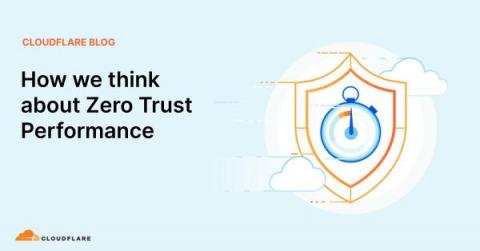
Cloudflare has done several deep dives into Zero Trust performance in 2023 alone: one in January, one in March, and one for Speed Week. In each of them, we outline a series of tests we perform and then show that we’re the fastest. While some may think that this is a marketing stunt, it’s not: the tests we devised aren’t necessarily built to make us look the best, our network makes us look the best when we run the tests.
What is it: Agentless architecture refers to platforms and services that are built to run as cloud-native applications. They require no installation, patching, or other forms of long term upkeep on the part of a user. Why it matters: Agentless applications, especially agentless security applications have a lower total cost of ownership (TCO), in terms of man-hours saved in deployment, maintenance, and overhead.
In January and in March we posted blogs outlining how Cloudflare performed against others in Zero Trust. The conclusion in both cases was that Cloudflare was faster than Zscaler and Netskope in a variety of Zero Trust scenarios. For Speed Week, we’re bringing back these tests and upping the ante: we’re testing more providers against more public Internet endpoints in more regions than we have in the past.
Upwork is a freelancing platform that connects a global base of clients to freelancers via job postings. Since going public on the New York Stock Exchange in 2019, the company has become one of the leading freelance platforms worldwide and was named on Time’s list of the 100 Most Influential Companies of 2022.
The past few years have witnessed a rapid surge in the use of SaaS applications across various industries. But with this growth comes a significant challenge: managing security and assessing risk in application connectivity.
In the ever-evolving landscape of cloud security, AWS Identity and Access Management (IAM) plays a critical role in safeguarding your AWS resources. By following IAM best practices, you can fortify your cloud environment, mitigate risks, and maintain granular control over access permissions. In this quick guide, we will review essential IAM best practices, from implementing least privilege to leveraging advanced features.
00:00 Intro: welcome Chris!
03:05 Trends in cloud security, reflected at fwd:cloudsec
05:00 fwd:cloudsec submissions - more practitioners needed!
10:40 Blurring the lines: what does that practically means?
19:30 Cloud service providers maturity: their security posture evolved
24:30 Public Cloud Security Breaches
30:01 Public Cloud Security Breaches demo
32:35 the Last Pass attack deep dive
38:00 Identify the crown jewels!
In our first-ever Cloud Threat Summit, CrowdStrike’s Senior Vice President of Intelligence and Senior Director of Consulting Services discussed the most common ways adversaries breach the cloud and the steps organizations can take to stay safe.
We have exciting news to share! Salt Security is building a bi-directional integration with the Wiz cloud security platform! With this announcement, Salt becomes the first API security vendor to build a two-way integration with Wiz, giving Wiz customers the deepest and most actionable insights into API behaviors – all within Wiz’s comprehensive cloud security platform.
Starting today, Cloudflare’s API Gateway can protect GraphQL APIs against malicious requests that may cause a denial of service to the origin. In particular, API Gateway will now protect against two of the most common GraphQL abuse vectors: deeply nested queries and queries that request more information than they should.
AWS Security Hub is a cloud security posture management platform (CSPM) that automates security best practice checks, aggregates security alerts, and understands your overall security posture across different AWS accounts. AWS Security Hub ingests security findings from other security services like Amazon GuardDuty, Amazon Inspector, Amazon Macie, AWS IAM, and AWS Firewall Manager — as well as findings from partners like Snyk.
In today’s highly dynamic application ecosystem, the number and scope of security issues that developers need to address have increased dramatically, making it imperative for modern development teams to have an automated system to handle security events across every application component.
Hybrid cloud takes the capabilities of the public and various private cloud options and merges them, allowing businesses to host different workloads within different environments depending on their performance, security, and resource needs. Companies leveraging a hybrid cloud strategy promote business competitiveness and agility, allowing them to respond to changes in resource demands quickly.
Cloudflare Area 1 is a cloud-native email security service that identifies and blocks attacks before they hit user inboxes, enabling more effective protection against spear phishing, Business Email Compromise (BEC), and other advanced threats.
Unless engineering practices introduce efficiencies, promote flexibility and drive revenues early, cloud migrations risk stalling because of cost and time overruns.
Is your organization grappling with the relentless pace of ever-changing threats in the cloud? Are you spending hours investigating security events without identifying the root cause of the problem?
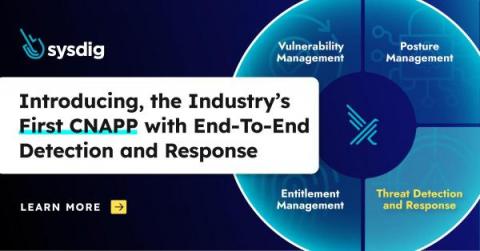
CrowdStrike is defining the future of cloud security by empowering customers to rapidly understand their cloud risk and to detect, prevent and remediate cloud-focused threats. Today we are announcing a series of new cloud security innovations designed to deliver complete visibility into potential attack paths, from endpoint to cloud, and instantly secure vulnerable cloud workloads across build and runtime.
We’re excited about achieving several key milestones with Amazon Web Services as we head into re:Inforce 2023 next week. These milestones include achieving the AWS Security Competency, partaking in the Amazon Security Lake launch as a subscriber partner, and the introduction of a Tines-Amazon GuardDuty partner solution. To date, the flexibility of our no-code automation sets us apart from other automation partners by automating across any AWS workflow.
APIs power today’s digital economy and enable organizations to succeed in their business innovation efforts. Because every company’s APIs are unique, so are its security gaps, which bad actors will inevitably try to exploit. Only through rich context and deep behavioral analysis can these attackers be stopped. Many of the APIs that enable today’s applications and business services live and breathe within the Amazon Web Service (AWS) ecosystem.
A cloud-native application is specifically created to operate seamlessly within a cloud environment, taking advantage of cloud infrastructure and services to achieve top-notch performance, adaptability, and reliability. They use microservices instead of monolithic structures, allowing independent development and deployment. Microservices are hosted in containers, providing a lightweight and portable runtime environment.