Security | Threat Detection | Cyberattacks | DevSecOps | Compliance

Introducing Adaptive Intelligence: Undermining the economics of every bot attack

Modern bot threats are increasingly driven by determined, sophisticated attackers. Often it is not even one person, but a group trading techniques with each other or a commercial service sold to anyone willing to pay. For many of them, getting past bot detection is a full-time job they genuinely enjoy. Block them and they get to work, finding a workaround. AI has simplified this further, making it even easier to set up complex configurations for attackers, lowering the overhead of an attack.

How to Protect Digital Ministries in the Age of Cloud Computing

Church ministry no longer stops at the sanctuary door. Livestreams, online giving, prayer forms, volunteer platforms, email systems, and social channels now carry much of the weekly work. That reach is certainly important. But still, every new account creates another place where credentials, personal records, or payment information can slip into the wrong hands. Churches often manage this digital estate with small teams, rotating volunteers, and limited technical oversight.

Cloud Computing Security for Community Organizations: Protecting Sensitive Data

Church work today runs through shared drives, livestreaming platforms, donation portals, email accounts, volunteer databases, and pastoral care systems. That shift happened gradually, often without a formal security plan. One tool arrived for scheduling, and another handled giving. At the same time, someone created a spreadsheet for member details. Before long, sensitive information sat across several cloud services, managed by staff and volunteers with very different technical skills.

Top 7 Technology Strategies Growing Businesses Need to Stay Competitive

Growing businesses face mounting pressure to modernize their operations while competitors race ahead with emerging technologies. The gap between those who adapt and those who fall behind widens each quarter, making strategic technology adoption no longer optional but essential for survival. Seven core strategies have emerged as critical differentiators in today's market, each addressing specific operational challenges that determine whether a company scales successfully or stagnates. Understanding these approaches reveals why some organizations thrive while others struggle to keep pace.

Is a SOC 2 Report Enough to Assess a Cloud Vendor?

A vendor sends over a SOC 2 report. It lands in the queue, someone reads the cover page, sees the auditor's name and a clean-looking opinion letter, and marks the assessment complete. The reviewer moves on to the next vendor. Multiply that by a few hundred vendors a year, and it becomes less of a decision and more of a reflex.

From all-or-nothing to task-based OAuth consent

Since June, developers have created thousands of third-party OAuth apps on Cloudflare, with more than a million authorizations since. OAuth makes delegated access possible. It lets applications act on a user’s behalf without asking them to handle long-lived credentials or hand over a password. That model works well when an application can describe its access needs with a small set of scopes. Developers use OAuth for SaaS integrations, internal tools, CLIs, and agents.

A revisit of remote Spectre attacks on Cloudflare Workers

In 2021, we assessed remote Spectre attacks against Cloudflare Workers. Based on the results, we shipped a production defense called Dynamic Process Isolation (DyPrIs), which identifies maliciously looking scripts and isolates them into separate processes. Since then, newer techniques in the area of stabilizing Spectre attacks have been discovered. To understand if these techniques posed a threat to our Workers production environment, we decided to internally reassess the remote Spectre attack.

BGP Role model: tracking the adoption of RFC 9234

Route leaks push traffic down paths it was never meant to take. We have written and spoken publicly in the past about route leaks in Border Gateway Protocol (BGP), depicting these events as impactful incidents that cause misdirection of traffic through unintended network paths. BGP routing is driven by the relationships between Autonomous Systems (ASes), i.e., customer-provider and peer-peer.

Top Atlassian Cloud Apps to Get the Most Out of Your Setup

Atlassian has ended new Data Center (DC) license sales and continues to prioritize Cloud for new customers. If you’re already using a data center, you have to plan your migration to the Cloud. And if you’re buying your first license, Atlassian Cloud is the only option. That shift comes with multiple benefits, like agility, scalability, and lower cost overhead. However, your DC environment, being on-premise, gave you more direct control over security.

On-Premise vs. Cloud IGA: How Do You Choose the Right Deployment for Your Organization?

Choosing the right deployment model for your Identity Governance and Administration (IGA) system is a high-stakes decision that affects many aspects of your organization. It determines how you manage access across your entire enterprise. It also dictates your audit readiness and integration capabilities. Now you might assume that the cloud is the only modern option. However, many organizations are changing their infrastructure strategies.

Secure all your internal vibe-coded applications - in one click

AI has enabled employees across every team to build applications faster than ever before. But that speed is also what's keeping every CISO up at night: any employee can build an application, deploy it to the public Internet, and accidentally expose internal work or company data. Today, we're launching new tools to make it easy to keep your applications hosted on Workers private.

How Cloudflare detects MCP traffic and helps secure it

Most companies designed their resource permissions with a human user in mind. A senior engineer may be able to deploy to production, query a sensitive database, or revoke another user's access. Those privileges come with risk, but that risk has traditionally been bounded by two assumptions: the engineer will use human judgment, and the engineer can only act at human speed.

8 Best Encrypted Email Services to Protect Yourself With In 2026

Most successful hacks and data breaches are perpetrated through email. In a perfect world, everyone would find safer methods for communication, but since email isn't going anywhere anytime soon, encrypted email is our best option. Since Internxt doesn't have its own encrypted email yet, we've assembled a list of the best encrypted email services you should use in the meantime.

Certificate Transparency Monitoring is now generally available

Since we launched Certificate Transparency Monitoring in public beta in 2019, we've been emailing subscribers whenever a new TLS certificate appears in a public Certificate Transparency (CT) log for one of their domains. Today, it's turned on for more than 650,000 customer domains. It's an early warning that someone, somewhere, has issued a certificate for a hostname in your zone, giving you a chance to spot a mis-issued certificate early.

The Cloud Controls Matrix (CCM): Manual vs. AI-Assisted Vendor Assessment

Most teams that assess cloud vendors already have a general idea of the Consensus Assessment Initiative Questionnaire (CAIQ) and Cloud Controls Matrix (CCM). However, you may not have a good answer for what it takes to run that assessment. Turning a vendor's trust center page, SOC 2 report, and security policy into a structured, defensible view of CCM control coverage is a different problem entirely.

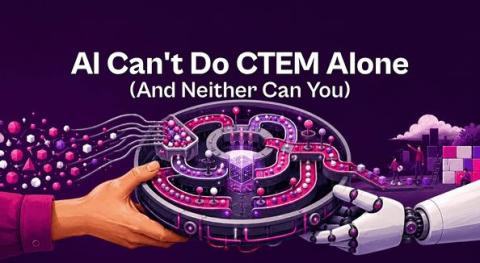
AI Can't Do CTEM Alone (And Neither Can You)

AI can meaningfully power Continuous Threat Exposure Management (CTEM), but only for specific stages of the cycle: prioritization, validation, and remediation routing. AI can’t replace the underlying data integration work, and it can’t turn CTEM into a single product, because Gartner defines CTEM as a continuous five-stage program (scoping, discovery, prioritization, validation, mobilization), not a tool you install.

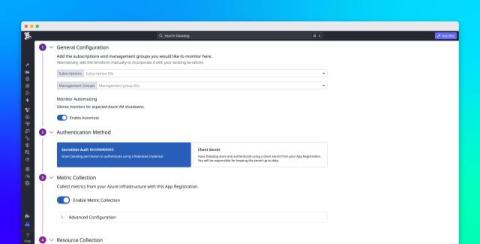
Avoid Azure secret rotation with secretless authentication

Many observability platforms authenticate to Microsoft Azure by using client secrets. Teams must create, store, and periodically rotate these secrets to keep receiving the telemetry data that they need. This recurring maintenance adds operational overhead and increases the risk of ingestion outages that occur when secrets expire.

Automate Inactive User Suspension with JumpCloud Workflows

Say goodbye to manual offboarding checks and dormant account risks! Join Derek Johnson as he demonstrates how to leverage JumpCloud’s user inactivity rules and Directory Insights (DI) trigger events to instantly automate account suspensions, group isolations, and admin notifications. We walk through configuring inactivity thresholds, mapping JSON parameters, and executing a live test run so you can streamline your IT operations today.

Cloudflare DDoS Threat Report H1 2026: 1 Tbps attacks soar as DNS floods and geopolitical tensions drive a new wave

Welcome to the 25th edition of Cloudflare's DDoS Threat Report. This is the first half-year edition in the series: rather than publishing separate reports for the first and second quarters of 2026, we have combined our coverage of Q1 and Q2 into a single volume covering January through June 2026.

What Is CSPM? Cloud Security Posture Management

The shift to cloud-native infra has broken the traditional perimeter security model. Modern cloud environments are dynamic, heavily distributed, and identity-driven, creating security challenges that conventional security tools were never built to address. Traditional SIEM and vulnerability management tools lack native capabilities to detect issues in IAM policies, S3 bucket ACLs, or the blast radius of a misconfigured Kubernetes node pool.

Serving the most critical missions: Cloudflare for Government achieves FedRAMP Class D (High) Certified status

We believe the Internet must be a force for good, and that it requires a foundation of trust. Nowhere is that trust more critical than in public service. Government agencies are the stewards of a nation’s most sensitive data. They protect national security, critical infrastructure, and the personal information of every citizen. Cloudflare’s mission is to help build a better Internet.

Unveiling good and bad behaviors on the Agentic Internet

The Internet isn’t a single lane of traffic. For a long time, the rule of thumb in web security was that bots are bad, while humans are good. Of course, we’re far past this generalization. Humans can be fraudulent, and bots can be helpful at different levels. Site owners actively want some automated traffic to interact with our sites to make the Internet functional and discoverable. To complicate things further, the line between "human" and "bot" is blurring more and more.

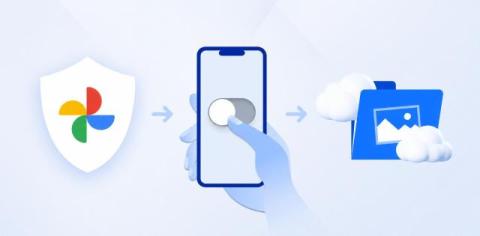
How to Stop Google Photos Backup and Protect Your Cloud Storage

For Android users, all the photos you take are automatically backed up into Google Photos; the same goes if you have Google Photos on iOS or your desktop devices. But what if you don’t want to automatically back up your Google Photos? Or what if you no longer want to be a part of Google’s business model that profits from your data?

Cloudflare AI Search: give your agents a search engine for your data

Today, we’re excited to announce a few developer experience improvements to Cloudflare AI Search to make it easy to manage a search solution out of the box. Previously, you had to stitch together components of the Cloudflare primitives (Workers AI, AI Gateway, Vectorize, R2, Browser Run) but now, AI Search can do this automatically, and better. Our goal is to give your agents their own search engine, where they can easily find data to provide better answers for themselves and their humans.

JumpCloud - Secure Every Identity. Human or not.

AI is advancing. Governance is lagging behind. AI agents are now managing critical tasks across your workforce. And they need access to your enterprise IT systems to do it. JumpCloud manages the entire lifecycle for human, non-human, and agentic identities from a single platform. Every identity, verified. Every action, governed.