Security | Threat Detection | Cyberattacks | DevSecOps | Compliance

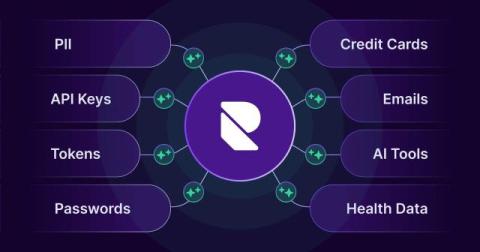
The Future is Now with Intelligent DLP

Historically, software vendors that detect various types of data in customers’ environments have relied heavily on rudimentary methods for identifying that data. One of the most popular methods for identifying the presence of any particular type of data is using regular expressions and, admittedly, Riscosity started off doing the same several years ago.

What Is Human Risk Management?

Cybersecurity has long focused on fortifying networks, securing endpoints and blocking malicious code. Yet one of the most persistent and costly security vulnerabilities isn’t technical — it’s human. Employees routinely fall for phishing scams, mishandle sensitive data or unintentionally violate security policies. While most people don’t mean to cause harm, their behavior still introduces significant cyber risk to the organization.

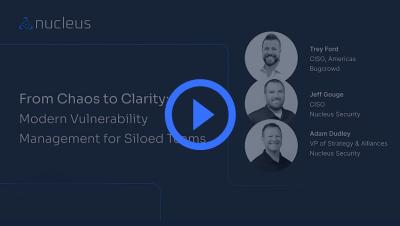
From Chaos to Clarity: How to Modernize Vulnerability Management

Fragmented tools. Manual data wrangling. Burned-out teams. Sound familiar? In this expert roundtable with Trey Ford (CISO, Bugcrowd) and Jeff Gouge (CISO, Nucleus Security), we break down how today’s security leaders can transform vulnerability management from a chaotic, spreadsheet-driven burden into a unified, automated, and trusted function. Watch to learn.

The User Risk Puzzle: Why Your Security Tools Don't Add Up

As a security leader, you face an inevitable daily reality: a flood of alerts pouring in from dozens of different tools. Risky sign-ins are flagged in Microsoft 365, weak passwords are pinged from a vault audit, and a separate report identifies which employees failed the latest phishing simulation. While all this information is valuable, most leaders are unable to connect these separate data points to paint a clear, cohesive picture of an individual user’s overall risk.

Trustwave SpiderLabs' 2025 Risk Radar Report: Technology Sector

Threat actors know that technology makes the world go round, and these adversaries are more than willing to use every cyber weapon at their disposal to take advantage of that fact, according to Trustwave SpiderLabs’ 2025 Trustwave Risk Radar Report: Technology Sector.

CISOs Brace for a Wave of AI-Powered, Domain-Based Cyber Threats

Domain-name system (DNS)- based cyber attacks are becoming increasingly complex, and AI will only make managing them even more challenging. According to a recent report, Chief Information Security Officers (CISOs) anticipate a tumultuous season of cyber threats, with low confidence in their abilities to defend against them effectively.

Exposed and Exploited: Trustwave Uncovers the Alarming Cyber Risks Lurking in the Tech Sector

Trustwave SpiderLabs' upcoming report, the 2025 Trustwave Risk Radar Report: Technology Sector, will be released on June 25 and will delve into the threats in the technology industry and how to stay secure. The report, an update on the team’s 2024 Technology Threat Intelligence Briefing and Mitigation Strategies, provides a comprehensive analysis of novel cybercriminal tactics and techniques, identifying the top trends that significantly affect the technology industry.

Leading the Next Evolution of Cybersecurity: From Threat Management to Real-Time Risk

The cybersecurity landscape has reached a turning point. In this article, George Patsis, CEO of Obrela, challenges the traditional, tool-centric approach to cyber defense and goes through Obrela’s ground breaking approach to: real-time risk management. With cyber threats growing more complex and unpredictable, organizations must shift from reactive threat detection to a context-aware, business-aligned risk management.

From Code to Conversations: How Modern AI Creates New Classes of Data Risk

The rise of generative AI has fundamentally changed how we work, create, and collaborate. But as organizations rush to integrate AI tools into their workflows, they're inadvertently creating entirely new categories of data risk that traditional security measures weren't designed to handle.

CVE Trends to Watch: Real-World Risks to Telecom and Professional Services

Cybersecurity weaknesses span both software and hardware systems, creating numerous opportunities for exploitation. Among the most common access vectors leveraged by threat actors are phishing attacks and Common Vulnerabilities and Exposures (CVEs). When left unpatched, CVEs can pose significant risks to an organization’s systems, exposing sensitive data and operational assets to potential compromise.

Why Your Organization's Security Awareness Training Isn't Working

Your IT department just sent out its annual reminder to complete security awareness training. Employees dutifully clicked through their training modules, passed a short quiz, and checked off the compliance box for another year. Ask yourself, does this process really give you confidence that your organization is prepared to dispel today’s security threats? Well, the odds aren’t in your favor.

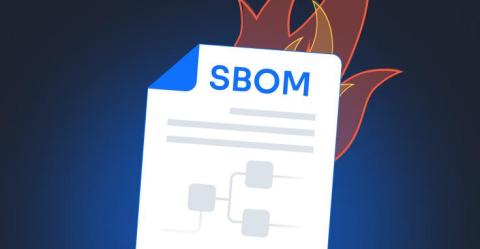
SBOM Is Not the Savior - Addressing the Deeper Problems in Supply Chain Security

I hear a lot these days about SBOMs and how they are going to be the key to supply chain security accountability, to even include a Presidential Executive Order mandating SBOMs in the procurement process for federal agencies. There are multiple areas of research going on in this area, such as this Academic SBOM Repository. But before we get too far down the road, let’s get one thing straight: SBOM isn’t going to save us. It’s a transparency tool, not a solution.

Who Buys Insider Risk Management? A Business Case Across Roles

A staggering 74% of cybersecurity incidents originate from within, and when looking at insider risk, 82% of incidents result from unintentional actions by well-meaning employees. More people are working from home, bringing their own devices, and connecting globally, which is widening the threat landscape. Attackers are more advanced, as they utilize AI and other technology to make their phishing and hacking attempts more sophisticated.

3 Important Ways Attack Surface Management Must Evolve

For the second time in a row, Bitsight has been named an Overall Leader in the KuppingerCole Leadership Compass for Attack Surface Management (ASM)—and it’s not just a title. The report offers a deep dive into how organizations are using ASM to get ahead of cyber threats by proactively managing their digital risk.

What Is Cyber Risk

Did you know that it is estimated that 45% of organizations worldwide will have suffered attacks on their software supply chains this year? Cyber risk is real, and its consequences can be devastating. As digital transformation continues to reshape how businesses operate globally, cyber threats are increasing at a rapid and alarming pace. The term cyber risk refers to the damage posed by these cyber threats.

Veracode: Application Risk Management for today's AI-driven world

Discover Veracode, the comprehensive application risk management platform designed for today's AI-driven world. This video provides an overview of how Veracode empowers organizations to build and deploy secure software by offering unified visibility, AI-driven prioritization, and integrated tools for detecting and remediating vulnerabilities. Learn about Veracode's key capabilities, including static analysis (SAST), dynamic analysis (DAST), software composition analysis (SCA), and risk management.

TPCRM Framework: Building Digital Trust for Modern Enterprises

Third-party cyber risk management (TPCRM) has emerged as a critical discipline, moving beyond traditional approaches to address the unique and evolving cyber threats posed by vendor relationships. This post explains the core tenets of TPCRM, outlines key requirements for ideal tools, and suggests implementation strategies for this new, important branch of cybersecurity.

ISO 27001 Risk Register Setup: Step-by-Step Guide

While we talk a lot on this site about the US Government’s various cybersecurity frameworks, like FedRAMP and CMMC, there’s one significant framework that deserves just as much attention: ISO 27001. ISO 27001, being an ISO standard, is an international framework for cybersecurity divorced from any one country’s government.

Checkups and Checklists: Cyber Risk Isn't Just a Technical Problem

There are many things in our lives we must prepare for to be ready. For other things, we wing it, or we're not prepared to deal with it at the moment. For me, I've reached that point in my life where I needed to have a medical procedure done, and it was something I've put off for several years. It may not be very comfortable to admit, but last week, I had a colonoscopy. That's not exactly how you'd expect a cybersecurity blog to start, but hear me out on this one!

Shadow AI: Examples, Risks, and 8 Ways to Mitigate Them

Shadow AI refers to the unauthorized or unmanaged use of AI tools, models, frameworks, APIs or platforms within an organization, operating outside established governance frameworks. While employees may adopt these AI tools with good intentions, seeking to enhance productivity or solve problems more efficiently, the lack of oversight creates significant security, compliance, and operational risks.

Bitsight AI Empowers Microsoft's New Threat Intelligence Briefing Agent

Threat Intelligence (TI) has become the secret weapon of modern security teams—essential for identifying possible emerging threats before they escalate. But TI is only as valuable as its accuracy, relevancy, and timeliness. Unfortunately, many traditional TI approaches can no longer keep up, as security teams are plagued with information overload: too many signals, too little context, and limited resources to process everything. This is why the coupling of GenAI and TI is a game changer.

AI is already embedded in our everyday tools, often without us realizing it. | UpGuard #ai

“AI is already embedded in our everyday tools, often without us realizing it. That changes how security teams need to adapt.” Hear from Randy Vickers, Deputy CISO at the National Student Clearinghouse, in this fireside chat from UpGuard Summit 20, as he shares how his team is staying ahead of AI’s evolving role in cybersecurity.

The Real AI Agent Risk Isn't Data Loss. It's Unauthorized Action.

Your AI Agent just updated a vendor’s payment details in your Enterprise Resource Planning (ERP) system based on a seemingly harmless prompt. No data was exfiltrated. No access policy was violated. But now, a $250,000 payment is sitting in a fraudulent bank account. This is the new face of AI risk. As enterprises adopt AI Agents - either off the shelf or custom built, security teams are facing a fast-moving shift.

The Future of Vulnerability Management is Aggregated, Automated, and Agnostic

For years, vulnerability scanners have been the cornerstone of enterprise security programs. But as organizations scaled, and as infrastructure, applications, and attack surfaces diversified, the single-scanner model broke down. Security teams now face a fragmented reality. Data pours in from dozens of sources: endpoint detection tools, cloud security platforms, application security testing, and more. Each of these systems generates findings with its own schema, priorities, and assumptions. The result?

A Real-World Insider Risk Management Success Story with Teramind

Watch how a global travel company transformed their insider threat management with Teramind. In this RSA Conference 2025 case study, Teramind's VP of Product, David Pinckard, and arrivia's Executive Director of Revenue Integrity & Fraud, Justin Skagen, reveal how to: Move from reactive to proactive threat detection Streamline fraud investigations Manage human-driven security risks at scale Discover how leading organizations address the most unpredictable challenge in cybersecurity: insider threats.

Open Chroma Databases: A New Attack Surface for AI Apps

Chroma is an open-source vector store–a database designed to allow LLM chatbots to search for relevant information when answering a user’s question–and one of many technologies that have seen adoption grow with the recent AI boom. Like many databases, Chroma can be configured by end users to lack authentication and authorization mechanisms.

Elevating Cyber GRC With a Smarter Risk Register Strategy

‍Cybersecurity governance, risk, and compliance (GRC) programs are gaining institutional support, with 61% of respondents from Sprinto's "Pulse of Cyber GRC Report 2025" claiming that embedding GRC into their business strategy is one of their organization's top priorities. Even so, only 53% state that they are doing so effectively, highlighting the prevalent gap that exists in the cybersecurity world between intention and execution.

Modeling Cyber Resilience Is Now a Regulatory Priority

‍ ‍The European Central Bank (ECB), tasked with maintaining financial stability in the region, is changing how it supervises institutional resilience. According to a July 2025 Reuters report, banks across the Eurozone are being asked explicitly to model how large-scale disruptions, including geopolitical conflict, potential dollar shortages, and cyber incidents, could impact their capital reserves.

Bitsight Identifies Thousands of Security Cameras Openly Accessible on the Internet

Welcome to 2025, where thousands of internet-connected cameras meant to protect us are actually putting us at risk. In our latest research at Bitsight TRACE, we found over 40,000 exposed cameras streaming live on the internet. No passwords. No protections. Just out there. We first raised the alarm in 2023, and based on this latest study, the situation hasn’t gotten any better.

Third Party Security: Building Your Vendor Risk Program in 2025

Are you confident your vendors can withstand a cyber attack? If not, you should continuously evaluate your third-party security, especially if you’re sharing sensitive customer data across your vendor ecosystem. In this post, we break down the concepts of third-party security and provide an actionable roadmap for effectively strengthening this essential branch of cybersecurity across your organization.

Vendor Security Review: Key Components And Implementation

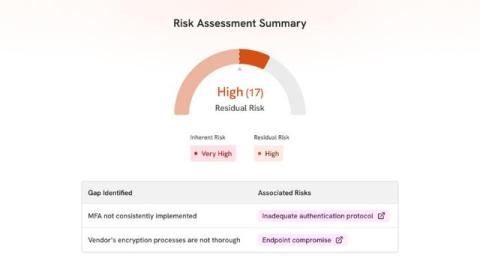
Your vendors are essential partners, but they could also be your organization's biggest hidden security risk. A robust vendor review process is the key to ensuring onboarded vendors align with your cybersecurity standards and don't increase your likelihood of suffering a data breach. This guide outlines everything you need to know to build a structured, repeatable, and scalable vendor security review process.

Shadow AI leak exposes data from 571 Canva Creators #ai #cybersecurity #dataleak #vendor #vendorrisk

571 Canva Creators had their personal data exposed by an unsecured Chroma database. The database, used by Russian AI startup My Jedai, contained 341 document collections. One of these collections included survey responses with emails, countries of residence, and detailed feedback on the Canva Creators program. This isn’t your typical breach. It’s the result of unsecured AI infrastructure.

Predictive risk assessment: Preventing security incidents

Organizations are facing an increasing array of security challenges these days that can disrupt operations, lead to significant financial losses, and damage reputations. Traditional reactive security measures are no longer sufficient. Instead, a strategic focus on proactive security is essential. Predictive risk assessment stands at the forefront of modern security approaches, offering a comprehensive framework for identifying vulnerabilities before they are exploited.

What Are The Key Components Of A Successful Human Risk Management Program?

When it comes to cybersecurity, organizations face an ever-present and often underestimated threat: human risk. Despite significant advancements in technological defenses, human error remains a leading cause of data breaches and security incidents. Industry studies consistently show that between 70% and 90% of data breaches involve some form of human-related cause—whether through social engineering, errors, or misuse.

What is an SBOM and Why is it Critical to Third-Party Risk Management?

A decade ago, the primary focus of TPRM was questionnaire management and distribution, usually done in a simple and manual way, relying on vendors to self-report on their security practices. Today the basic best practices of TPRM have grown to include continuous monitoring and other advanced AI-based capabilities like CVE alerting for third parties as elementary aspects of an effective program.

Why Vulnerability Remediation Breaks Down and How to Fix It

The biggest cybersecurity bottleneck for today’s enterprises isn’t detection. It’s remediation. Organizations are flooded with vulnerability data, but that flood rarely translates into effective action. Instead, security teams spend their time wrangling data, chasing tickets, and firefighting the same risks week after week. The outcome? Wasted effort, missed SLAs, and real business risk.

ThreatBook Selected in the First-ever Gartner® Magic Quadrant for Network Detection and Response (NDR)

After nearly a year of research and evaluation, Gartner released the first "Magic Quadrant for Network Detection and Response" report on May 29, ThreatBook became the only Chinese company selected.

Shadow AI: Managing the Security Risks of Unsanctioned AI Tools

The explosion of generative artificial intelligence tools is sparking a wave of enthusiasm in workplaces, with employees eagerly embracing new applications to boost productivity and innovation. However, this adoption often leads to a new phenomenon known as shadow AI—the use of artificial intelligence tools within an organization without explicit approval or oversight from IT and security teams. Unsanctioned use of AI creates significant (and often invisible) security blind spots.

Data Leakage and Other Risks of Insecure LlamaIndex Apps

Similar to Ollama and llama.cpp, LlamaIndex provides an application layer for connecting your data to LLMs and interacting with it through a chat interface. While LlamaIndex is an open source project like other LLM application frameworks, LlamaIndex is also a company, with a recent Series A, a commercial offering, and a more polished aesthetic than their strictly DIY counterparts.

Beyond Compliance: How Cyber Threat Intelligence Fortifies Third-Party Risk Management

Third-Party Risk Management (TPRM) is a critical function for modern organizations, given the reliance on external vendors and partners. The interconnectedness of digital ecosystems means that a breach at a third party can have severe repercussions for your organization. In a recent Dark Reading survey, 30% of organizations experienced some or many supply chain attacks over the past 12 months, and only 14% of respondents reported themselves confident their supply chain is completely secure.

BlueVoyant Unveils New SBOM Capabilities as Part of Its Leading Third-Party Cyber Risk Management Solution

BlueVoyant's new Software Bill of Materials (SBOM) management offering, powered by SBOM leader Manifest, enables organisations to efficiently analyse and reduce third-party risks from commercial software.

Inside RansomHub: Tactics, Targets, and What It Means for You

Ransomware attacks are undeniably on the rise—but just how significant is the increase? According to Bitsight CTI researchers, ransomware attacks (as measured by unique victims listed on leak sites) rose by almost 25% in 2024, and the number of ransomware group leak sites rose by 53%. Ransomware is becoming the go-to tactic for financially driven threat actors seeking quick and substantial payouts.

The Power of Automated Risk Resolution: Simplifying Security for Your Team

In today’s cybersecurity landscape, security teams face a daunting challenge: managing an ever-growing volume of risks with limited time and resources. Traditional manual risk resolution methods are no longer sufficient. They slow down response times, increase the risk of human error, and strain already stretched teams—ultimately compromising the organization’s security posture. That’s where automated risk resolution comes in.

Building cybersecurity resilience through governance and assurance

Notis Iliopoulos from Obrela explains why it is time to move beyond checkbox compliance towards true operational resilience and provides advice on how to do it Managing cybersecurity risk exposure and ensuring compliance with evolving regulations has never been more complex or more critical. The rapid expansion of regulatory frameworks such as NIS2, DORA, and GDPR, to name a few, has forced organisations to rethink their approach to governance, risk and compliance (GRC).

Is Runtime Vulnerability Management the future of cyber risk management?

Traditional vulnerability management has hit a wall. The vulnerability management playbook hasn't changed much in decades: scan for CVEs, prioritize by CVSS scores and patch as quickly as possible. But this reactive approach is failing security teams who are drowning in alerts while real threats slip through the cracks. Runtime vulnerability management sets out to change this status quo. Here's what you need to know.