Security | Threat Detection | Cyberattacks | DevSecOps | Compliance

The CEO's Take: Blind Spots in the Enterprise & Ecosystem

“The best way to compromise a ‘secure organization’ was to go find the things they didn’t know about.” Vulnerability management – within both the enterprise as well as the vendor ecosystem – is largely broken. Join Aleksandr Yampolskiy and HD Moore for this webinar discussing: SecurityScorecard monitors and scores over 12 million companies worldwide.


The CISO's Take: Navigating Cyber Risk in Financial Services

“If you are solving problems at human speed, you are at a huge disadvantage, because your attackers are operating at machine speed.” As cyber risk – in both the financial services sector and more broadly – accelerates at the pace of automation and AI, securing our future requires practitioners to be more strategic than the threat actors after our assets.

SecurityScorecard CISO Steve Cobb as Cyber Santa | Cyber Santa's 2026 Predictions

The New Year is upon us and with a new year comes new changes. Cyber Santa is back with his predictions for the coming year and how cyber will evolve in the next 365 days. SecurityScorecard CISO Steve Cobb returns in his jolly red hat and white beard to shake his snow globe and see what's ahead for the cybersecurity industry in 2026 and what you need to know going into the new year. CISO responsibility, data sprawl, and AI governance are the top 3 on the list of emerging priorities.

Third-Party Risk Management: Best Practices and Trends

In the quiet corners of the darknet, threat actors aren’t always looking for a way to break through your front door. Instead, they’re hunting for the “side door”—the niche cloud provider you use for analytics, the marketing firm with access to your customer data, or the logistics partner with a direct line into your ERP. As we move into 2026, Third-Party Risk Management(TPRM) has evolved from a periodic compliance exercise into a high-stakes game of digital chess.

Security Alert: CVE-2025-14847 MongoDB "MongoBleed" Actively Exploited

A high-severity vulnerability, CVE-2025-14847, affecting MongoDB Server is being actively exploited in the wild with a Bitsight Dynamic Vulnerability Exploit (DVE) score of 9.71. The flaw, commonly referred to as “MongoBleed,” is an unauthenticated memory-read vulnerability caused by improper handling of zlib-compressed network message headers, which may allow attackers to read uninitialized heap memory remotely.

NIST compliance in 2026: A complete implementation guide

Aligning with a NIST framework is a strategic initiative for any organization serious about cybersecurity. It provides a clear roadmap to defending against sophisticated supply chain attacks, meeting evolving regulatory demands, and managing growing cyber risk exposure from third-party vendors. This guide explains the core NIST frameworks and provides a practical, 5-step implementation plan for building a resilient and defensible security program with a NIST standard.

How to communicate cyber risk in commercial terms

Cyber risk is often discussed in technical language, often in a way which is difficult to decipher the real business impact. CVSS scores, vulnerabilities, attack paths and threat actors all have their place but for many decision‑makers, this language doesn’t translate into real-world business outcomes. Small business leaders and non-technical executives need to understand what cyber risk means for revenue, reputation and operational continuity.

Bitsight Threat Intelligence Briefing: Top TTPs Leveraged by Threat Actors in 2025

As the global cyber threat landscape evolves, adversaries continue to refine and adapt their tactics. Bitsight threat intelligence indicates that there are several tactics, techniques, and procedures (TTPs) that are most commonly and consistently leveraged by threat actors. These attacks are not isolated; they’re systemic.

How to Build an Effective Insider Risk Management Program

Insider threats have become one of the most difficult and damaging challenges in cybersecurity. Unlike external attackers, insiders already have access to sensitive data and systems. Their actions often appear legitimate until it’s too late. Whether it’s a malicious employee stealing intellectual property or a well-meaning one accidentally leaking customer information, insider incidents are complex, nuanced, and often invisible to traditional security tools.

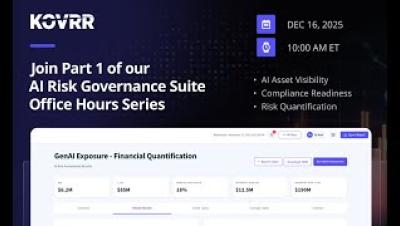
AI Risk Governance Suite - office hours part 1

Kovrr’s new AI Risk Governance Suite gives enterprises the visibility, structure, and measurable control needed to manage GenAI responsibly across its full lifecycle. Join us for Office Hours: Part 1, where Or Amir will walk through the first three modules of the suite—showing how enterprises can gain real-time oversight and quantifiable insight into their AI landscape: Discover how these capabilities help enterprises align innovation with accountability—building a defensible foundation for responsible GenAI adoption.
Featured Post

Security Shifts in 2026: Risk Moves Beyond the CISO

In 2026, cybersecurity will shift from being seen as the security team's responsibility to being part of how the entire company operates. Every business function will share ownership of risk. Finance, engineering, product, and marketing will all have clear roles in protecting customer trust.

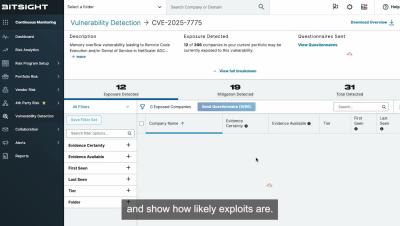
Continuous Vendor Risk Monitoring: Real-Time Cyber Risk Visibility with Bitsight

Gain real-time visibility into cyber risks across your entire vendor ecosystem with Bitsight Continuous Monitoring. Continuously track third- and fourth-party security performance, uncover hidden vulnerabilities, and identify high-risk changes before they impact your business. Powered by the industry’s most comprehensive cyber risk data, Bitsight helps security and GRC teams respond faster to critical threats—including zero-day vulnerabilities—while improving vendor collaboration and strengthening overall supply chain resilience.

This or That. CEO Shares Favorite Cybersecurity Books in SecurityScorecard Bracket #cybersecurity

This or That. Favorite Books of SecurityScorecard Bracket, Cyber Edition is BACK – but this time it's Security Books! �� CEO and Co-Founder of SecurityScorecard Aleksandr Yampolskiy has another list of books you'll want to grab for some winter break reading and relaxation. Which ones are you hoping end up in your stocking this year? Drop a comment with your favorites and recommendations below.

Why MDR Matters for Building Cyber Resilience in Telecoms

Telecom networks are the backbone of the digital economy. They must deliver secure, always-on connectivity at scale, supporting everything from critical national infrastructure to everyday consumer services. But cyber resilience today is no longer defined by uptime alone. It is about the ability to withstand, detect, and respond to highly targeted cyber threats that are designed to exploit the very fabric of telecom environments.

Cybersecurity Predictions for 2026: Human Risk, AI Data Leaks, and the Next Big Breach

Looking back at 2025, two mega-trends from the past have continued: First, data breaches remained a constant and continued to trend upward; and second, there was once again a headline disaster no one anticipated. The first point needs no elaboration; data breaches are like air pollution—an accepted nuisance that only occasionally becomes so severe that we wonder why we live like this. For the second point, I gesture toward the major incidents of recent years. MoveIt. Crowdstrike. Snowflake.

Looking Ahead to 2026: Why Cyber Economics Will Redefine the CISO's Mandate

Cybersecurity in 2026 will be driven by economics. Not hype. Not novelty. Economics. Attackers follow financial incentives and scale their operations faster than most enterprises can defend. CISOs must shift from reporting technical metrics to explaining business impact, guide safe AI adoption as Shadow AI grows, and design programs that emphasize resilience over perfection.

Why AppSec and Network Risk Management Must Be Unified in the Modern Enterprise

How Mend.io’s ServiceNow integration helps organizations manage application, network, and operational risks together—at scale. Managing AppSec and network risk as separate programs is no longer realistic for enterprise security teams. Today’s digital environments are interconnected, distributed, and constantly changing. A single misconfiguration, unpatched server, or vulnerable open-source component can become a point of exploitation when combined with weaknesses elsewhere in the stack.

CVE-2025-55182: First Days of React2Shell Exploitations

On December 3rd Lachlan Davidson disclosed an unauthenticated remote code execution vulnerability in React Server Components (RSC) that exploits how React.js (and Next.js) decodes payloads sent to React Server Function endpoints. On December 4th we started observing fingerprinting attempts for these vulnerabilities and on December 5th we started observing exploitation attempts. React.js is used by 66% of the global digital supply, in the top 0.06% of all technologies.

Top 10 Security Events of 2025

If 2025 has taught us anything, it’s that risk is no longer confined to the edges of your network. The traditional security perimeter has dissolved, with risk creeping into the very tools we use to run our businesses. Organizations faced off against catastrophic configuration errors, the weaponization of third-party trust connections, Multi-Factor Authentication (MFA) failures, and attackers who clearly love the holidays.

SecurityScorecard CISO Steve Cobb as Cyber Santa's 2025 Naughty and List 2025

AI dominated headlines this year and threat actor groups made bold moves in 2025. From threat actors like Imperial Kitten and scammers using tools like Sora AI to mimc real human voices to Congressional action on the PILLAR act and a $50 billion rural healthcare investment from the U.S. government, there are a lot of moments this year that make up Cyber Santa's Naughty and Nice List for 2025.

Risk Acceptance vs Risk Exposure: Making Smarter Security Investments

Before investing in new security tools, it’s critical to understand what your current stack is actually delivering. Barmak Meftah spoke about the importance of baselining existing investments to truly grasp risk acceptance versus real risk exposure. Without that foundation, new acquisitions lack context and are often driven by trends rather than necessity. Smarter decisions come from understanding:︎ What is already deployed︎ How it is configured︎ Where exposure persists.

Compliance Requirements That Make Cybersecurity Training Essential

Cybersecurity threats continue to evolve, but one constant remains: human error is still one of the leading causes of data breaches. As a result, cybersecurity training has become more than a best practice-it is increasingly a requirement driven by regulations, insurance providers, and industry standards. Organizations that fail to properly train employees not only expose themselves to cyber risk but may also fall out of compliance with critical legal and contractual obligations.

The Author's Take: The Past, Present, & Future of Third Party (Cyber) Risk Management

“It is also a common trap of giving inexperienced customers a false sense of security…”~Navigating Supply Chain Cyber Risk TPRM processes today are filled with thousands of pages of questionnaires, assessments, and more, but does that status quo really help secure your vendor ecosystem? Join Aleksandr Yampolskiy (CEO & Co-Founder, SecurityScorecard) and Alex Golbin (Co-Author, Navigating Supply Chain Cyber Risk) as they chat about.

Practitioner Insight: 4 Best Practices for Supply Chain Risk Resilience in Finance

Like any other global industry, financial services companies face tremendous challenges of scale and complexity when it comes to managing cyber risk across their digital supply chain. The financial services supply chain is composed of more than 1.6M third-party relationships across the industry ecosystem.

How To Reduce Risk This Holiday Season

The holiday season is traditionally a period of goodwill, gift giving, and time with loved ones, but if you are responsible for your enterprise’s cyber defenses it’s also a time when you should have a heightened awareness of cyber risk. Cybercriminals often treat this time of year as a prime opportunity to exploit the unprepared and unwary.

Finding the Best AI Governance Software for Enterprises

‍ ‍AI governance software provides GRC leaders and security and risk managers (SRMs) with a dependable way to understand how AI is being used across the business and whether safeguards are functioning as intended. The software can translate a complex ecosystem of tools and models into concrete insights that stakeholders can evaluate.

What Is a Prop Firm and How Technology Ensures Secure Trading

In today's fast-paced financial markets, professional trading has evolved significantly, thanks to the rise of proprietary trading firms, commonly known as prop firms. These firms provide traders with the capital and resources necessary to trade financial instruments without risking their own money. But beyond the financial mechanics, technology plays a critical role in ensuring that trading within prop firms is secure, efficient, and transparent. This article explores what is a prop firm and the technological safeguards that protect both traders and firms in the digital era.

Kenna Lit the Spark on the Exposure Management Fire and It's Time for the Next Generation

When Kenna launched more than a decade ago, it reshaped an industry that had grown numb to vulnerability overload. Back then, vulnerability management meant looking at mountains of CSV files, scanner reports, and a never-ending backlog of unprioritized issues. Kenna introduced the idea that risk instead of raw counts should determine what gets fixed first. For many security teams, it was the first time they realized they didn’t have a vulnerability problem.

SecurityScorecard CEO Dr. Aleksandr Yampolskiy 2026 Predictions for Supply Chain Cybersecurity

It's that time of year again for SecurityScorecard 2026 predictions. CEO and co-founder of SecurityScorecard Dr. Aleksandr Yampolskiy shares his predictions for how CEOs will rethink supply chain cybersecurity in 2026. We have seen supply chain breaches take over the headlines and cyber risk is becoming more than just a TPRM & IT issue and is becoming a bigger boardroom issue.

The Future of E-Commerce Payment Processing Worldwide

E-commerce is now central to how you sell. Still, cross-border growth often exposes familiar pain points: you juggle multiple payment providers, wrestle with unfamiliar regulations, and watch customers abandon full carts when their preferred payment method is unavailable or too slow. At the same time, you need to control fraud, reconcile data across channels, and keep checkout fast and trustworthy on every device. In this environment, choosing an international payment gateway that can handle global reach, local expectations, and rising risk is becoming one of the most important strategic decisions you make.

Reimagining Third-Party Risk: How Framework Intelligence Transforms Compliance

30% of data breaches come from third parties. That number is accelerating—and it’s why smarter, connected risk management has never been more critical. In our latest “F” Word webinar, Bitsight SVP of Product Management Vanessa Jankowski shared how forward-thinking teams are reimagining third-party risk management with Bitsight Framework Intelligence—turning compliance from a static checklist into a real-time intelligence engine.

Evolving Your Cyber Framework: From Checklists to Intelligence Engines

Risk isn’t static—so why should your frameworks be? In this clip from The “F” Word webinar, Vanessa Jankowski shares how Bitsight Framework Intelligence helps organizations move beyond checkbox compliance to proactive risk mitigation. By automating control mapping and enriching frameworks with real-time exposure data, Bitsight empowers teams to anticipate threats, not just respond to them. When frameworks evolve into intelligence engines, risk mitigation becomes faster, smarter, and measurable.

Bitsight TRACE: State of the Underground: What's Lurking Beneath the Surface of Cybercrime

Cyber risk doesn’t start at your network’s edge—it starts in the underground. In just 34 seconds, discover how Bitsight shines a light on hidden threats, providing organizations with unmatched visibility into the evolving cybercrime ecosystem.

Retail Never Sleeps - and Neither Do Cyber Threats

Retail has become a 24/7 business. In the post-pandemic world, eCommerce and digital channels operate continuously, with customers expecting constant availability and frictionless transactions. Seasonal demand peaks, global supply chains, and already thin margins leave little tolerance for disruption. At the same time, cyberattacks continue to grow in both volume and sophistication. For today’s retailers, digital resilience is no longer optional.

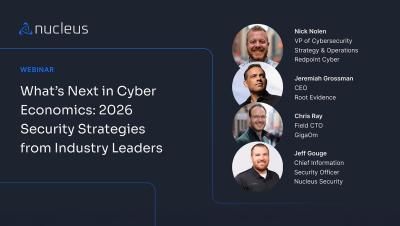
What's Next in Cyber Economics: 2026 Security Strategies from Industry Leaders

Security leaders are bracing for a pivotal shift in 2026. Attacker economics are evolving, extortion models are changing shape, and organizations are rethinking how they allocate resources to defend against more scalable and financially motivated threats. In this on-demand webinar, four industry experts break down the forces reshaping cybersecurity strategy and offer practical guidance for leaders preparing for the next wave of challenges.

Adversarial AI: The New Symmetric Threat Landscape

Adversarial AI is geometrically making cyber a symmetric threat, fundamentally altering the cybersecurity equation. However, there are leaders who have successfully navigated these emerging challenges and understand the implications. Join Dr. Aleksandr Yampolskiy (CEO & Co-Founder, SecurityScorecard) and Dr. Srinivas Mukkamala (CEO, Securin Inc.) as they dive into: SecurityScorecard monitors and scores over 12 million companies worldwide.

The problem? The people you're blocking are often top performers.

Banning AI seems logical. Our new report shows why it's failing. The problem? The people you're blocking are often top performers. They're confident, innovative, and willing to work around the rules to get value. This video explains why this paradox changes everything. You can't just block curiosity. You have to harness it. Download the complete (ungated) report.

It's 2 AM. Do You Know Which AIs Your MCP Server Is Talking To?

When Anthropic dropped the Model Context Protocol (MCP) in late 2024, it felt like the missing puzzle piece for AI tooling: a standard way for Large Language Models (LLMs) to talk to data sources, APIs, and pretty much anything else you can think of. Think of it as a USB-C port for AI, as the protocol’s creators like to say. But like most shiny new standards, the devil’s in the details.

Risk, Reward, and Reality: How to Decide the Right Amount to Invest in Crypto

Entering the world of crypto can feel exhilarating. Stories of rapid gains and high-profile success can make even cautious investors consider dipping their toes into digital assets. Yet, alongside the potential for reward comes significant risk. Understanding how much to invest in crypto is less about chasing opportunity and more about aligning investments with your financial reality, goals, and tolerance for volatility.

Unsubscribed Doesn't Mean Disconnected: The Persistent Risk of Calendar Domains

We trust our devices to keep our lives organized, from reminders and appointments to birthdays and holidays. But behind that convenience lies an invisible risk. Every time you subscribe to an external calendar, you may be granting an unknown third party the ability to send events directly to your device for as long as the subscription remains active.

Unlock resilient risk management strategies for 2026 success

Resilience is not a metric. It is the ability of an organization to anticipate, absorb, and adapt to disruption without disintegration. In 2026, risk management will be less about identifying what might go wrong and more about designing systems that endure what inevitably will. The pace of change has erased the illusion of stable baselines. Risk is dynamic, spreading faster through digital ecosystems, third-party dependencies, and regulatory uncertainty than most governance models were built to handle.

AI Browsers Are Here-But Enterprises Aren't Ready. Why Obrela Advises Extreme Caution

The cybersecurity landscape is changing at a pace we haven’t experienced since the dawn of cloud computing. The newest disruptor, the rise of AI browsers such as Perplexity Comet and OpenAI’s ChatGPT Atlas, promises to revolutionize user interaction with the web. But behind the innovation lies a long list of risks that enterprises cannot afford to ignore.

The CISO's Take: Securing the Future of Financial Services & More

New year, new threats… Except some aren’t so new; they’ve been years in the making. As the future of financial services evolves from relying on traditional banking to other platforms, securing our future requires practitioners to be more strategic than the threat actors after our assets. Join Aleksandr Yampolskiy and Jeff Lunglhofer for their take on: SecurityScorecard monitors and scores over 12 million companies worldwide.
Transforming AI Risk Awareness Into Measurable AI Governance

Only a few years ago, after more than a decade of debate over how cybersecurity incidents affect the financial stability of public companies, the U.S. Securities and Exchange Commission (SEC) finally made cyber risk disclosure a formal requirement. The intent was to bring transparency and accountability to a category of risk that had long been treated as technical rather than financial. Now, albeit voluntarily, AI has entered that same conversation, but the speed of its arrival has been remarkable.

Top 5 Most Dangerous Truck Fleet Apps - Security Flaws That Could Trigger Major Accidents in Florida

Truck fleet applications are a backbone for logistics and driver management, but some serious security gaps in these tools can lead to real-world dangers-especially on Florida's packed highways. Weaknesses in software that handles real-time tracking, route planning, and communication can cause breaches or outright system failures, putting people in harm's way. If you're running a fleet, knowing which apps are risky isn't just smart-it's essential for keeping your operation safe and above board.

Solving Human Risk: Build a Measurable, Security-First Culture

We've previously addressed the foundational problems of visibility and automated human risk management. However, the final, most enduring challenge remains: how do you address the human element that lies at the core of human cybersecurity risk? Now more than ever, users are prime targets for attackers, but the traditional playbook offers little more than check-the-box training (which is often easily forgotten).

Why Every CEO Needs a CISO or CIO on the Board and How to Get a Board Seat if You Are One

As boards face AI risk, digital transformation, and evolving regulation, technical expertise has become essential. But when it comes to board seats, CISOs or CTOs are often underrepresented. Speakers Dr. Aleksandr Yampolskiy, Co-Founder and CEO of SecurityScorecard | Beth Stewart, Founder and CEO of Trewstar Corporate Board Services SecurityScorecard monitors and scores over 12 million companies worldwide.

Featured Post

Cyber Resilience and AI Risk: Safeguarding Critical Infrastructure in a New Threat Landscape

In October, the UK put a spotlight on cyber resilience with the release of the NCSC's 2025 Annual Review. CEO Richard Horne warned that failing to prepare for cyberattacks risks a company's future. The urgency behind this statement is backed by data: the NCSC handled 204 major cyber incidents between September 2024 and 2025, and 43% of UK businesses reported a breach in the past year.


Automating SLAs in Risk-Based Vulnerability Management: Turning Deadlines into Results

Many organizations set remediation SLAs, but static severity-based timelines and manual tracking prevent them from meeting those deadlines in a way that meaningfully reduces risk. This article outlines how automated, risk-based SLAs connect timelines to real exploitability, exposure, and asset value, turning deadlines into reliable, measurable outcomes. Key takeaways from this article.

Head of Public Policy Mike Centrella talks CISA Shutdown Updates - Nov. 13, 2025

News alert: With the government shutdown coming to an end, the continuing resolution includes the extension of CISA 2015 (Cybersecurity Information Sharing Act). However, sustained information sharing isn't optional, it's crucial for national resilience and security. A reinstitution of CISA 2015 for the coming weeks is just the beginning. "Timely, trusted threat intelligence sharing is foundational to both national security and private sector resilience.".

Security Alert: CVE-2025-66478 & CVE-2025-55182 (React2Shell) - Next.js React Server Components Remote Code Execution

A critical vulnerability, CVE-2025-66478, has been identified in Next.js applications using React Server Components (RSC) with the App Router. This vulnerability receives a CVSS score of 10.0 and a Bitsight Dynamic Vulnerability Exploit (DVE) score of 7.85. This vulnerability may allow remote code execution (RCE) when affected servers process attacker-controlled RSC requests. CVE-2025-66478 is tied to an upstream React issue (CVE-2025-55182–DVE score 9.15) affecting the RSC protocol implementation.

Paying the Ransom: A Short-Term Fix or Long-Term Risks?

According to our 2025 State of the Underground report, ransomware attacks rose by nearly 25% in 2024, and the number of ransomware group leak sites jumped 53%. This surge sets the stage for a critical question: if compromised, should you pay ransomware demands or not? The stakes are enormous, including downtime, data loss, brand damage, and legal risk all hang in the balance.

Attack Surface Monitoring Guide for Security Teams

The rising threat of cybercrime, projected to reach an astonishing $13.82 trillion by 2028, is largely attributed to the expanding attack surface. This signals that organizations are more vulnerable than ever. Assuming your organization is safe, without ongoing visibility is dangerous. That’s because every digital asset poses a threat, whether a new tool or forgotten assets. Security and Operations Center (SOC) teams require real-time insight, which is why attack surface monitoring is crucial.

Communicating AI Risk to the Board: Bridging the AI Governance Gap

‍AI is altering business operations and workflows at a pace that few leaders have experienced before. GenAI deployments are rising across every department, expanding their influence and maximizing business productivity and efficiency. However, the moment the conversation shifts from AI's advantages to its inherent risk, the dynamic changes.

Why Data Transformation Techniques Are Essential for Security Intelligence

In today's digital world, the amount of data generated by organizations is growing at an unprecedented rate. Every day, businesses, governments, and individuals produce vast streams of information, from financial records and customer interactions to logs from security systems. While this data holds incredible potential for insights, it is often raw, unstructured, and scattered across multiple sources. Security intelligence, which relies on accurate and actionable information to detect threats and make informed decisions, cannot function effectively without proper preparation of this data.

AI Adoption Surges While Governance Lags - Report Warns of Growing Shadow Identity Risk

The 2025 State of AI Data Security Report reveals a widening contradiction in enterprise security: AI adoption is nearly universal, yet oversight remains limited. Eighty-three percent of organizations already use AI in daily operations, but only 13 percent say they have strong visibility into how these systems handle sensitive data. Produced by Cybersecurity Insiders with research support from Cyera Research Labs, the study reflects responses from 921 cybersecurity and IT professionals across industries and organization sizes.

AI Browsers: A Security Nightmare Flipping the Board on Decades of Security Progress

Modern browsers are among the most hardened mass consumer applications that we have access to. Decades of work have produced strict isolation between sites, safer defaults for cookies, strong TLS enforcement, controlled permissions, and a user experience that steers people away from phishing and fraud. The result is a trustworthy gatekeeper that keeps untrusted sites and attacker payloads confined to their own sandboxes.

New Report Reveals Third-Party Risk Management's Next Chapter

After six years of tracking third-party risk management programs (TPRM), one thing has become clear: having a program doesn't necessarily mean it's working. Our latest The State of Supply Chain Defense report reveals an interesting shift. Organizations are spending more than ever on securing their vendor ecosystem, with 95% planning to increase their budgets in the next year. Programs are maturing, with nearly half of surveyed organizations reporting established and optimized initiatives.

Making DORA Strategy Practical: What Cybersecurity Leaders Need to Succeed in 2026

For many cybersecurity teams, the race to comply with the Digital Operational Resilience Act (DORA) is well underway, but clarity and confidence remain elusive. With enforcement set to take effect in January 2026, the countdown is on for financial institutions and their ICT providers to prove that they can withstand and recover from digital disruptions. The regulation sets high expectations for cross-functional coordination, ICT risk oversight, third-party accountability, and real-time monitoring.

The Mother of All Breaches: A Corporate Credential Security Wake-Up Call

Cybersecurity researchers uncovered what is being called the "mother of all breaches," a colossal dataset containing 16 billion login credentials, including user passwords for Google, Facebook, and Apple. To put that figure in context, the cache represents twice the current human population of the Earth. This event was not the result of a single breach, but likely a compilation of data stolen from multiple breaches over many years.

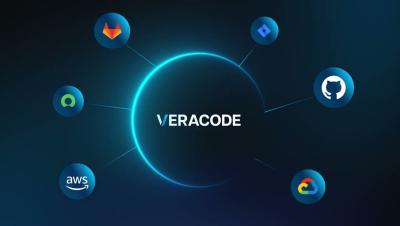
Master Your Application Security Risk with Veracode's Application Risk Management Platform

Discover how Veracode's Application Risk Management Platform transforms application security from a growing liability into a strategic advantage. Watch this video to learn how Veracode cut's through the chaos of expanding portfolios, AI-driven development, and vulnerable supply chains to deliver clarity, prioritization, and automated remediation.

Solving Human Risk: Automate Governance and Prioritize Action

In our previous blog post, “Closing the Visibility Gap,” we established that visibility is the first step in managing the modern human attack surface; however, prioritizing that data is the next major concern for any CISO. Prioritization of human risk data is critical, as it directly informs governance and effective high-level decision-making. Simply put, prioritization is crucial to driving action.

Securing the Smart Factory

In the manufacturing industry, IT and OT systems are converging, automation is accelerating and supply chains are more interconnected than ever before. While these changes are about progress, they also introduce new risk. A single compromise now has the potential to completely halt production and ripple across global logistics. Earlier this year, Jaguar Land Rover experienced this firsthand.